
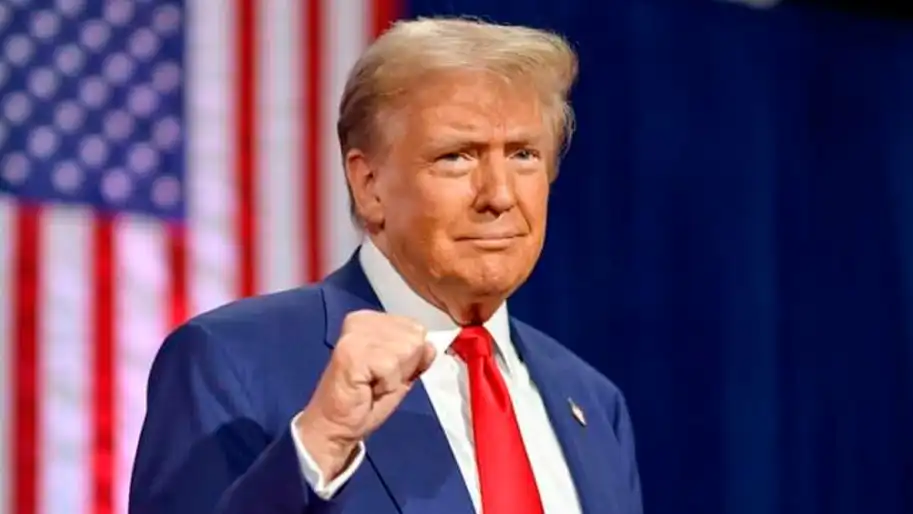

Donald Trump's victory, it would seem, should have angered European leaders because of his campaign rhetoric, in which the now-president-elect put the United States above all else and trashed the North Atlantic Treaty Organization (NATO). However, Trump's first round of phone calls led to a change in mood in European capitals. Fury was replaced by acceptance.
Columnist David Ignatius wrote about this for The Washington Post.
According to Ignatius, the phone calls with Trump began immediately after the news of his election victory. And they went a little differently than European leaders had imagined.
According to Ignatius' interlocutors, European leaders were faced with the fact that Trump was asking questions about Ukraine, not making demands.
As an example, the columnist cites a fragment of a phone call between Trump and German Chancellor Olaf Scholz.
Trump asked what Scholz thought about Ukrainian President Volodymyr Zelenskyy’s victory plan, as well as what the Chancellor thought about russian dictator vladimir putin.
There is also some information about the content of Trump’s phone calls with the leaders of France, Poland, Denmark, the Czech Republic and other countries.
“The calls were more friendly than expected, and Trump listened more - he was well-prepared and was not rambling,” Ignatius quotes an unnamed German official as saying.
The columnist notes that such optimistic comments reflect Europe’s desire to establish a good working relationship with the new US President.
Several officials told Ignatius that NATO Secretary General Mark Rutte is likely to be Europe’s main representative in talks with Trump.
“Rutte is rumored to be a ‘Trump conspirator,’ partly because he appeased the then-president after his 2018 tirade on NATO by agreeing that Trump was right to demand that alliance members spend more on defense,” Ignatius wrote.
In recent days, Rutte has advised European leaders to engage Trump. The NATO Secretary General has told them not to gossip about Trump, but to call and enlist his support.
Several interlocutors told the columnist that Rutte will soon travel to Trump’s private residence in Florida to discuss the strategy for peace talks on Ukraine, which the president-elect has said he wants to hold.
A senior German official told Ignatius that Rutte would talk about how “a just and lasting peace is in the interests of Trump and Europe,” which “will not reward russian aggression and provide reliable security guarantees for Ukraine.”
According to the official, Rutte told Trump, “Keep in mind that you have to solve the Ukraine problem in a way that it does not haunt you during your term.”
Ignatius added that from conversations with European officials, he came to the conclusion that Europe knows it needs Trump because France and Germany, the traditional pillars of the European Union, are weak politically and financially.
As Ukrainian News Agency earlier reported, in early November, the Axios portal wrote, citing its own sources, that Ukrainian President Volodymyr Zelenskyy “did not feel a sense of hopelessness” after a phone call with Trump.
Recall, earlier, Finnish President Alexander Stubb said that US President-elect Trump wants an early end to the war in Ukraine.
And The Economist newspaper wrote that Trump's inauguration day - January 20, 2025 - could be the first day of a ceasefire in Ukraine.
At the same time, the publication wrote that the Ukrainian military does not really believe in a truce, which allegedly could come after Trump takes office as US President.
Who we are: About us, Contacts. How we write news and our principles: Editorial code. We did our best. If you found this valuable – please support us.
To request a correction, please send an email.