
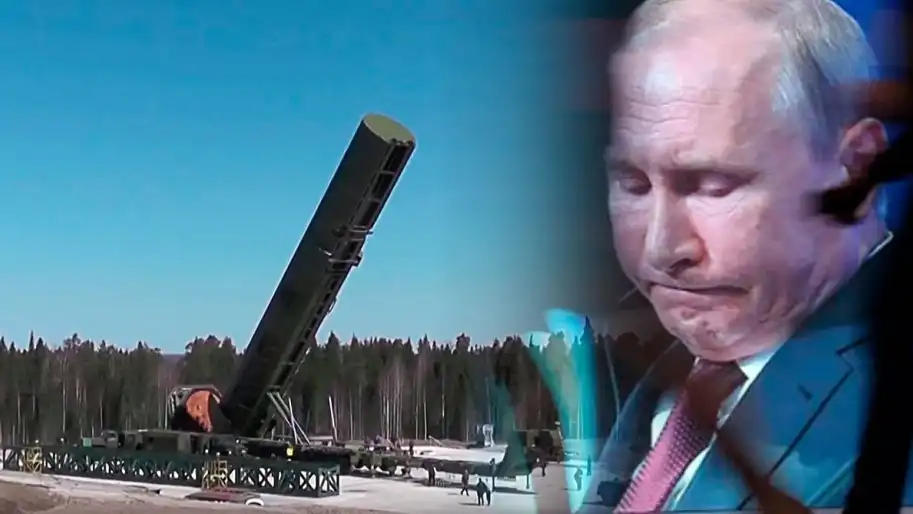

The aggressor country of russia has encountered difficulties in developing the RS-28 Sarmat intercontinental ballistic missile (ICBM). Due to the aggression against Ukraine, ties with Ukrainian engineers, who have extensive experience in rocketry, were severed.
This is reported by Business Insider, citing Timothy Wright, a missile expert at the International Institute for Strategic Studies (IISS).
Ukraine's defense industry has remained closely intertwined with russia's after the collapse of the Soviet Union in 1991. The country has experience in nuclear and missile technologies, as well as knowledge in the field of production.
The publication writes that over the following decades, russia has reduced its dependence on the Ukrainian defense industry. But in critical areas, they remained strong when Moscow launched an offensive, occupying Crimea and starting a war in eastern Ukraine.
According to Wright, after the collapse of the Soviet Union, russia continued to develop solid-fuel missiles, and russian engineers managed to achieve some success.
However, in the Sarmat missile, the russians decided to use a liquid-fueled system.
"The problem is that the russians have not done this for over 30 years <...> Historically, many of the ICBM production facilities and personnel were located in Ukraine," the publication quotes Wright as saying.
He called the russians' decision to use a liquid-fueled engine for the Sarmat missile "very strange," because during the Soviet Union, engineers located in the territory of modern-day Ukraine were engaged in this work.
The Sarmat missile is designed to replace the Soviet R-36M ICBM, which was given the name Satan in NATO countries. The earliest version of this missile entered service with the Soviet Armed Forces in the 1970s. The missile was developed by the Yuzhmash enterprise, located in the Ukrainian city of Dnipro.
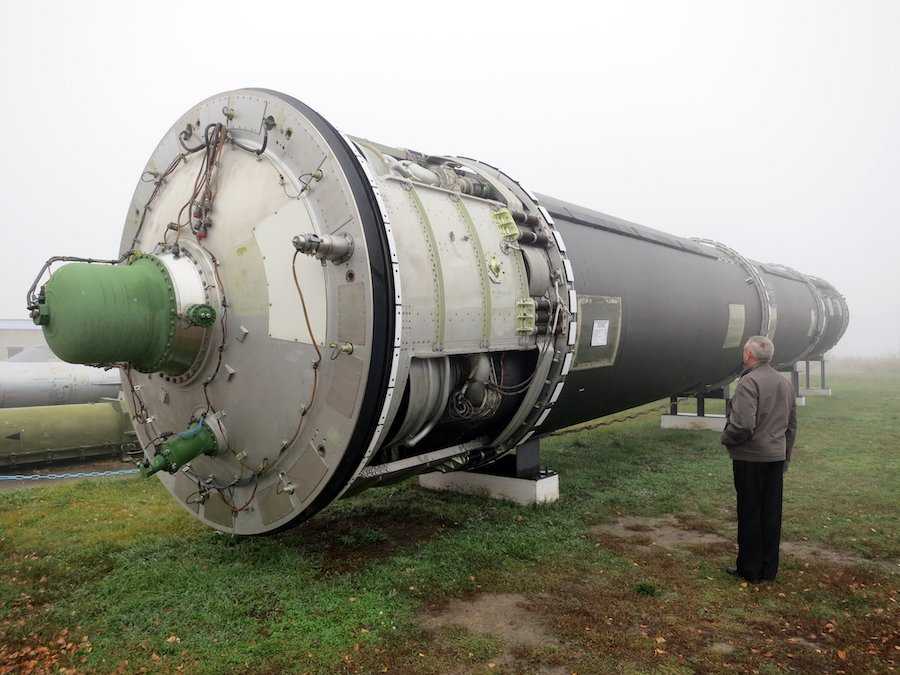 The R-36M (SS-18 Satan) missile in a museum. Photo: Flickr.
"After the collapse of the Soviet Union, russia found itself in a position where, in essence, it had to rely on external countries to support its existing programs <...> So they continued to work with the Ukrainians until 2014," Wright said.
After the occupation of Crimea and the outbreak of conflict in eastern Ukraine, ties between Ukrainian and russian engineers were severed, including on the maintenance of the R-36M missiles.
This led to russia focusing on replacing the R-36M and developing a new missile.
The problems in the development of the RS-28 missile are evidenced by the unsuccessful launch that the russians carried out in September 2024. Then the missile exploded for an unknown reason on the launch pad of the Plesetsk cosmodrome.
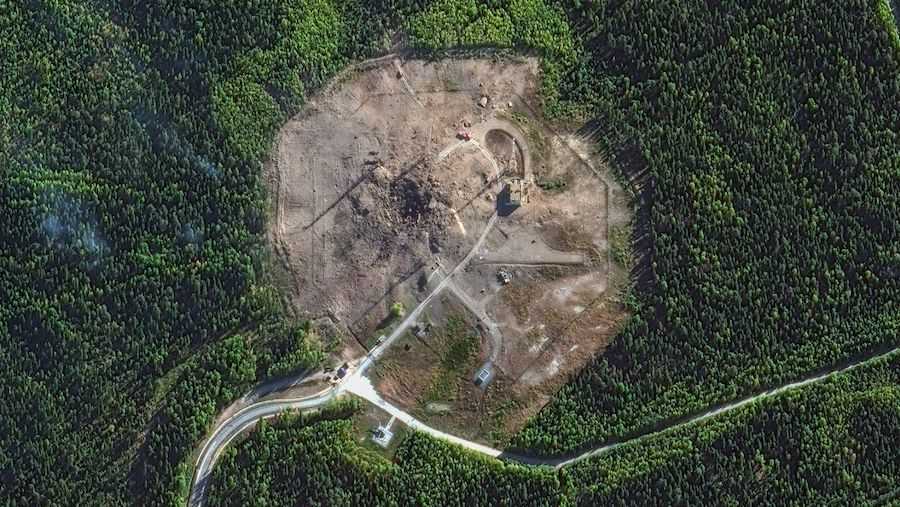 Crater at the site of the unsuccessful launch of the Sarmat missile at the russian Plesetsk cosmodrome. Photo: CNN / Maxar Technologies.
According to the British analytical center RUSI, the tests of the Sarmat missile have been postponed repeatedly, and there have been at least two cancellations of flight tests and at least one failure before.
Russia has invested large financial, material and propaganda resources in the development of the Sarmat missile. Dictator vladimir putin and other russian officials have repeatedly stated that the world's existing missile defense systems are supposedly useless against the RS-28.
Wright emphasized that the missile "is not working properly." He also added that in the face of failures and the lack of a replacement, the russians are forced to extend the service life of the Soviet R-36M.
"The missile has served its term for a very, very long time. And sooner or later everything will fall apart," Wright noted.
As Ukrainian News Agency earlier reported, on November 21, 2024, the russian army struck the city of Dnipro, using, as putin later stated, the allegedly newest ballistic missile called Oreshnik.
The day before, The Economist wrote, citing Ukrainian experts, that the study of the fragments of the Oreshnik missile allows us to assert that putin's "new" missile turned out to be not so new.
Who we are: About us, Contacts. How we write news and our principles: Editorial code. We did our best. If you found this valuable – please support us.
To request a correction, please send an email.