

While Western countries continue debating whether immobilized Russian assets can be transferred to Ukraine, a clearer legal route exists through court proceedings. This approach could strengthen Ukraine’s economy and broaden financing options for resisting Russian aggression, but it would still require political support from both Ukraine and its European partners.
For more than two years, Ukraine has been discussing the use of immobilized Russian assets with partner countries. These assets are held across multiple jurisdictions and are estimated at around €300 billion, with roughly €210 billion located in the EU. Many governments say there is no clear legal mechanism to transfer sovereign assets without major legal and financial risks. For example, Belgium has vetoed the use of immobilized Russian assets, citing concerns that it could face legal challenges from Russia. Italy, Bulgaria, and Malta have also urged the EU to look for alternative ways to finance Ukraine’s needs.
The United Kingdom, which is not an EU member, is also saying it currently cannot transfer immobilized Russian assets to Ukraine. A recent Financial Times report said London would not use immobilized Russian assets held in the UK on a unilateral basis to support Kyiv after a similar initiative failed at an EU summit. The main reason is legal concerns from banks. They fear lawsuits from Russia and point to the lack of state guarantees in case Russia takes retaliatory measures. In practice, European policymakers are wary of "confiscation" and the consequences it could trigger.
At the same time, Ukraine faces acute financing needs. The draft state budget for 2026 includes a deficit of about $45 billion, and clear sources to cover it have yet to be identified. Moreover, given the U.S. position and the risk of a sharp reduction in support for Ukraine’s defense capabilities, Ukraine could face a critical funding gap for the armed forces next year.
Despite largely negative signals from partner states, which in practice amount to a refusal to transfer the aggressor’s funds held in their jurisdictions, legal avenues for compensation from Russian assets do exist. One such route involves court claims filed by companies and individuals seeking compensation for the damages caused by the Russian Federation.
The damages case: How a civil lawsuit can become a pathway to Russian assets
The editorial team obtained documents from a case reviewed in 2024 by the Pechersk District Court in Kyiv, based on a claim filed by an individual. In a decision dated May 21, 2024, the Ukrainian court effectively set a precedent for seeking compensation from the Russian Federation through civil proceedings.
The case involved a lawsuit against the Russian Federation and the Central Bank of the Russian Federation for $12.19 billion in damages. The claimant’s funds had been held in accounts at a Ukrainian bank that is currently undergoing a market exit procedure. According to the court decision, the funds were withdrawn "as a result of unlawful actions by a criminal group. The bank was later declared bankrupt and liquidated. The decision states that the group acted under the influence and control of the Russian Federation."
The claimant argued that the Central Bank of the Russian Federation facilitated money laundering, including through the looting of a Ukrainian bank, and asked the court to award compensation. The precedent is that the Pechersk District Court in Kyiv upheld the claim, effectively recognizing a civil-law tort: material damage caused through organized criminal activity in the banking and financial sector.
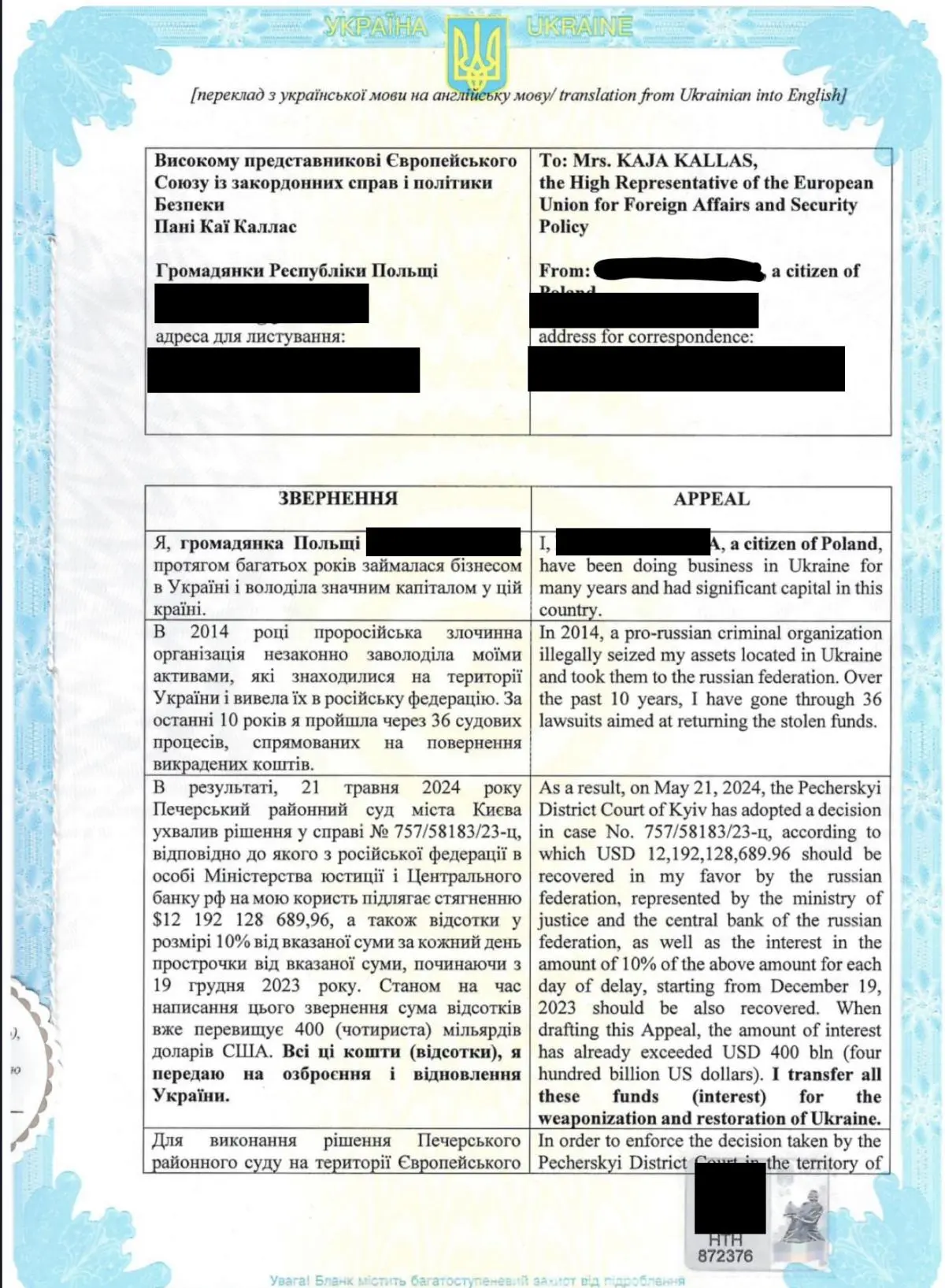
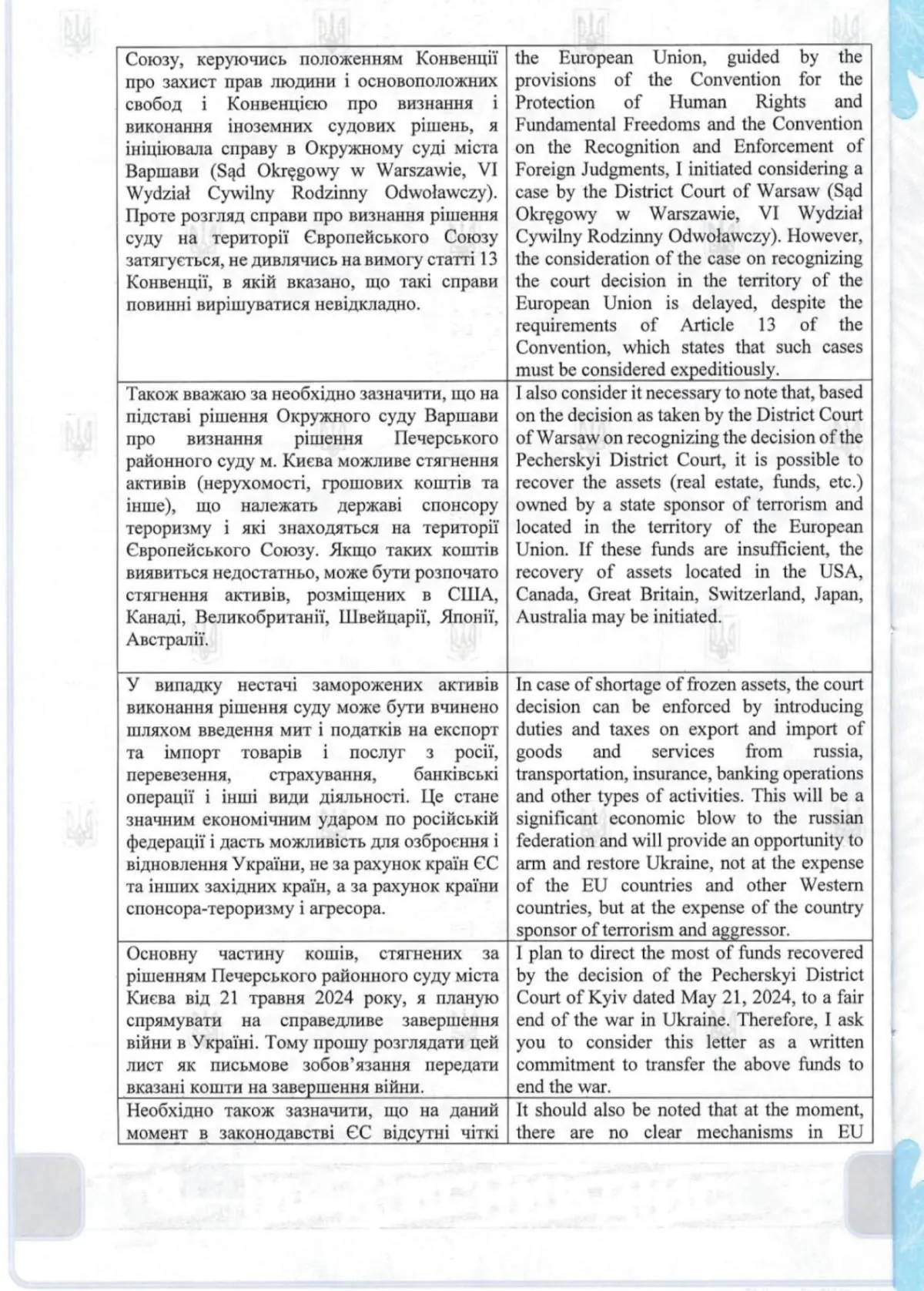
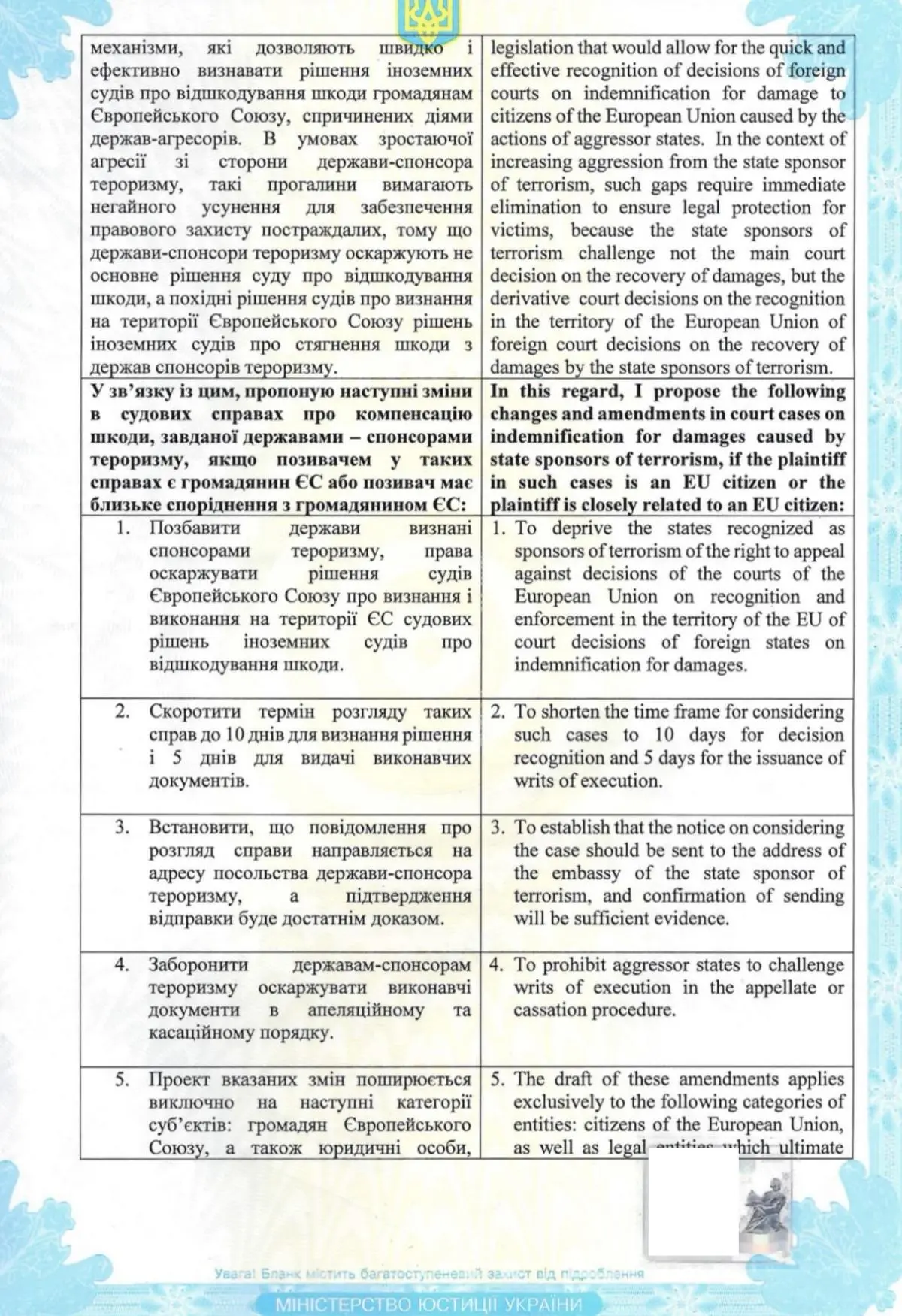
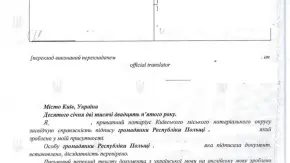
The court treated the armed conflict between the Russian Federation and Ukraine only as a circumstance that created favorable conditions for the criminal acts, not as the legal cause of the damage. The court also expressly separated the dispute from acts of a sovereign nature and did not apply state immunity.
The ruling relied on a large evidentiary record. The court referenced 15 criminal convictions that established elements of organized criminal activity, unlawful seizure of assets, and the operation of a criminal organization linked to the Viktor Yanukovych era. It also cited 36 court decisions in civil and commercial cases addressing the illegal origin of assets, chains of control, and beneficial ownership. The materials included documents from multiple criminal investigations, as well as international legal opinions on countermeasures, including opinions prepared by U.S. lawyers for the U.S. administration.
The decision of the Pechersk District Court in Kyiv granted the individual’s claims. The court ordered compensation of $12.2 billion in material damages, plus €9,000, and imposed a penalty of 10% for each day of delay, starting from Dec. 19, 2023, until full enforcement of the ruling. By the end of 2025, the accumulated penalties were estimated at around $900 billion, which would make enforcement unrealistic without execution against major Russian state assets.
Why the ruling matters: How civil cases against Russia remove judicial immunity
Last year’s ruling by the Pechersk District Court is important in the discussion around immobilized Russian assets. The court ordered the Russian Federation to compensate losses linked to the expropriation of banking assets by a criminal organization described as being controlled by Russia during the Viktor Yanukovych era. The key point is that the court treated the claim as an economic crime, not as "war damages." This framing is central because it can narrow Russia’s ability to rely on judicial immunity.
The funds sought by individuals through civil claims against the Russian Federation over economic crimes are significant because claimants are prepared to direct any recovered amounts to special funds supporting Ukraine’s resistance and recovery. In the Pechersk District Court case cited above, the claimant submitted a notarized Guarantee Letter confirming "a commitment to transfer any funds recovered through enforcement exclusively for purposes linked to Ukraine’s victory and reconstruction."
The scale is also significant. The claim involves billions of dollars, and the total amount continues to grow due to penalty interest accruing as Russia does not comply with the ruling. With penalties included, the total exposure under this single claim is described as approaching $1 trillion. If enforcement becomes possible, sums of this size could materially affect Ukraine’s ability to fund defense needs and support recovery spending, including budget and social programs.
International courts: How a $12 billion damages case is moving through European courts
A damages case filed in Ukraine seeking more than $12 billion in compensation from the Russian Federation is now moving through the European justice system. The next step is recognition and enforcement of the Ukrainian court’s decision in countries where Russian assets are held. A legal basis for this process exists. The 2019 Hague Convention on the Recognition and Enforcement of Foreign Judgments in Civil or Commercial Matters provides a framework that requires participating states to recognize qualifying foreign court decisions, including those issued by Ukrainian courts.
In Poland, applications to recognize the decision of the Pechersk District Court of Kyiv have been filed with courts in several cities. In one instance, the claimant’s application was returned twice without being considered on formal grounds, which conflicts with Polish civil procedure. In another case, a court of first instance attempted to avoid reviewing the matter by transferring it to another court. The appellate court overturned that approach and stated that the court of first instance must determine jurisdiction and consider the application on its merits.
"As Ukraine is not a member of the European Union, recognition of its court decisions in Poland is carried out in accordance with international agreements. Ukraine ratified the 2019 Hague Convention on the Recognition and Enforcement of Foreign Judgments in Civil or Commercial Matters in 2022. As of Sept. 1, 2023, the Convention is in force for Poland and applies, among others, in relations with Ukraine," the appellate court ruling states.
A similar recognition process is also underway in one of the Baltic states. There, a court of the first instance returned the recognition application twice, incorrectly treating the dispute as related to the armed aggression of the Russian Federation. A local district court overturned the repeated returns and ordered the court of first instance to proceed with a review of the case on its merits.
A complex but necessary path: How to unblock court proceedings in Europe and recover billions from Russia
The 2019 Hague Convention on the Recognition and Enforcement of Foreign Judgments requires courts to accept and consider recognition applications. Returning such applications without consideration, or allowing proceedings to stall for extended periods, can violate Articles 6 and 13 of the European Convention on Human Rights. The $12 billion claim described above is becoming a precedent. If it moves successfully through EU courts, it could open a fully lawful route to executing against Russian assets, without breaching international law.
As international law experts explain, recognition of a ruling in one EU member state awarding compensation for damages caused by Russia can open the way to a European Enforcement Order that is effective across the European Union. In this model, the ruling itself, its recognition, the issuance of an EEO, and compulsory enforcement through execution proceedings form a single legal mechanism for levying execution on Russian assets immobilized in the EU.
However, clear difficulties remain. They stem from reluctance among courts in EU countries to take responsibility for such cases. In practice, this can lead to procedural delays and postponed substantive hearings. These obstacles are described as political rather than legal, based on the expectation that courts are waiting for a "green light" from senior EU officials.
Ukraine’s authorities also need a detailed legal and economic assessment of the potential impact of these civil claims for damages caused by Russia. President Volodymyr Zelensky could take the lead by instructing Prime Minister Yuliia Svyrydenko and the Cabinet of Ministers to review the legal options and practical opportunities, and to raise the issue of pursuing such compensation in Europe at the highest level, including through direct engagement with the president of Poland and other European leaders.
European courts need a "green light" from their parliaments and governments confirming that supporting the decision of the Pechersk District Court of Kyiv is a lawful procedure that does not violate EU legal norms. This would unblock the recovery of funds from Russia’s frozen accounts and allow them to be transferred to Ukraine.
It is also important that claimants in these compensation cases guarantee that most of the recovered funds from the defendants, the Russian Federation and the Central Bank of the Russian Federation, will be directed for the benefit of the Ukrainian state. This would support funding for the Armed Forces of Ukraine and national reconstruction.
Ukraine’s authorities should not ignore this opportunity to recover billions in immobilized Russian assets that the country urgently needs. Enforcing civil judgments against the Russian Federation and its central bank could help Ukraine maintain a professional, combat-ready army and support effective resistance, while also reducing Russia’s ability to finance its aggression. Last year’s decision of the Pechersk District Court of Kyiv is presented as a unique instrument and, at this stage, as the only lawful mechanism for levying execution on Russian state assets. It is also described as a simpler and faster route than the approach Ukraine is currently pursuing. This also carries major significance for Ukraine’s security and for strengthening Europe’s broader security framework.
Who we are: About us, Contacts. How we write news and our principles: Editorial code. We did our best. If you found this valuable – please support us.
To request a correction, please send an email.