
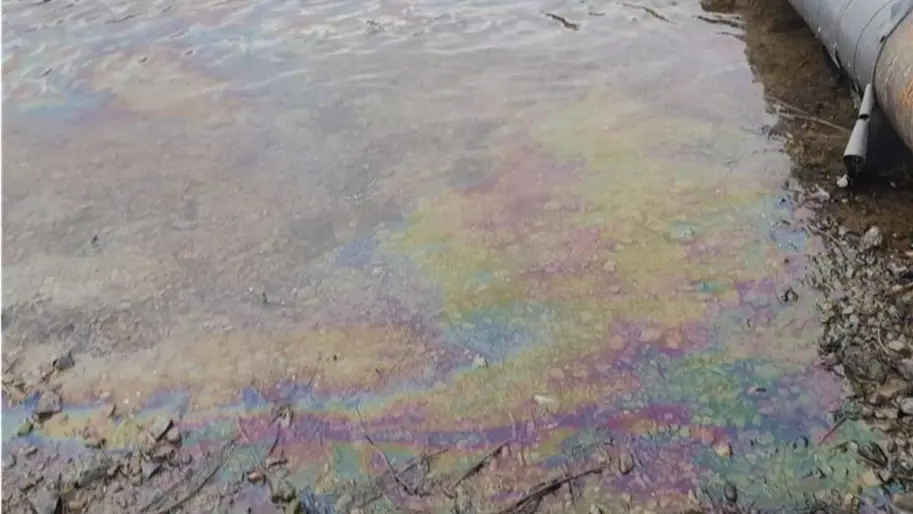

Russian shelling of infrastructure facilities near the Dniester hydroelectric power plant has led to a large-scale leakage of technical oils into the Dniester River, which poses a direct threat to the ecosystems of the two countries. It was reported by the Ministry of Economy, Environment and Agriculture of Ukraine.
The pollution caused by the attack on March 7 has already spread downstream and reached the territory of the Republic of Moldova, in particular the area of Naslavcea village. Stains of transformer oil were also recorded in the Vinnytsia Region near the village of Liadova, which confirms the transboundary scale of russia's environmental crime.
The situation is critical, as the Dniester is a key source of drinking water for major cities such as Ukrainian Odesa and Moldovan Chisinau. The ministry emphasized that russia continues to use war as a tool to destroy ecosystems and create international environmental threats. Currently, Ukraine is acting as the central coordinator of the response, working in close cooperation with the Moldovan side to minimize the consequences of the leak.
SESU units are involved in oil spill response, installing barrier boom lines and using special sorbents to collect pollutants. Despite the prompt localization measures, the Ukrainian side insists on the need for a proper international legal assessment of the actions of the aggressor country. Experts warn that such pollution poses a serious danger not only to the water supply of the population, but also to the biodiversity of the entire river area.
As the Ukrainian News agency earlier reported, as a result of russian massive attacks on the port of Pivdennyi (Odesa Region) there was a leak of vegetable oil into the water area. The port water area was closed until the consequences of the leakage were completely eliminated
Who we are: About us, Contacts. How we write news and our principles: Editorial code. We did our best. If you found this valuable – please support us.
To request a correction, please send an email.