
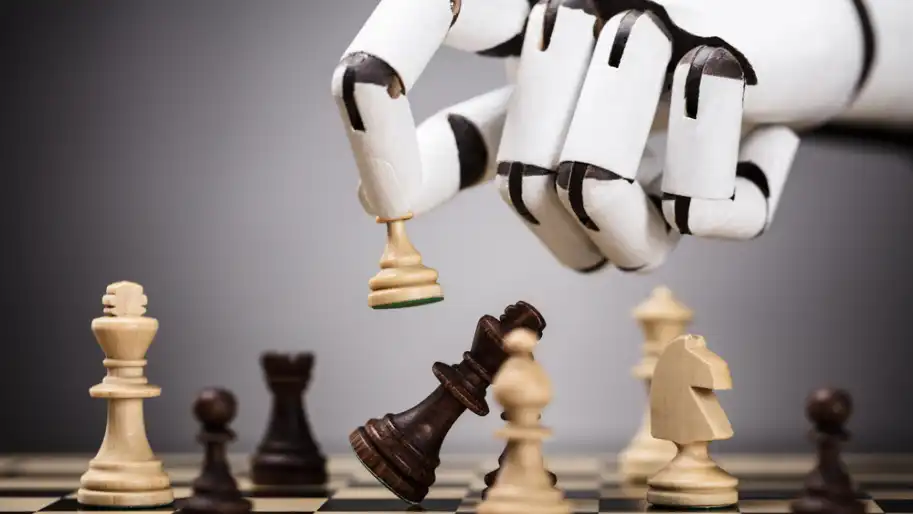

The story of the confrontation between man and machine in chess is not just a plot for science fiction. It is a real, dramatic saga, where human intuition, emotions and experience competed with increasingly powerful machines capable of surpassing grandmasters through sheer computational power. From a fake 18th-century automaton to self-learning programs that learn to play better than anyone else, the journey has been fascinating, ambiguous and deeply symbolic. Today, on International Chess Day, let's remember the confrontation between intelligence and algorithm.
It all began in 1770, when Wolfgang von Kempelen presented to the world the Mechanical Turk - a chess automaton that supposedly played on its own and even defeated Napoleon. Only later it became clear that a real chess player was hiding inside. However, the idea of a "playing machine" caught on: it inspired Charles Babbage, the father of the modern computer.
The first calculations: technology tries to think
In 1951, one of Alan Turing's colleagues, Dietrich Prinz, created the first chess program. It did not recognize castling or checkmate, but it laid the foundation for future machine chess. In 1968, programmers Larry Atkin and David Slate created the CHESS system. It could already play with humans - and although it lost to British champion David Levy in 1978, it was only a temporary victory for humanity.
The age of Deep Blue: when man gave in
The real breakthrough came in 1997. After several years of development, IBM's Deep Blue computer defeated the reigning world champion Garry Kasparov. The match ended with a score of 3.5-2.5. Kasparov initially thought the computer was "just calculating," but when he saw the knight sacrifice in the final game, he was shocked. It looked like deep understanding, not just arithmetic. Psychological pressure, lack of access to his opponent's games, fear of the "invisible" - all this undermined Kasparov's confidence. Since then, the fight has become unequal.
Chess in your pocket: machines for everyone
More than two decades have passed - and today, a regular program on a smartphone easily defeats a grandmaster. Engines like Stockfish, Komodo, Leela Chess Zero can do everything that a billion games have taught them. AlphaZero, created by DeepMind, defeated Stockfish with a score of 64-36 without a single defeat in just four hours of self-training. People can only watch - and learn.
Despite the fact that computers play better, spectators still want to see people. They empathize, admire the style, live together with mistakes and triumphs. The game between Carlsen and Caruana is no longer just a game, but a dramatic action. And grandmaster Jan Hein Donner, answering the question of how he would prepare for a match with Deep Blue, joked: "I would take a hammer with me."
As Ukrainian News Agency earlier reported, ChatGPT from OpenAI was defeated in a chess game against an old Atari 2600 game console, released in 1977. This console has only 128 bytes of RAM.
Grandmaster Magnus Carlsen, who holds the first place in the world ranking, played online chess against a team consisting of more than 143,000 people from all over the world. The game, which lasted almost a month and a half, ended in a draw.
Who we are: About us, Contacts. How we write news and our principles: Editorial code. We did our best. If you found this valuable – please support us.
To request a correction, please send an email.