
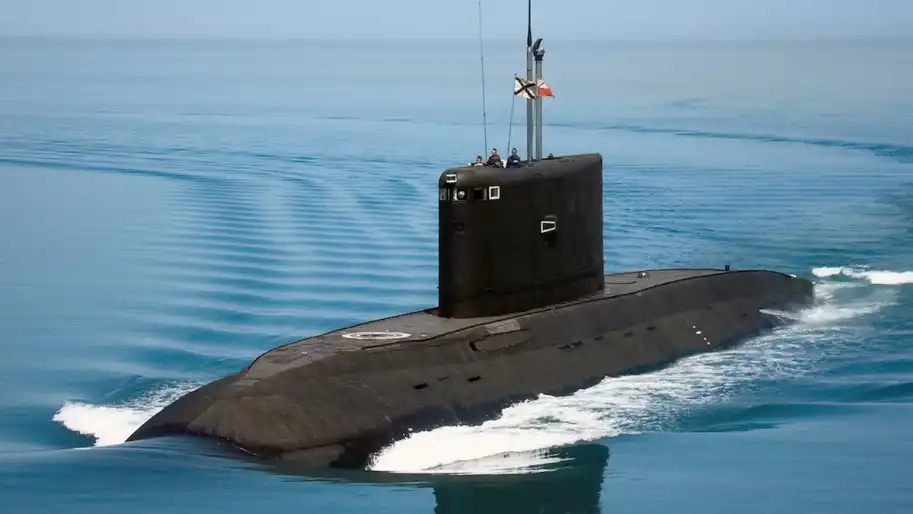

The British military has come up with a way to detect submarines of the army of the aggressor country russia. They want to "hunt" them using a system of several hundred unmanned vehicles equipped with sound sensors.
This is reported by the British publication The Times.
According to the publication, the British military has magnetic tapes on which the acoustic signatures of Soviet and russian ships and submarines were recorded for many decades.
For a long time, this data had no practical use, as it was extremely difficult to use. The development of technology has allowed these recordings to be given a "second life".
The Ministry of Defense of the United Kingdom wants to integrate the acoustic signatures of russian ships into a system called Lura. This is a development of the European company Helsing, equipped with artificial intelligence.
The British military wants to equip several hundred naval drones with the Lura system. The devices will be able to patrol the sea and detect russian submarines thanks to the sounds and noises they make. It is noted that the sensors will be able to determine which boat is underwater, since each of them makes unique sounds.
When a suspicious noise is detected, the drones will rise to the surface and transmit information to the military.
The use of hundreds of such devices will allow them to cover large areas and make it extremely difficult for submarines of the russian army to move unnoticed.
As the Ukrainian News agency earlier reported, at the end of April 2025 it became known that the French Navy tested a kamikaze sea drone, which looks very similar to the Ukrainian Magura V5 device.
We also wrote that the Estonian parliament proposed a bill that would allow the country's armed forces to sink ships if necessary to protect infrastructure in the Baltic Sea.
Recall, Australia decided to spend almost USD 5 billion on the purchase of American missiles for the ships of its fleet.
Who we are: About us, Contacts. How we write news and our principles: Editorial code. We did our best. If you found this valuable – please support us.
To request a correction, please send an email.