
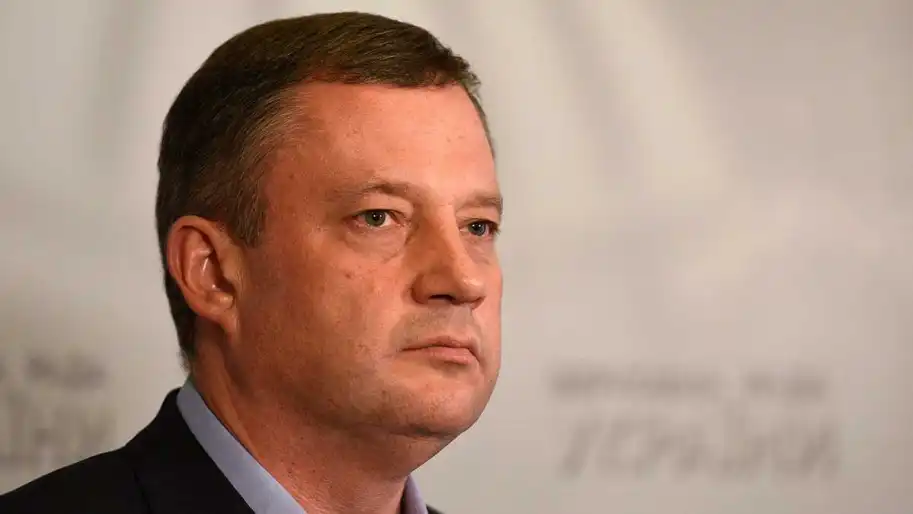

Member of Parliament Yaroslav Dubnevych, whom the Ukrainian authorities have declared internationally wanted in the "gas case", is not on Interpol's wanted list.
Dubnevych's lawyer Volodymyr Bohatyr reported this to the Ukrainian News Agency.
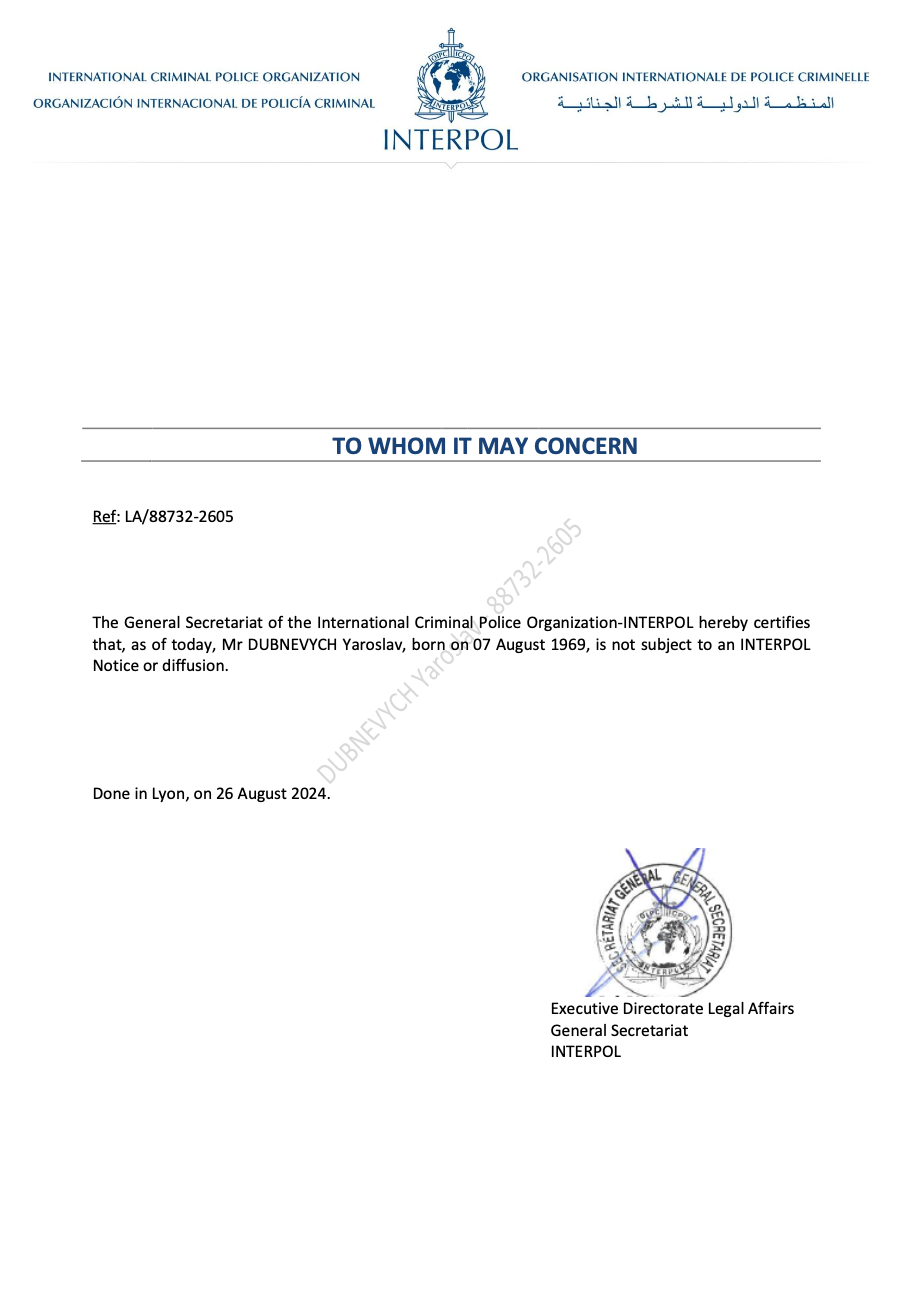
He noted that he had received a corresponding letter from Interpol at his disposal.
In November 2023, the High Anti-Corruption Court of Ukraine, at the request of the prosecutor of the Specialized Prosecutor's Office, declared Dubnevych internationally wanted.
He is accused of illegally embezzling UAH 93 million from PJSC Ukrzaliznytsia, as well as organizing the theft of natural gas from NJSC Naftogaz of Ukraine for the amount of UAH 2.2 billion.
In making its decision, the court proceeded from the defendant's failure to appear at court hearings and the availability of information about his stay abroad.
As evidence, information was presented, allegedly from the system of the official Europol channel Secure Information Exchange Network (SIENA), although the State Border Guard Service did not record Dubnevych crossing the state border.
Later, the headquarters of the European Police Office in The Hague reported that no data regarding the MP was being processed by Europol.
"In relations with international institutions, Ukrainian law enforcement agencies often wishful thinking. And thereby abuse their rights granted under the relevant agreements. This certainly negatively affects the attitude of international organizations to the Ukrainian judicial and law enforcement systems," lawyer Volodymyr Bohatyr is convinced.
According to him, in the case of MP Dubnevych, the artificially created formal grounds for declaring him wanted look dubious, especially in conditions when a significant part of parliamentarians is under pressure from criminal prosecution.
We remind you that in Ukraine there is a National Central Bureau of Interpol, the functions of which are performed by the National Police. As a working apparatus, it is tasked with coordinating law enforcement agencies, as well as interacting with the General Secretariat of Interpol and relevant bodies of member states. In particular, sending requests to partners about criminals and wanted persons, as well as receiving and monitoring the implementation of similar requests from abroad.
The main area of interaction between law enforcement agencies through Interpol is to establish the location of wanted persons. When suspects try to evade justice by hiding abroad, they can be put on the international wanted list through the so-called red notice. In essence, it is a request to law enforcement agencies around the world with a request to find and temporarily arrest a person pending extradition or transfer. As a rule, the request is based on a court decision of the country.
"A red notice is not a warrant for the arrest of a person. It is only a simultaneous warning to the police of all Interpol member countries about the fact of search. Therefore, Interpol does not search for persons, it cannot force the law enforcement agencies of any country to arrest someone. Each country decides for itself what legal significance it attaches to red notices and the powers of its law enforcement officers to execute them," Bohatyr added.
In addition, according to the lawyer, it is important to consider that a member country's request for a red notice is not automatically executed. It is preliminarily considered by both the Secretariat and may be preventively blocked by the Interpol Files Control Commission, for example, due to inconsistency with the statute and rules of Interpol.
According to him, since the international search, as a rule, is carried out through the channels of Interpol, as the largest international organization of police cooperation, at present the search is actually not being carried out, and the legal grounds for the international search are extremely dubious.
As Ukrainian News Agency reported, earlier, NABU employees broke the arm of a witness in the criminal case against MP Dubnevych. NABU has declared Verkhovna Rada member Yaroslav Dubnevych wanted.
Who we are: About us, Contacts. How we write news and our principles: Editorial code. We did our best. If you found this valuable – please support us.
To request a correction, please send an email.