

South Korean Acting President Choi Sang-mok ordered an emergency safety inspection of the country's entire airline system on Monday, December 30, following the country's deadliest plane crash.
This was reported by Reuters.
"As soon as the disaster relief work is completed, the transport ministry should conduct an emergency safety inspection of the entire aircraft operation system to prevent a recurrence of air crashes," he stressed.
As a first step, the transport ministry announced plans to conduct a special inspection of all 101 Boeing 737-800 aircraft operated by South Korean airlines starting Monday, focusing on maintenance records of key components.
Jeju Air Flight 7C2216, which arrived from the Thai capital Bangkok, attempted to land shortly after 9 a.m. Sunday at an airport in the south of the country.
Fire and transport officials said investigators were looking into possible causes of the crash, including bird strikes, failure of the plane's control systems and the apparent haste of the pilots who attempted to land shortly after declaring an emergency.
Experts said many questions remain, including why the plane, powered by two CFM 56-7B26 engines, was traveling so fast and why its landing gear was not lowered when it skidded off the runway and hit a wall.
On Monday, the Ministry of Transport said that as the pilots were approaching for a scheduled landing, they informed controllers that the plane had suffered a bird strike, shortly after the control tower had warned them that birds had been spotted nearby.
The pilots then signaled for help and announced their intention to abandon the landing, turn around and try again. The plane descended onto the runway shortly after, landing about 1,200 meters (4,000 feet) along the 2,800-meter (9,900-foot) runway and striking a structure at the end of the runway.
Officials are investigating the role of a locator antenna located at the end of the runway to aid landing, as well as the concrete embankment on which it stood, the Ministry of Transport said at a media briefing.
The Ministry of Transportation said the plane's flight recorder had been recovered but appeared to have some external damage, and it was unclear whether the data was complete enough for analysis.
The flight recorder was flown to Seoul and will be analyzed when a team from the US National Transportation Safety Board (NTSB) and Boeing officials arrive in the country late Monday night, the agency told reporters.
The crash reportedly killed mostly locals returning from a holiday in Thailand, as well as two Thai nationals. All 175 passengers and four of the six crew members were killed. Two crew members were pulled out alive.
On the morning of December 30, investigators were trying to identify some of the more than two dozen remaining victims as families waited in the Muan airport terminal.
Park Han-shin, who lost his brother in the plane crash, said authorities told him his brother had been identified but he had not been able to see his body. Park called on the families of other victims to unite in the response to the disaster and recovery efforts, recalling the 2014 ferry disaster that killed more than 300 people. Many relatives of the victims of the Seoul ferry disaster complained that it took authorities too long to identify the dead and the cause of the accident.
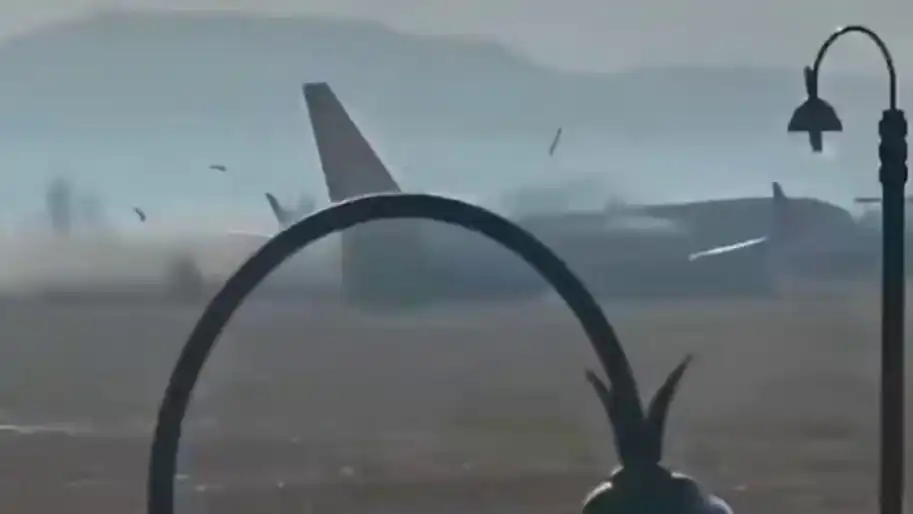
On December 29, a Jeju Air Boeing 737-800 crashed in South Korea. While landing at Muan International Airport, the plane skidded off the runway, hit a fence and exploded. There were 181 people on board.
Who we are: About us, Contacts. How we write news and our principles: Editorial code. We did our best. If you found this valuable – please support us.
To request a correction, please send an email.