

European leaders have repeatedly said that the aggression of russian leader vladimir putin will not stop at Ukraine. In particular, in Germany, they have repeatedly stated that the russian federation may attack a NATO country, and also that we must be ready "for war by 2029".
Newsweek has created a map of potential hot spots if russia invades further into Europe.
Thus, currently the aggressor state russia already presents the war with Ukraine as a war with NATO, and, according to Article 5 of the NATO Charter, a strike on one member of the Alliance can provoke a collective response, even if hybrid attacks call this definition into question.
“There is little doubt that Putin will continue to aggressively pursue his interests in Europe, and Eastern Europe in particular. If there is one motivating factor for Putin over the last 25 years, it has been NATO expansion. He will look to exploit any crack to advance Russian influence across the region,” William Muck, a political science professor at North Central College, told Newsweek.
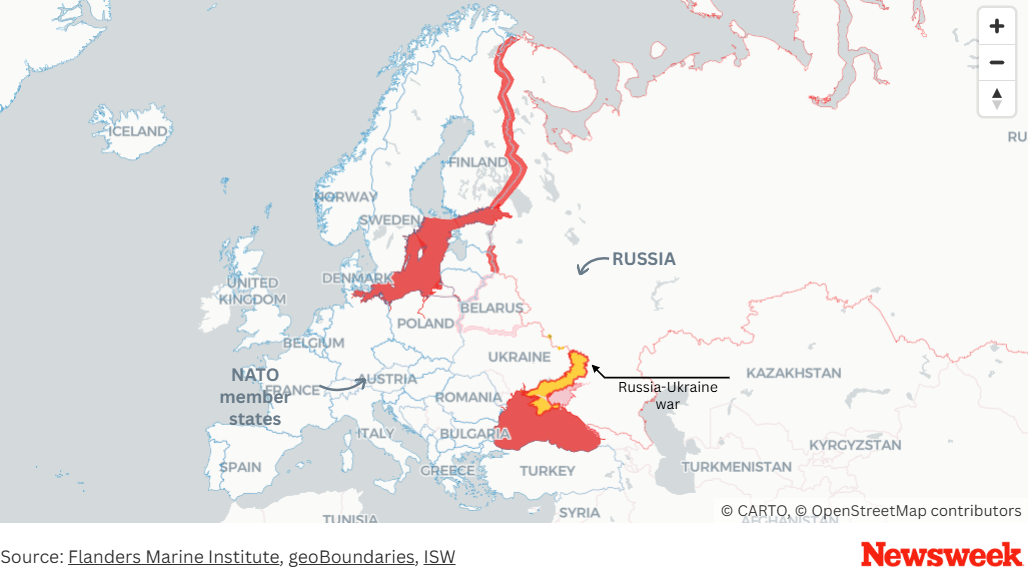 Full map. Source: Newsweek
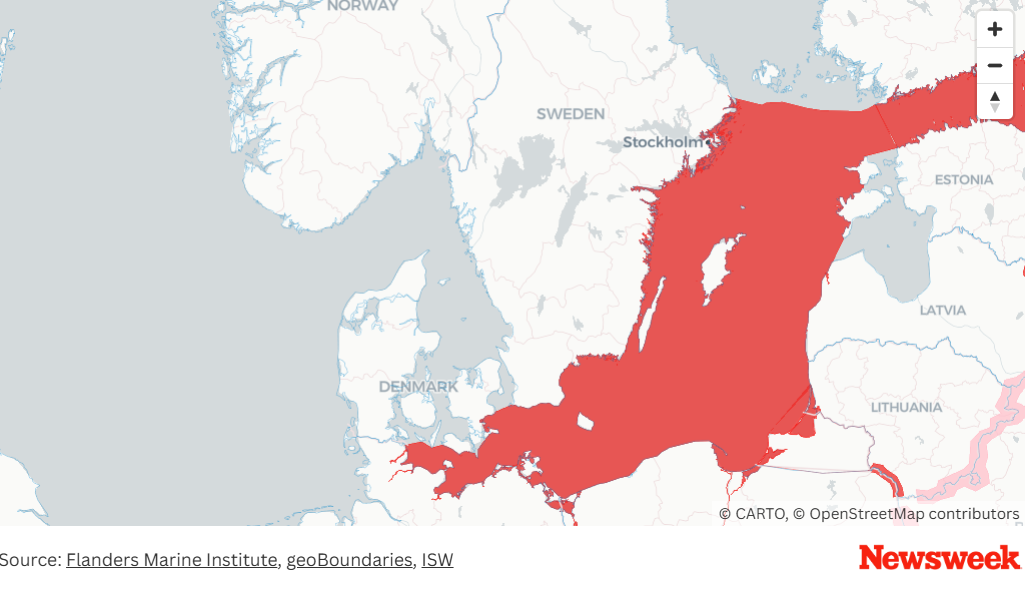
Swedish Civil Defense Minister Carl-Oskar Bohlin said that “war could come to Sweden” on the same day the country’s Commander-in-Chief Micael Bydén warned Swedes to “prepare themselves mentally” for conflict.
 Source: Newsweek
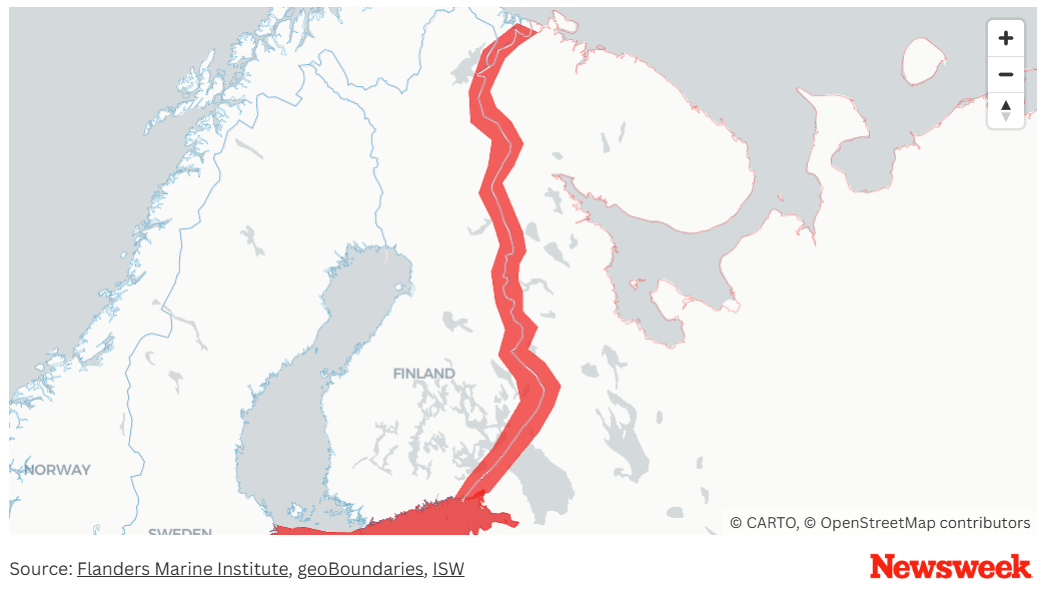
As one Newsweek map shows, NATO’s northeastern flank, which includes the 830-mile border with neighboring Finland, could become a possible front. The Nordic country, which joined the alliance in 2023, has already accused moscow of fueling a migrant crisis on its border.
 Source: Newsweek
Lieutenant General Jürgen-Joachim von Sandrart, the former head of NATO's Multinational Corps Northeast, previously told Newsweek that moscow has "multiple options" to test the alliance's cohesion, including "limited land grabs."
"As we think about potential future flashpoints, the Baltic states stand as an important test case of the strength of the NATO deterrent. Estonia, Latvia, and Lithuania have large Russian populations—usually an important motivating factor for Putin interventionism," said political science professor Muck.
Their location next to the russian exclave of Kaliningrad is strategically important as a potential frontline in any conflict between moscow and the alliance.
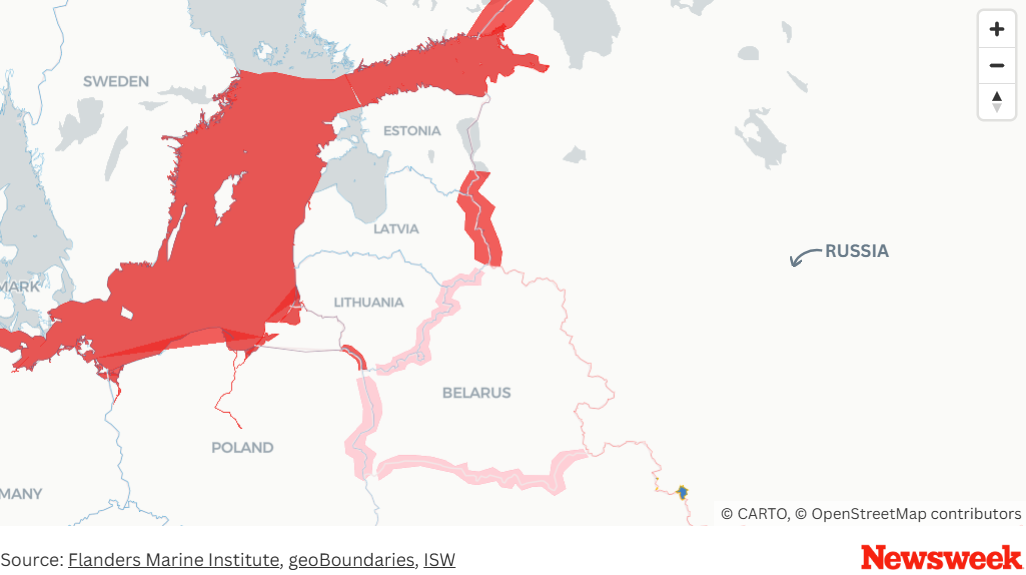 Source: Newsweek
As the Newsweek map highlights, the Suwalki Corridor, also known as the Suwalki Gap, could be the first point of contact for any move by moscow towards NATO, as it separates the russian exclave of Kaliningrad on the Baltic Sea from Belarus. It is also home to thousands of russian troops, cutting-edge fighter jets and nuclear weapons, and is the only road or rail route between Poland and Central Europe and the Baltic states.
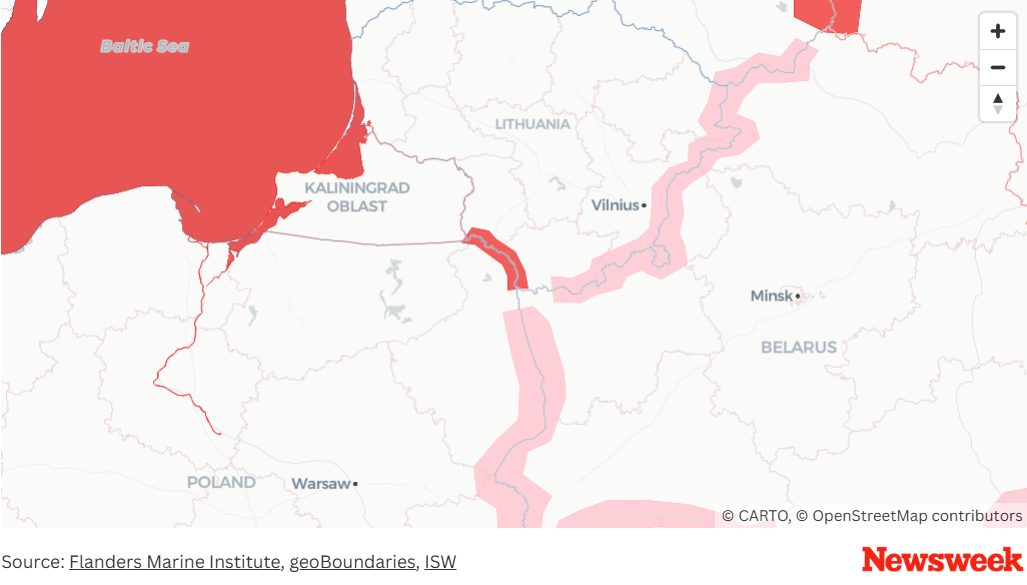 Source: Newsweek
"While states bordering Russia have rightfully expressed heightened concern, it is likely that Putin will remain deterred by NATO and focus his military adventurism on non-NATO states with large Russian populations—think Moldova and Ukraine," Newsweek reports.
Shortly after the war in Ukraine began, russian commander Rustam Minnekaev said in April 2022 that moscow wanted to create a corridor through the south of Ukraine to Transnistria, the territory shown on the Newsweek map.
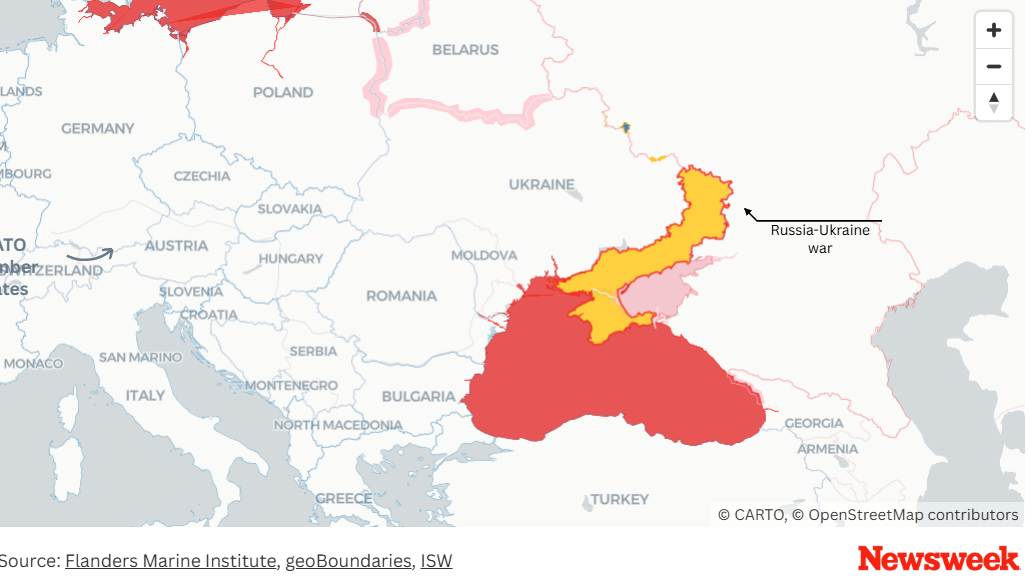 Source: Newsweek
It is noted that other parts of Europe could also be vulnerable – as retired U.S. Admiral Mark Montgomery previously reported to Newsweek, russia’s influence in smaller conflicts in Georgia and Serbia could grow even more.
The Newsweek map also shows this potential complication for NATO member Türkiye, which borders the South Caucasus republic, which fought a brief war with russia in 2008. It led to the declaration of independence of the Abkhazia region, which faced protests over pro-moscow legislation.
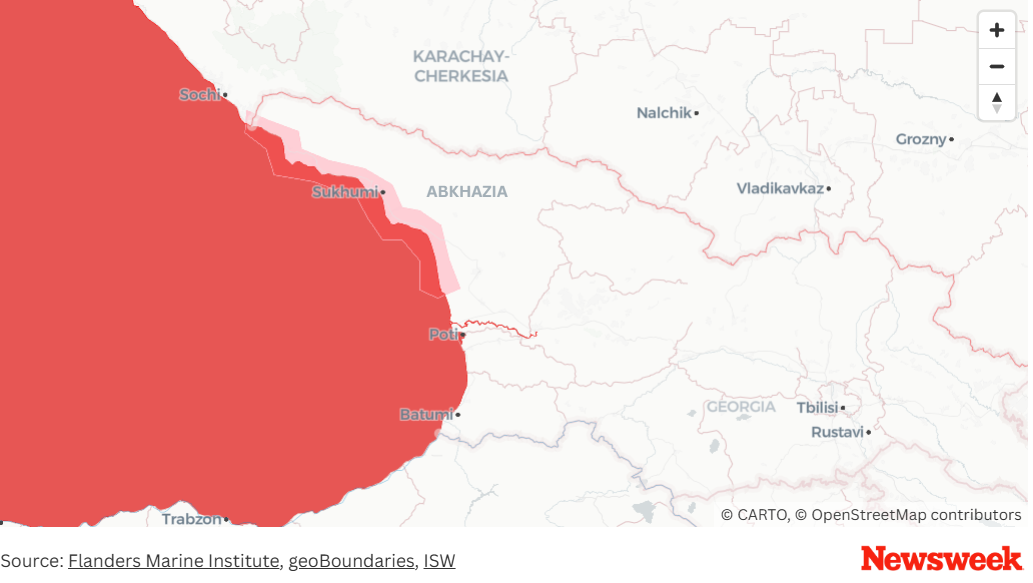 Source: Newsweek
“If the NATO alliance can remain united despite Russia's best efforts to foster chaos and division, it will dramatically decrease the chances of Putin expanding his war beyond Ukraine,” Muck said.
As the Ukrainian News agency earlier reported, former Commander-in-Chief of the Armed Forces of Ukraine and current Ambassador of Ukraine to the United Kingdom Valerii Zaluzhnyi said that World War III began when the aggressor country russia involved its allies in hostilities against Ukraine.
Who we are: About us, Contacts. How we write news and our principles: Editorial code. We did our best. If you found this valuable – please support us.
To request a correction, please send an email.