
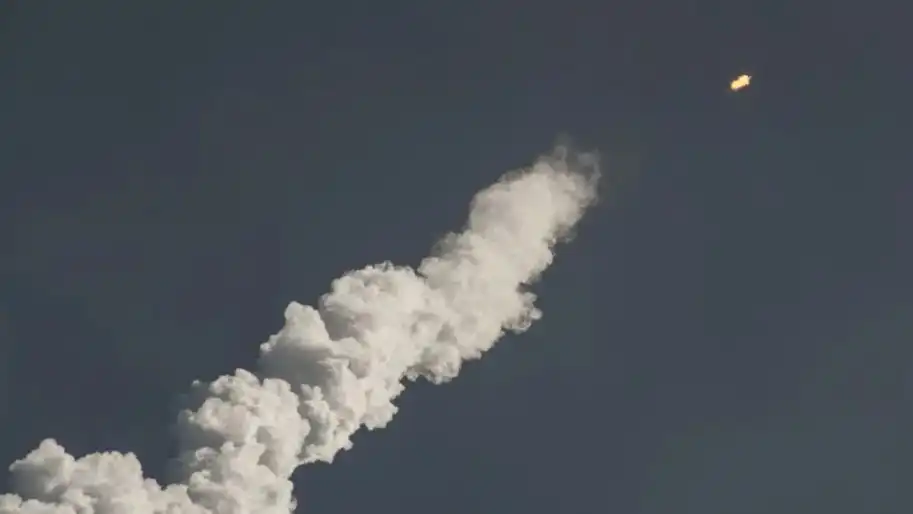

The Ukrainian Air Force can shoot down the russians' new Oreshnik ballistic missile with the anti-aircraft and anti-missile weapons they have, but only after its warhead splits into six parts, NV reports, citing its sources in the security and defense sector.
The publication's sources added that although the Kedr is a recent russian development, it is still a modernization of Soviet technology.
"When the missile gains altitude, the main blocks are divided into six combat units. At present, it may be difficult for Ukraine to shoot down such missiles," the publication quotes its sources. "The most likely option for their destruction may be to shoot down individual blocks, rather than the entire missile."
The russians use the Oreshnik against Ukraine to intimidate allies, including by demonstrating the ability to deliver a nuclear strike, and to encourage the West to turn to the path of peace negotiations.
Another source told the publication that Ukraine is currently discussing with the United States the potential acquisition of means that will allow it to neutralize intercontinental ballistic missiles. The talks are probably about the updated Patriot or Aegis or THAAD missile defense systems. This weaponry became relevant for the Defense Forces after the strike on Dnipro on November 21, when everyone believed that the russian federation had attacked Yuzhmash with the RS-26 Rubezh ICBM.
Recall, as reported by the Ukrainian News Agency, on November 21, russia attacked Dnipro with an experimental medium-range ballistic missile Oreshnik (Kedr), which can carry a nuclear warhead. The aggressor currently has from two to ten such warheads, and at least ten tests are required to begin serial production.
It is possible that one of these tests was the attack on Yuzhmash, because fragments of telemetry, necessary for measuring flight parameters, were found at the hit site. However, experts suggest that Oreshnik could have disintegrated on the approach to the target due to entering the dense layers of the atmosphere at a speed of 2 km/second.
Who we are: About us, Contacts. How we write news and our principles: Editorial code. We did our best. If you found this valuable – please support us.
To request a correction, please send an email.