
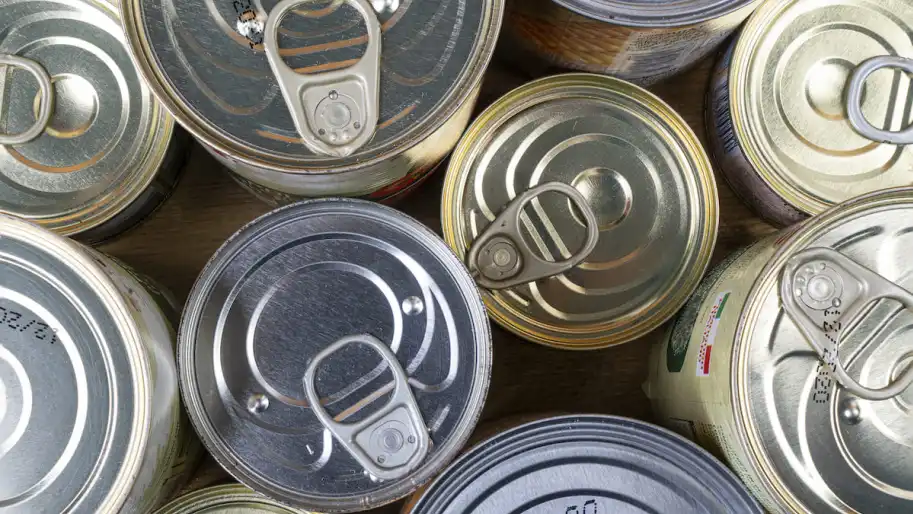

Residents of the countries of the European Union are recommended to stock up on at least three days' worth of food in case of war or a major emergency.
As Newsweek reports, this is stated in a 165-page report on civil defense and military preparedness of the European Union.
The report, which was written by the former president of Finland, Sauli Niinistö, states that the European Union was not prepared either for the COVID-19 pandemic or for russia's aggression against Ukraine. The authors of the document stated the need to move from reactive measures to proactive preparedness.
As part of the new strategy, European governments should advise their citizens to be prepared for self-sufficiency for at least 72 hours in the event of war or other emergency.
EU countries are recommended to develop and provide their citizens with instructions on food stockpiling, evacuation and access to emergency services.
The research cited in the report discusses the various essential items that households should have in case of an emergency. These include supplies of food, drink and medicine, a flashlight and a battery-powered radio.
"We do not have a clear plan on what the EU will do in the event of armed aggression against a Member State. The threat of war posed by Russia to European security forces us to address this as a centerpiece of our preparedness, without undermining the work to prepare for other major threats," says the report.
The document also proposes other EU-wide measures, including allocating at least 20% of the bloc's total budget to strengthening security and crisis preparedness.
In addition, the EU countries are offered a plan for a wider exchange of intelligence information among themselves.
As the Ukrainian News agency earlier reported, at the beginning of 2024, the Ministry of Civil Defense of Sweden called on the citizens of the country to prepare for war, inspired by the example of Ukraine.
And in March, Swedes were urged to stock up on canned goods and medicines in case of a russian invasion.
We also wrote that in the capital of Poland, they announced their intention to build bomb shelters due to the threat of strikes from russia.
At the same time, the Baltic countries (Lithuania, Latvia and Estonia) called on NATO to revive the conscript army against the background of the threat of a full-scale war with russia.
Who we are: About us, Contacts. How we write news and our principles: Editorial code. We did our best. If you found this valuable – please support us.
To request a correction, please send an email.