
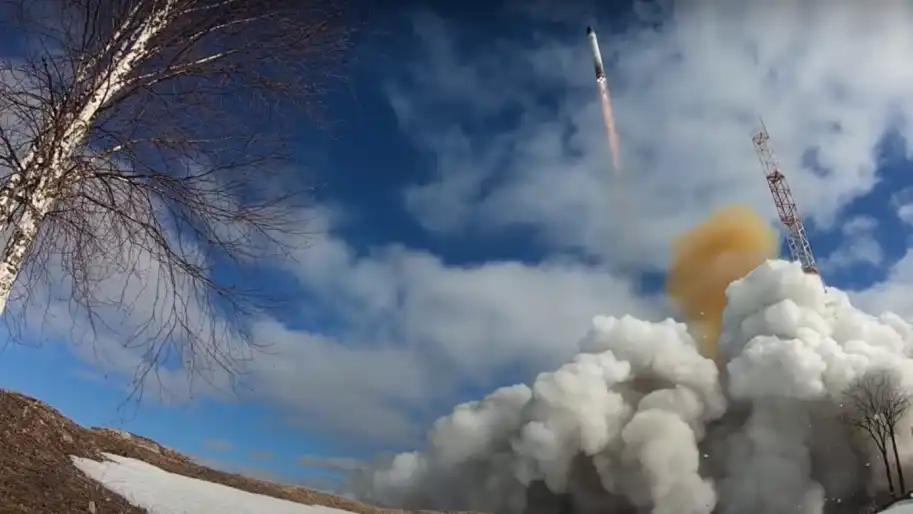

The russian authorities are trying to hide the explosion of the intercontinental ballistic missile RS-28 "Satana" or "Sarmat". Satellite images record a huge sinkhole at the Plesetsk cosmodrome, where such missiles were tested.
Defense Express writes about it.
OSINT analyst MT_Anderson released a satellite image of the russian Plesetsk Cosmodrome, which shows the crater from the explosion of a russian intercontinental ballistic missile. The explosion probably occurred between September 20 and 22, 2024.
As can be seen from the given picture, the launch of the missile could take place from a silo launcher, the launch was unsuccessful and it ended with such a large-scale explosion that only a crater remained at the place of the launch site.
Unsuccessful ICBM launches are an extremely rare phenomenon. The last time this happened was in 1960 at the Baikonur cosmodrome during the first test launch of the intercontinental ballistic missile R-16.
Defense Express analysts believe that in the event of a failed launch of "Sarmat" or "Satana", the russians will not recognize the fact of the explosion and will not disclose the details of the incident. At the same time, the Kremlin regularly threatens the West with the use of such missiles.
My thanks to @MT_Anderson for providing this Planet Labs imagery and allowing me to publish it with comments.
— MeNMyRC (@MeNMyRC1) September 21, 2024
As is readily apparent, the RS-28 Sarmat test was a complete failure. The missile detonated in the silo leaving a massive crater and destroying the test site. The… https://t.co/FuKIaTNFVs pic.twitter.com/AuIpQRrDLa
As Ukrainian News Agency earlier reported, the russian federation conducted a test of an intercontinental ballistic missile, which appears to have failed around the time that US President Joe Biden was in Ukraine, i.e. in February 2023.
Who we are: About us, Contacts. How we write news and our principles: Editorial code. We did our best. If you found this valuable – please support us.
To request a correction, please send an email.