


Ukraine's pharmaceutical market has traditionally been one of the most sensitive and high-risk sectors. It brings together large financial interests, strict state regulation, the ambitions of international manufacturers, and ultimately issues of life and health for millions of people. For this reason, any failures in the system of medicinal product quality control have not only economic but also serious social consequences.
In recent years, the Ukrainian pharmaceutical market has faced more than one crisis at once, including corruption scandals surrounding public procurement, conflicts between manufacturers and pharmacy chains, regulatory confrontations, as well as additional challenges caused by the full-scale war. At the same time, these circumstances have made the market attractive not only to bona fide businesses but also to those seeking "workarounds." More details about one such case — notably involving international business — are outlined below.
Case background
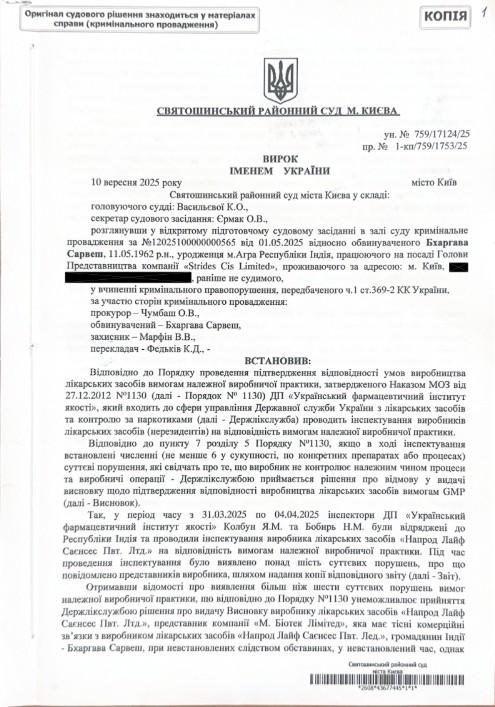
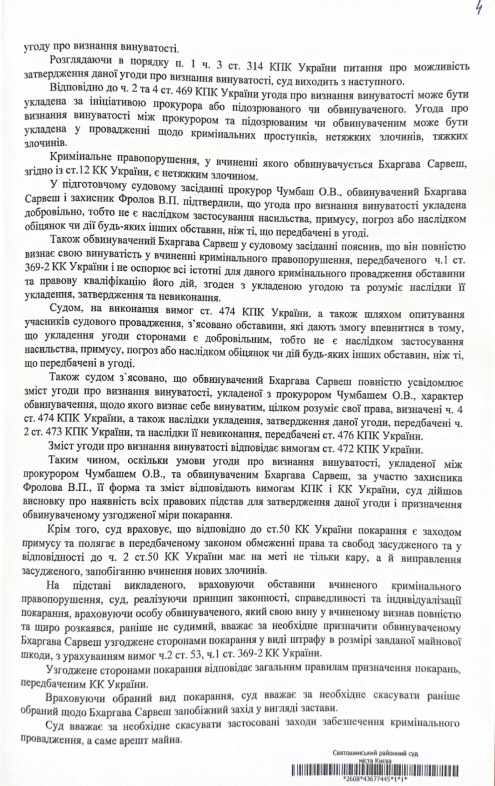
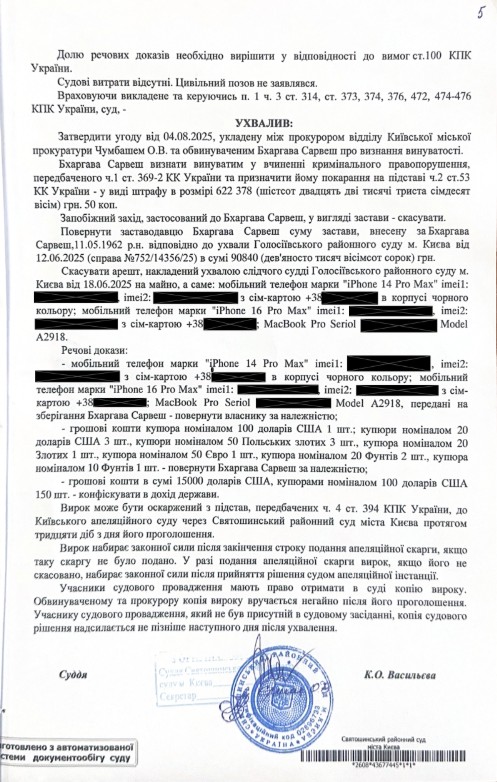
In September 2025, Kyiv's Sviatoshynskyi District Court brought criminal proceedings against Indian citizen Sarvesh Bhargava to a close. Bhargava was a representative of companies linked to a foreign pharmaceutical manufacturer. The court approved a plea agreement concluded between the defendant and the prosecution. This means that the defendant admitted the facts set out in the investigation materials, and the court recognized them as proven.
The essence of the case concerns an attempt to influence the state system for pharmaceutical quality control. The goal was to obtain a positive GMP (Good Manufacturing Practice) conclusion for a foreign manufacturer despite serious violations identified during an inspection.
According to the verdict, in spring 2025 inspectors from the State Enterprise "Ukrainian Pharmaceutical Institute of Quality" conducted an inspection of Naprod Life Sciences Pvt. Ltd. in India. As a result, more than six significant violations of GMP requirements were recorded. Under existing rules, this automatically made it impossible to issue a positive GMP conclusion.
In practice, the manufacturer found itself in a situation where no lawful "quick solution" existed. The only path provided by law was to eliminate the violations and undergo a repeat inspection. It was precisely at this point, according to investigators, that an alternative scenario emerged.
Sarvesh Bhargava, who represented the manufacturer's interests and was keen on quickly bringing its products to the Ukrainian market, decided not to wait for a repeat inspection. Instead of addressing production deficiencies, he sought to influence not the manufacturing process but the outcome of the inspection itself.
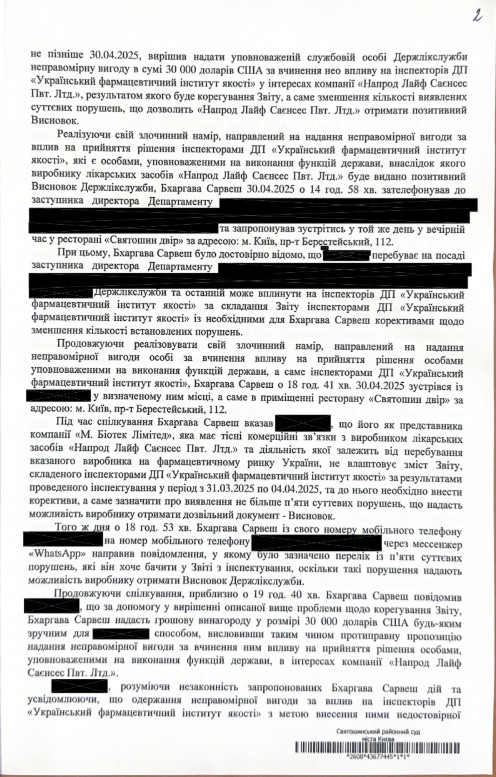
The court established that between April and June 2025 Bhargava was in contact with an official of the State Service of Ukraine on Medicines and Drugs Control who had influence over the work of inspectors and the subsequent preparation of the inspection report. This was not a single interaction: the parties met repeatedly in Kyiv and communicated via messaging apps.
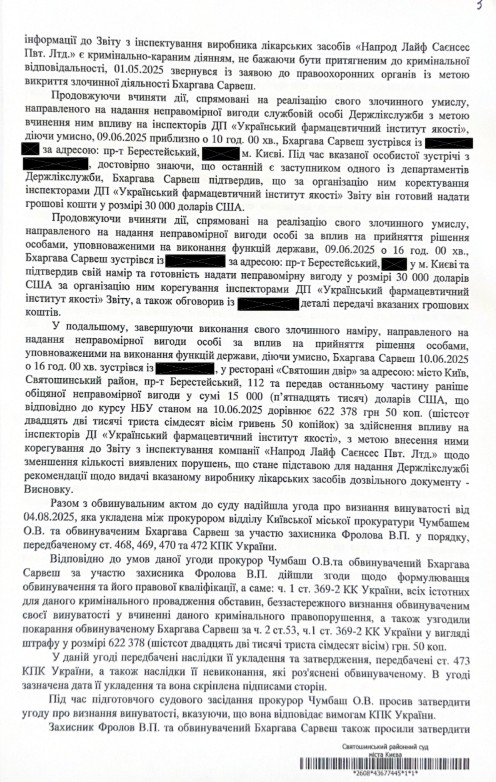
During these contacts, Bhargava offered USD 30,000 for the "adjustment" of the inspection report — reducing the number of recorded violations to a level that would allow the issuance of a positive GMP conclusion despite the actual state of affairs at the production facility.

In June 2025, the first tranche of this amount — USD 15,000 — was handed over at a Kyiv restaurant. These funds were documented by law enforcement, seized, and later confiscated.
A key point in this case is that the official of the State Medicines Service did not agree to the arrangement and reported the attempted bribery to law enforcement authorities. All subsequent actions by the defendant took place under investigative control.
The court emphasized separately that this was not an emotional or accidental act. Bhargava's actions were deliberate and consistent, aimed at achieving a specific result — obtaining a regulatory permit without actually remedying the identified violations.
Ultimately, the court found Sarvesh Bhargava guilty of attempting to influence an official for the purpose of obtaining an unlawful benefit. He was fined UAH 622,378, and previously imposed preventive measures and asset seizures were lifted.
Who is Sarvesh Bhargava?
Sarvesh Bhargava is not a random individual who found himself at the center of criminal proceedings by chance. According to open sources and case materials, he is a representative of international pharmaceutical business who had worked in the Ukrainian market for a long time and had a direct commercial interest in passing regulatory procedures.
In the court decision, he is described as an Indian citizen residing in Ukraine and representing the interests of a foreign pharmaceutical manufacturer. He was directly interested in obtaining a positive conclusion from the State Medicines Service confirming compliance with GMP requirements — a document without which further operations in the Ukrainian market were effectively impossible.
Open business registries indicate that Bhargava has long worked in the pharmaceutical sector. He is associated with several companies, including the Ukrainian LLC "Biotek Consulting," as well as a number of pharmaceutical entities abroad. In the UK Companies House registry, Sarvesh Bhargava is listed as a director of pharmaceutical companies, with Ukraine indicated as his country of residence.
Notably, even long before this case, Bhargava's name appeared in industry publications devoted to the activities of international pharmaceutical companies in Ukraine and Eastern Europe. This creates the image of a person well versed in local rules, regulatory procedures, and market specifics.
For this reason, his actions in this case are of fundamental importance. This was not a misunderstanding or ignorance of regulatory requirements. On the contrary, court materials indicate that Bhargava was fully aware of the significance of the inspection and the consequences of the violations identified, yet chose an attempt to influence the state control system instead of acting within the law.
Why this case goes beyond a single incident
The story involving Sarvesh Bhargava is not an isolated incident that can be written off as an individual mistake or an unfortunate coincidence. It demonstrates a persistent pattern of behavior that Ukraine encounters across various sectors of the economy, but which is particularly dangerous in the pharmaceutical field.
Instead of remedying detected violations, investing in production modernization, or undergoing repeat inspections, some businesses attempt to influence the control system from within. In this logic, state procedures are seen not as safety mechanisms but as barriers that can be "resolved" through intermediaries and informal arrangements.
In the pharmaceutical industry, such practices are especially dangerous. This is not about market competition or commercial interests, but about the quality and safety of medicines that reach patients — often people in critical conditions for whom these drugs are a matter of life and death.
Such cases undermine trust in the entire regulatory system, create unequal conditions for honest manufacturers, and encourage shadow practices. In the long term, this harms not only the market but also the state, which is striving to build transparent and predictable rules of the game.
Implications for Ukraine
Beyond internal risks, such cases also have an external dimension. Ukraine remains under constant scrutiny by international partners and regulators. Any confirmed attempts at corruption in the healthcare sector damage trust — not only in individual companies, but in the market as a whole.
That is why the publicity of such cases and a clear judicial stance are critically important. The case of Sarvesh Bhargava cannot be dismissed as a "misunderstanding" or a one-off incident. It is a court-proven fact of an attempt at corrupt influence on the system of medicinal product quality control.
For the pharmaceutical market, this is a direct signal: no "arrangements" can replace compliance with standards, and attempts to bypass the system may end not with permits, but with real convictions.
Who we are: About us, Contacts. How we write news and our principles: Editorial code. We did our best. If you found this valuable – please support us.
To request a correction, please send an email.