
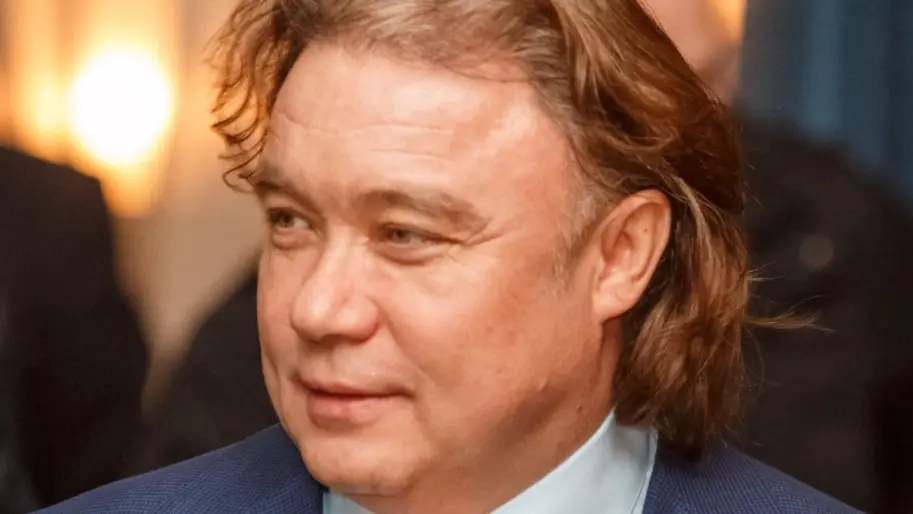

Ukrainian agriculture has long been one of the key sectors of the economy – a sector that not only generates foreign currency revenue but also upholds the country’s resilience during wartime. Despite land losses, logistical constraints, and security risks, the agricultural sector remains one of the few industries that continues to grow, invest, and create new jobs.
Serhiy Tarasov, an entrepreneur with more than 30 years of experience and founder of I&U Group, one of the most prominent agricultural groups in central Ukraine, speaks with us not so much about yields or markets, but about how agribusiness is transforming, how EU accession is reshaping its trajectory, and which challenges post-war recovery will bring – particularly the return of tens of thousands of veterans.
"You have been in agribusiness for more than three decades. Which change has been the most important for the sector in terms of development rather than technology?"
The greatest change has been the emergence of responsibility.
In the 1990s, everyone was simply trying to survive and find their niche. Today, an agricultural producer is not only about land and harvests – it is about environmental standards, cooperation with communities, financial transparency, and fair relations with landowners.
When I&U Group underwent an EBRD audit ahead of financing our biogas complex, we essentially proved that Ukrainian agribusiness can operate under the strictest European rules. It completely shifted the company’s internal mindset.
"There have been public accusations concerning I&U Group and you personally. How do you comment on this?"
Our position is very straightforward: we operate openly and within the law.
All I&U Group companies function at their registered legal addresses, pay taxes, and undergo regular state and international audits. This is confirmed not by words but by dozens of documents.
As for the cases mentioned in the media – the investigation is ongoing, and we respect this process. There are no verdicts, no proven facts, and not a single case involving me or any I&U Group employees has been sent to court. We provided investigators with a full package of documentation and are interested in the investigation being completed as quickly and objectively as possible.
Regarding claims that I am "hiding" – that is simply untrue. I am available to investigators, always in contact with law-enforcement bodies, and I have already testified in court more than ten times. My location and contact information have long been known. Moreover, I regularly send formal requests to state authorities asking to be questioned. Many public figures and interpretations – such as "Tarasov appropriated land" – are distortions of reality that still need to be proven or disproven.
The fact remains: during the EBRD’s due diligence, which examined our entire land bank, no violations were found. The investigation continues, but there has been little progress. We are ready for any inspection because we are confident in the legality of our activities and want all questions resolved once and for all.
"Given the challenges and shocks of wartime and internal turbulence, what defines a successful agribusiness today?"
Balance. Between technology and the human factor. Between profit and responsibility. Between today’s business and tomorrow’s community resilience.
We have 30 enterprises, 40–50 thousand hectares, and more than two thousand employees. But no matter how it sounds, the most important thing is not scale – it is trust. Landowners who have worked with us for decades. Communities that know we are not "outsiders." These things cannot be captured in any report.
"You are actively developing bioenergy. How realistic is it for this sector to become one of the pillars of Ukraine’s economy?"
Very realistic.
First, it is environmentally sound. A 6 MW biogas complex reduces more than 24,000 tonnes of CO₂ annually.
Second, it strengthens energy independence. The less we depend on fossil fuels, the stronger the country becomes.
Third, it enables processing. The world is moving toward a circular economy. The more waste we convert into energy or products, the closer we align with EU standards.
"Much is being discussed about the future of agriculture after Ukraine joins the EU. What prospects do you consider realistic?"
The EU is not only a market – it is a system of standards. And to be honest, we have already been operating under these standards for quite some time. Audits, environmental requirements, logistics rules – none of this is new for us.
Looking ahead, the greatest potential lies in:
- processing of grain and oilseeds,
- export of finished products,
- bioenergy production,
- digitalisation,
- education and workforce development.
The agriculture of the future is not "a tractor and a field." It is analytics, drones, artificial intelligence, and international standards. Ukraine is already part of this process.
"Let’s talk about human capital. After the war, thousands of veterans will return to rural areas. You are preparing dedicated projects for them. What exactly do you plan?"
This is likely our greatest responsibility in the coming years.
We are developing a social centre and training school for veterans and their families based at our agricultural complex. These will be practical, hands-on programs – not "theoretical" ones:
- how to start your own agribusiness,
- how to manage a small farming enterprise,
- how markets, contracts, and logistics work,
- how to apply modern agricultural technologies,
- how to work in bioenergy, processing, and livestock.
A crucial component is psychological and social reintegration. Veterans must return not just home, but to a life where they can work, earn, learn, and feel supported.
"Your companies regularly support local communities. How do you determine what is truly important to them?"
The simplest approach is to listen.
Support for orphanages, assistance to schools and hospitals, development of sports programs – none of these are "top-down projects." These are initiatives that come directly from people.
Supporting children of fallen soldiers is a separate priority for us. We provided full support and meals during events held for Children’s Day. This should become standard practice for all companies.
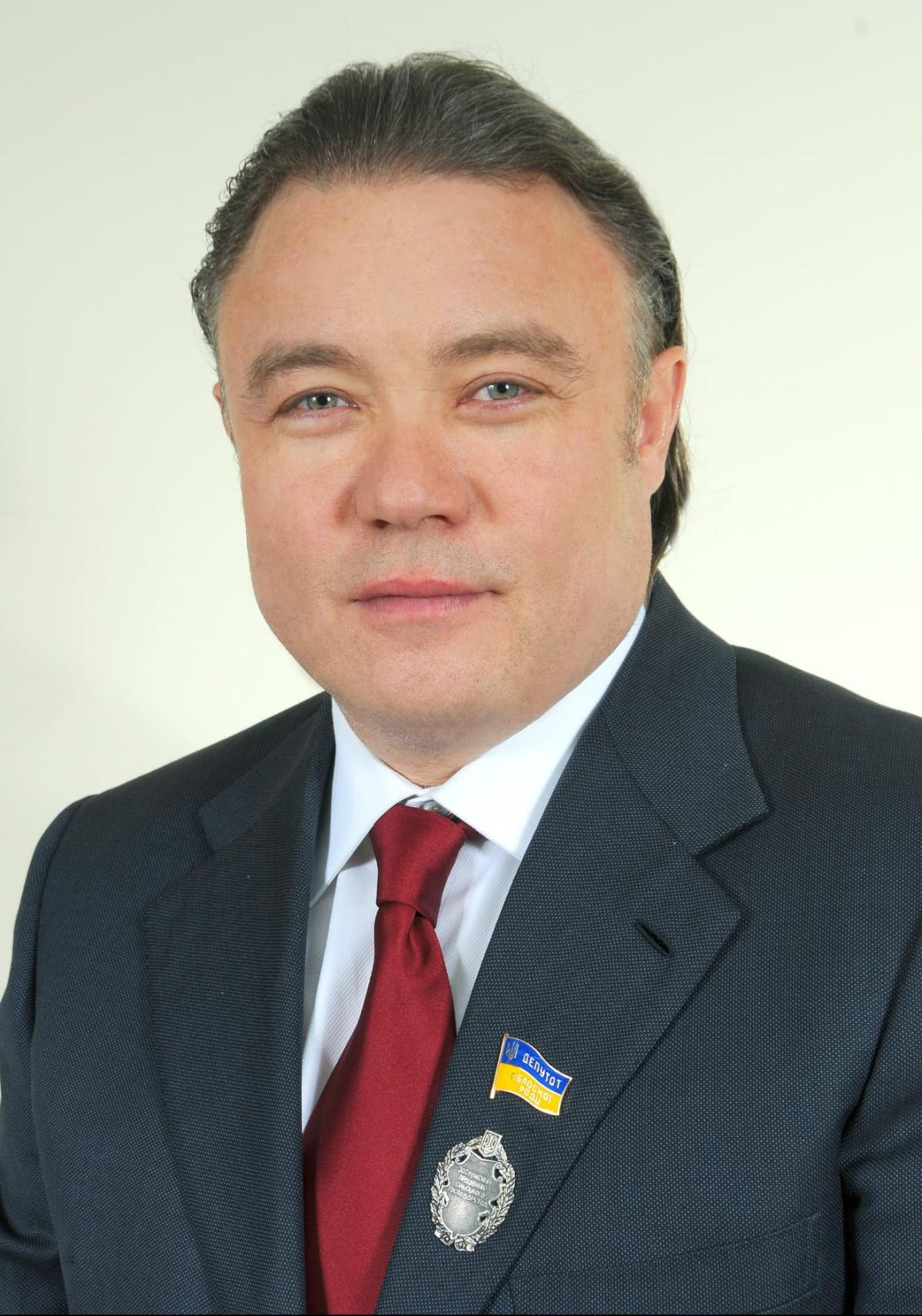
"You have diplomatic experience as Honorary Consul of Lithuania. How does this influence your vision of Ukraine’s development?"
Diplomacy teaches you to look broader. Lithuania is a small country with significant influence. It managed to modernise education, digitise the state, and build a knowledge-based economy.
Together we launched several projects in Ukraine – "My School," "Deka Office," and initiatives on digital textbooks. This shows that even in agribusiness, you must think more broadly – about education, technology, and international connections.
"Finally, after everything the country has been through, what is your personal definition of success today?"
Not awards and not rankings.
For me, success is when an employee has worked in the company for twenty years and brings his son to join; when a landowner such as Ms. Valentyna Vyshnevska, who is 95, continues to trust us with her land; when a community uses a new sports field or medical facility.
And also – when a soldier returning from the front knows that here, in his village, he is needed and has a place to start a new life.
If we preserve our people, we will rebuild our country. And this is our shared responsibility – both for business and the state.
Who we are: About us, Contacts. How we write news and our principles: Editorial code. We did our best. If you found this valuable – please support us.
To request a correction, please send an email.