
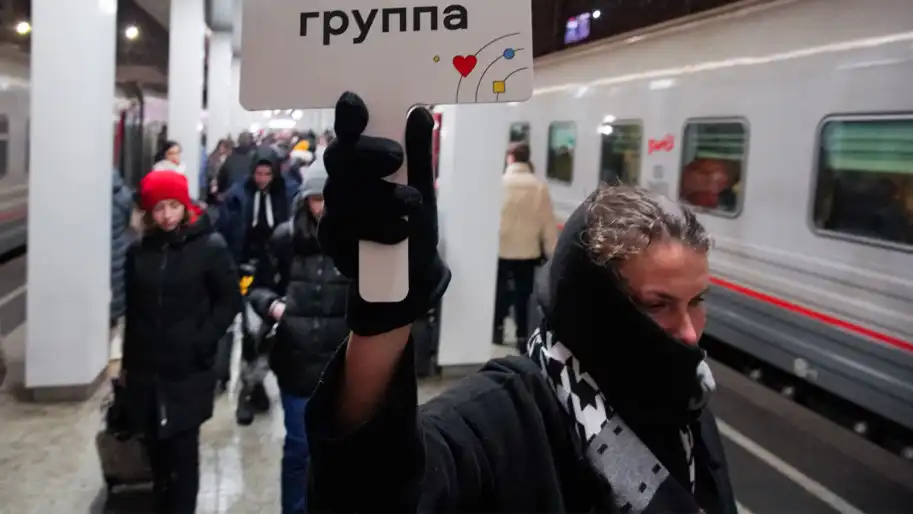

The authorities of the terrorist country of the russian federation removed at least 285 Ukrainian children from the occupied territories of Donbas, who were then sent to orphanages.
This is stated in the joint investigation of the anti-putin publications Vazhnye Istorii [Important Stories] and Verstka.
The first questionnaires of Ukrainian children deported to russia began to appear in data banks at the beginning of October 2022 - a week after russian president vladimir putin announced the annexation of Ukraine's Donetsk, Luhansk, Kherson and Zaporizhzhia Regions.
Most of the questionnaires (263 children) got to the bank in October and November 2022, another 14 appeared in 2023.
According to journalists, children taken out of Ukraine were placed in institutions in at least 15 regions of russia. Journalists found the most questionnaires in Oryol (38 children), Nizhny Novgorod (28) and Rostov (27) Oblasts. However, many more children could be sent to these regions. So, for example, it is known that a total of 66 people turned up in the Oryol Oblast.
Most questionnaires (214) stated that russians can adopt children because their parents have died or have been deprived of parental rights. Another 71 children can only be taken into custody. These are children whose parents are in a colony, have limited rights, or whose whereabouts are unknown.
It is not known whether children from the data bank are actually given up for adoption. But during the preparation of the investigation questionnaire, 98 children disappeared from the bank. According to the law, a child is excluded from the data bank only in cases of transfer to a family, return to parents, coming of age or death.
Only in 17 cases the children have already turned 18 years old, and at least five children were returned to their relatives in the occupied territories. Investigators assume that the remaining 76 children were placed in russian families for upbringing.
Currently, at least 187 children from Donbas who ended up in russia still live in orphanages or study in colleges. At the same time, 90% of them are older than 10 years, while all children younger than five have already been taken to families. Some children maintain contact with relatives in the occupied territories - this also deters potential guardians.
Who we are: About us, Contacts. How we write news and our principles: Editorial code. We did our best. If you found this valuable – please support us.
To request a correction, please send an email.