


More and more countries around the world are joining in recognizing the Holodomor of 1932-1933 as genocide against Ukrainians. In this ideological struggle, the National Museum of the Holodomor-Genocide plays a key role: this institution shapes the Ukrainian vision of the events of 90 years ago. At the same time, the Museum's development has been on hold for a long time due to lack of funding until a key intervention in 2021. Just months before Russia's full-scale invasion, the Petrovskyi family stepped in to update the Memorial’s exhibits.
The Holodomor Museum: Active Development and Years of Stagnation
The Holodomor-Genocide, the largest and most horrific attempt in history organized by the communist totalitarian regime to annihilate Ukrainians, still echoes after 90 years. As of early 2024, this crime has been recognized as genocide by 32 countries, the European Union, and the Council of Europe. Others, including the Netherlands and Italy, are on the verge of similar acknowledgments, with one chamber of their parliaments already approving resolutions. These acts serve not only as sanctions against Russia, which has spent over nine decades obscuring the Holodomor's truths but also as crucial steps in presenting an accurate account of the 1932-1933 events. This understanding is vital for the global community to grasp the nature of the ongoing Russo-Ukrainian war, emphasizing the continued threat to Ukrainian sovereignty.
The global recognition of the Holodomor-Genocide was a task spanning generations. It faced significant hurdles, particularly within Ukraine itself. In the first 15 years of independence, a combination of silence, repression, and the influence of Moscow's agents in power meant that the tragedy of the genocide remained largely unrecognized. This changed in 2006 when the Verkhovna Rada enacted the "On the Holodomor of 1932-1933 in Ukraine" law, initiating the construction of a National Memorial. Between 2007 and 2009, the initial stage of Holodomor Museum was constructed, including its memorial component: The Candle of Memory. Nearby, the Millstones of Destiny is a monument showcasing a poignant sculpture of a girl – a representation of the millions of Ukrainian children who perished from starvation.
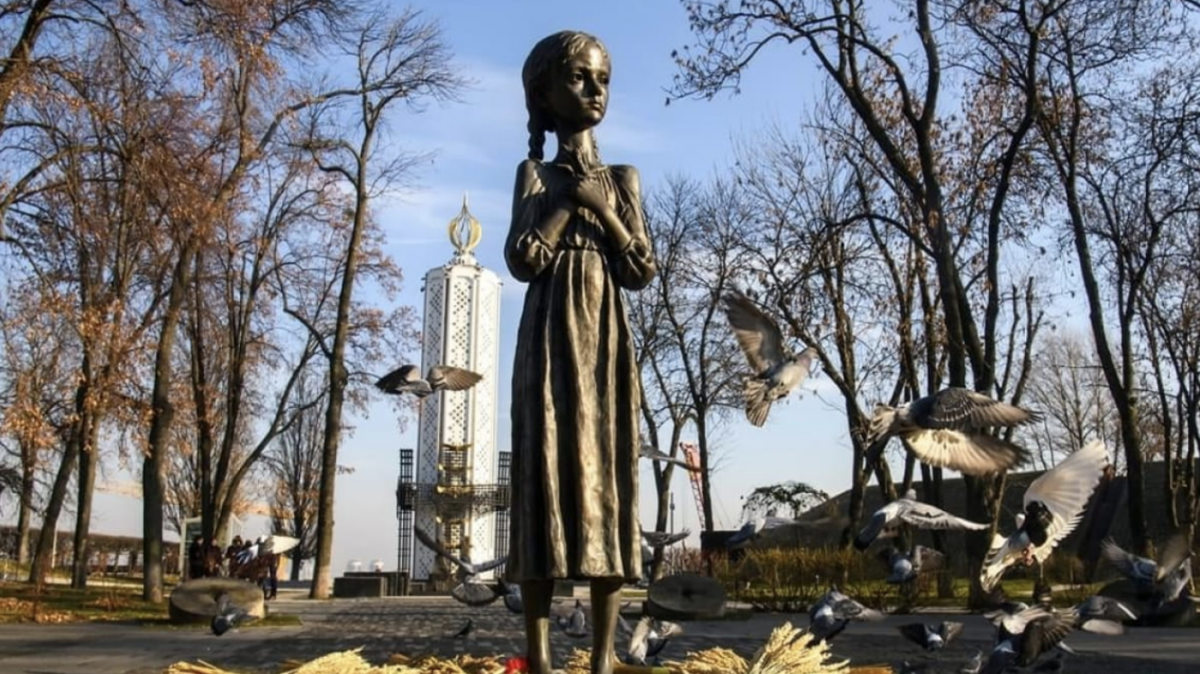 National Museum of the Holodomor-Genocide in Kyiv
The Holodomor-Genocide Museum, given national status in 2010, has become more than a memorial for Ukrainians. It's a focal site of remembrance and a symbol of renewed awareness. For Moscow, however, it represents a significant irritant. The construction of the second phase, including the museum and research components, was notably stalled under the presidency of Yanukovych, widely regarded as a Russian puppet. The development of the main memorial part of the Museum was also suspended. The exposition was not updated for a long time and gradually began to lose its relevance. Yet, the ideological and political significance of this institution cannot be overestimated: official foreign delegations visiting the capital of Ukraine continued to attend the Holodomor Museum according to protocol. Thus, the international recognition of the genocide of the Ukrainian people directly depended on the content of the exhibition and its quality. The situation was remedied only a few months before the start of the full-scale Russian invasion.
An Ideological Blow to the Kremlin: The Museum's 2021 Re-Exposition
On September 7, 2021, with the support of patrons, the National Museum of the Holodomor Genocide unveiled its updated Hall of Memory exhibition. Coinciding with this was the International Forum "Mass Man-Made Famines: Remembering and Commemorating" held in Kyiv. A groundbreaking revelation at this forum was the forensic analysis data, which reported the staggering number of killed Holodomor victims: 10.5 million Ukrainians, including 4 million children. These two events struck a chord against Kremlin narratives, triggering a wave of outrage among Russian propagandists.
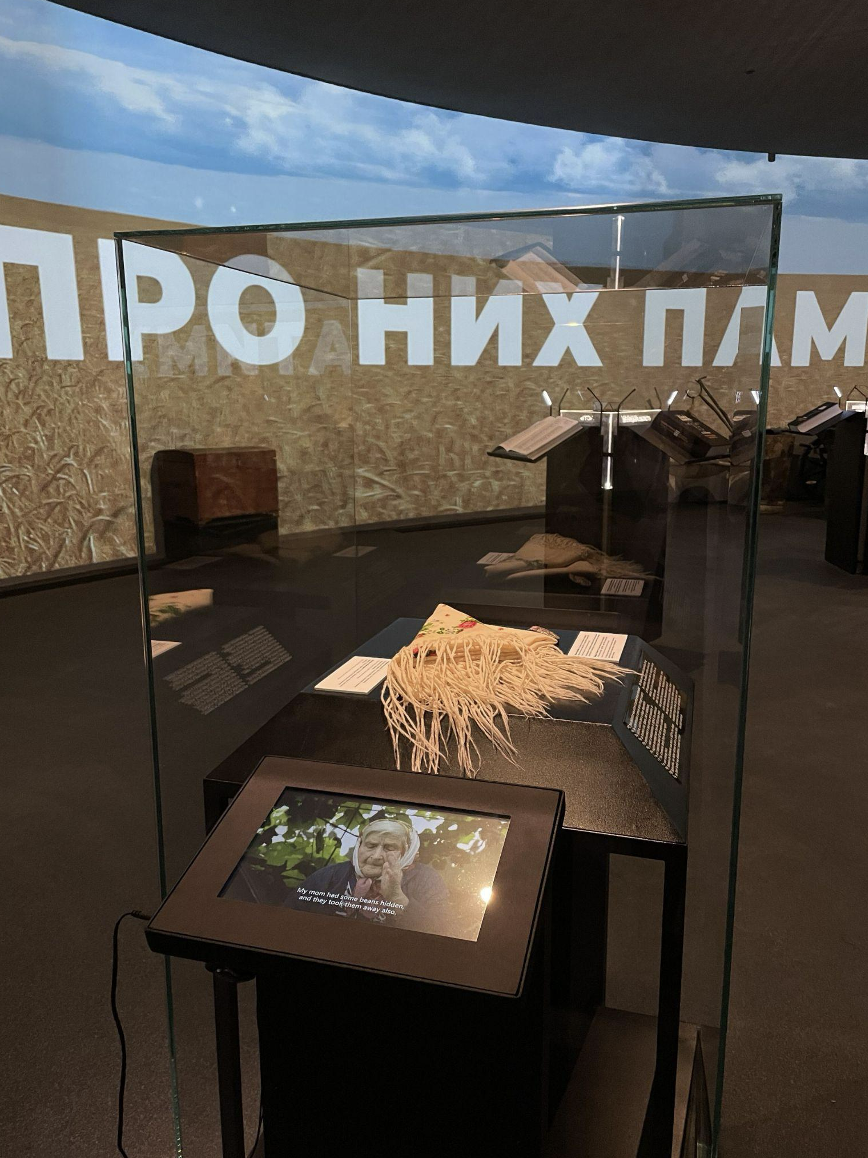 The updated exposition of the Holodomor Museum's Hall of Memory
The Hall of Memory in the Holodomor Museum stands unique in the museum complex, showcasing archival materials, photographs, eyewitness testimonies, maps, and more, all transporting visitors to the harrowing 1930s. For over a decade, this exhibition remained largely unchanged. This stagnation meant that the Museum was falling behind its Western counterparts and losing appeal. The much-needed re-exposition was not just a matter of funding, but also required a fresh vision – fortunately, both were eventually secured.
In April 2021, a partnership was formed to revitalize the Hall of Memory at the National Museum of the Holodomor Genocide. Olesia Stasiuk, the museum's director, and Oleksandr Petrovskyi, president of the Solidarity International Charitable Foundation, signed a memorandum for co-financing the re-exposition. Petrovsky, a renowned philanthropist, urged Ukrainians worldwide to back the initiative. Emphasizing the significance of the project, he stated, "This is our tragedy, the tragedy of this land, our state, our Ukraine. I want us to remember this so that it never happens again on our land."
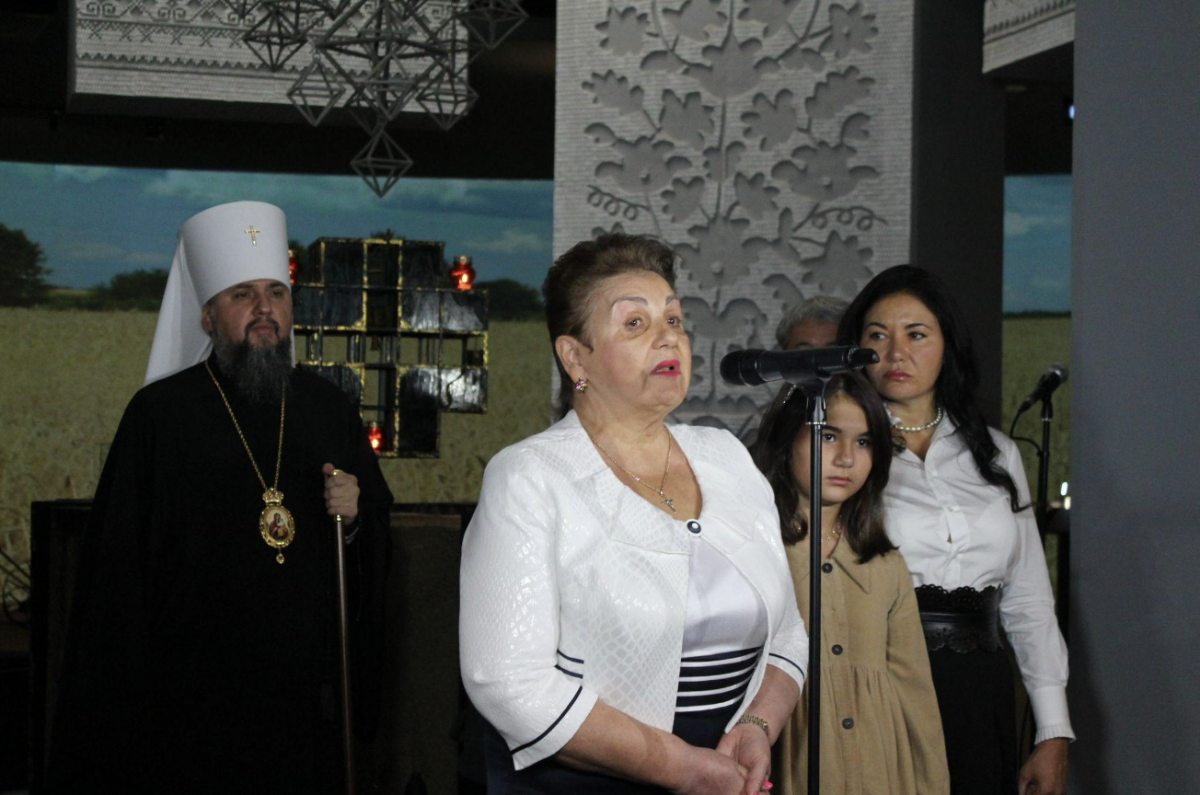
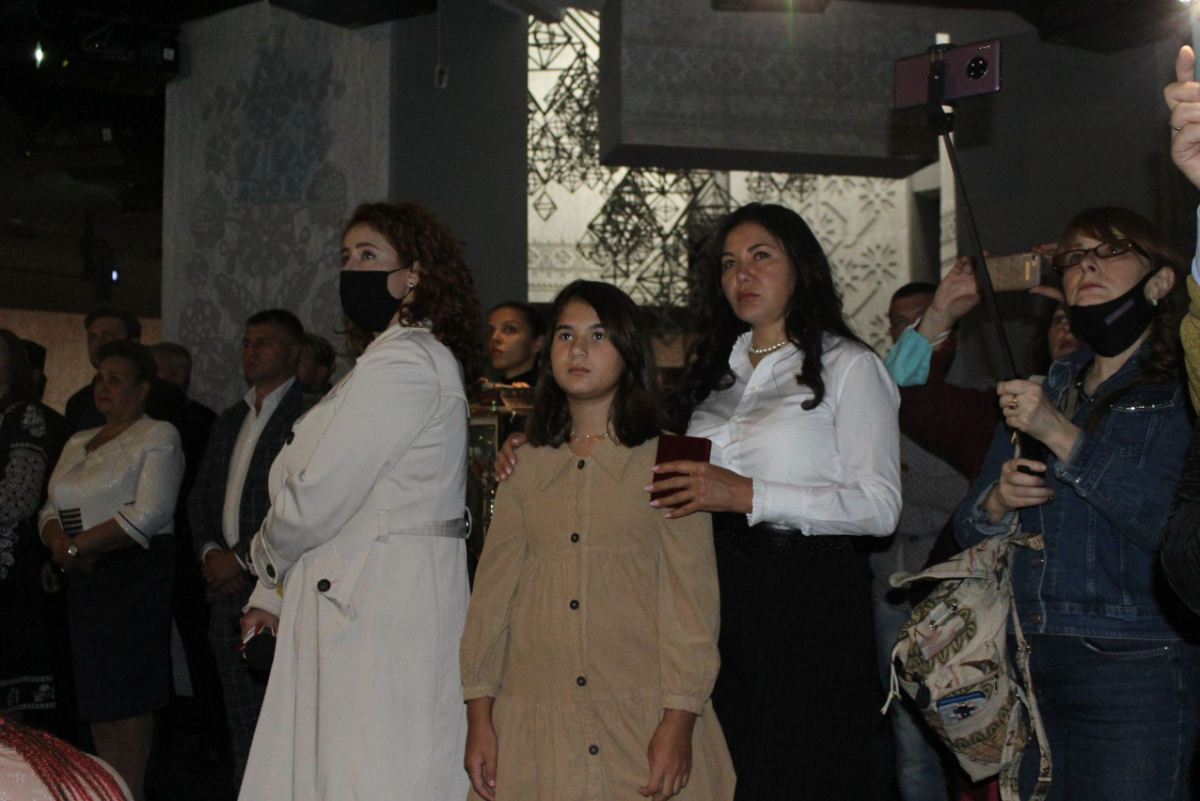 Anzhelika Petrovska with her daughter Oleksandra during the opening of the renovated Hall of Memory of the Holodomor Museum, September 7, 2021
The project kicked off immediately. By May, a new concept for the Hall of Memory was developed in collaboration with experts. The Orthodox Church of Ukraine also actively participated – moreover, Metropolitan Epiphanius of Kyiv and All Ukraine attended the opening of the new exhibition. Anzhelika Petrovska, a representative from the Solidarity International Charitable Foundation, played a crucial curatorial role, later acknowledged by the National Security and Defense Council of Ukraine. The project was centered around innovation and interactivity.
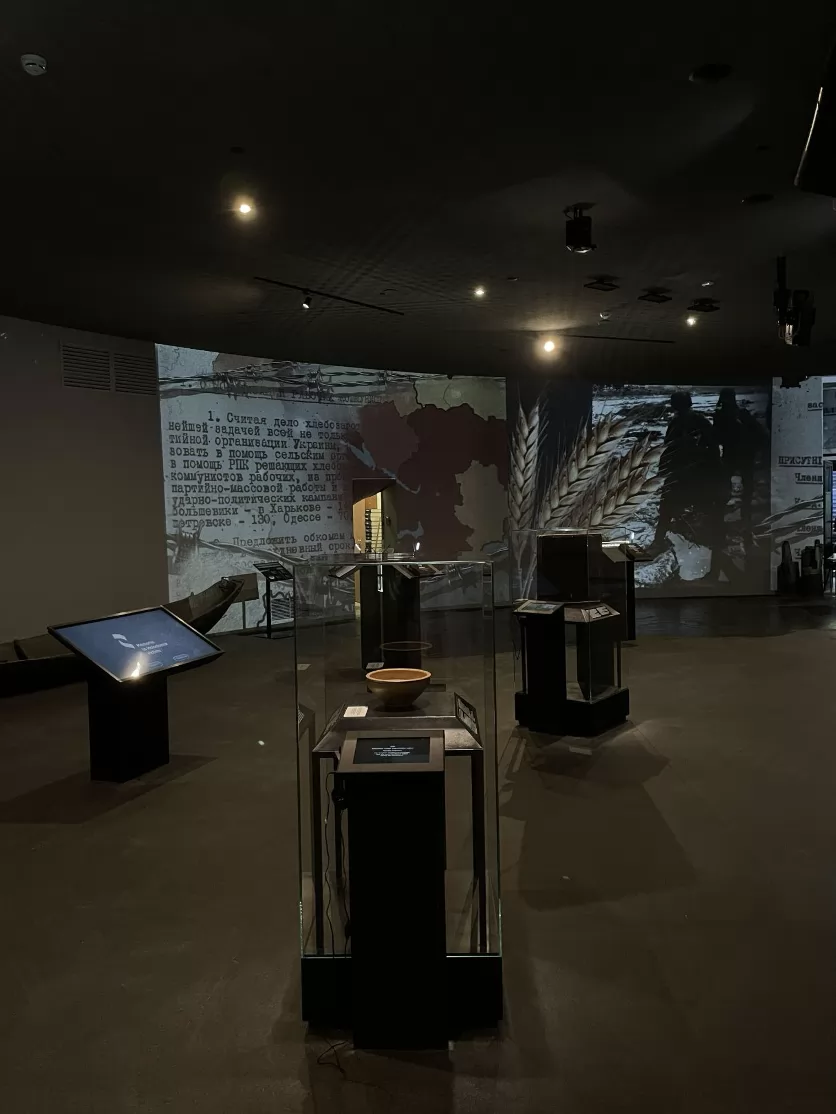 The updated exposition of the Hall of Memory of the Holodomor Museum
The Hall of Memory's transformation included new interactive features like memory books with touchscreens and an audio guide available in thirty languages, providing eyewitness accounts. The exhibition expanded to incorporate recent historical research, especially on Ukrainian resistance to the communist totalitarian regime between 1930-1932. What captivates visitors the most is the multimedia installation with complex graphic animation, including 3D mapping. This technology brings to life a 10-minute film narrated by a character named Oksana, who recounts her family's experience during the Holodomor. Representing the collective experience of millions of Ukrainian children, this narrative is voiced by 10-year-old Oleksandra Petrovska – the great-great-granddaughter of Ukrainians who were starved to death in 1933. The film is available in Ukrainian and English.
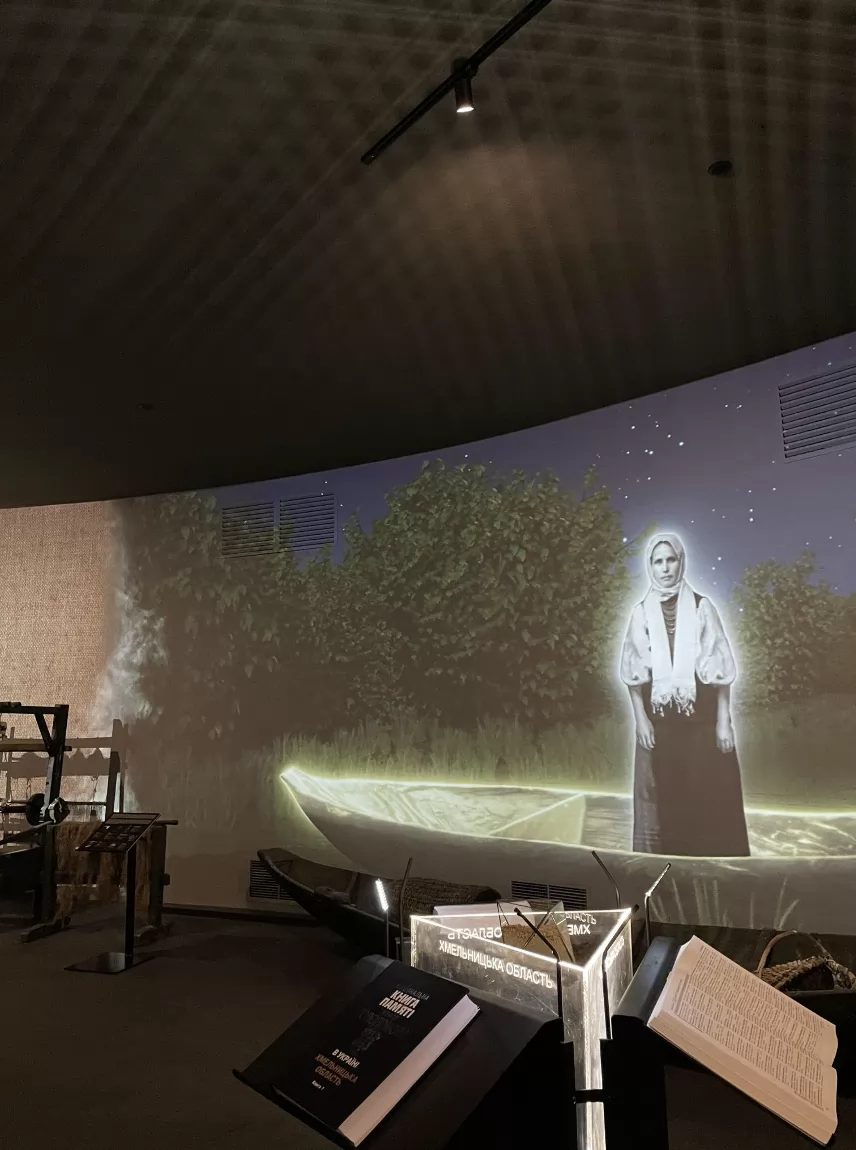 The updated exposition of the Hall of Memory of the Holodomor Museum
Linking Generations: The Petrovskyi-Vovk Family during the Holodomor
For the Petrovsky family, remembering the Holodomor-Genocide is not just a historical responsibility but a deeply personal matter. Philanthropist Oleksandr Petrovsky's mother, Oksana Petrovska-Vovk, an Honored Artist of Ukraine, hails from Bodakva in the Lubny region. She is a descendant of the ancient Cossack family of Vovk, which survived the genocide. In the Poltava region's book of memory, six of her relatives are listed among those who starved to death, including her great-grandmother Maria and her son Yakiv Panasovych Vovk.
 Oksana Petrovska-Vovk
In Bodakva alone, the communists starved to death over a hundred people, as confirmed by the National Book of Memory. In particular, 81 of the murdered Bodakiv residents were identified by name. The town, along with others in the Lokhvytsia district, was targeted and besieged by the communists. This was retaliation for a large-scale uprising in March 1930, where at least 800 locals, primarily descendants of Cossacks opposing collectivization, stood against the forced establishment of collective farms. Across Ukraine, the Chekists recorded 1,500 similar uprisings involving more than a million people, representing a largely forgotten struggle for independence. Forensic experts have indicated that one of the objectives of the Holodomor genocide was to suppress the Ukrainian national liberation movement.
Under Communist rule, even mentioning the famine was a repressible offense, and commemorating murdered relatives was forbidden. Despite these challenges, Oksana Petrovska-Vovk's family maintained their generational bonds and the memories of the 1932-1933 hardships. By supporting the re-exposition of the Holodomor Museum's Hall of Memory, the Petrovsky family not only honors their own past but also aids in restoring the memories of countless Ukrainian families affected by this tragic history.
In September 2021, Anzhelika Petrovska, the project curator for the Holodomor Museum, emphasized the museum's significance as a destination for foreign delegations. At that point, no one could have predicted that the next two years would witness a remarkable development: 15 additional countries officially recognized the Holodomor. Similarly, few could have imagined that Moscow would decide to organize a new genocide of Ukrainians in the 21st century.
The events of the 1930s and current events are directly related. Therefore, a just punishment of Russia for the current crimes against the Ukrainian nation is possible only if the world understands the crimes of the totalitarian Moscow regime 90 years ago. The memory of the Holodomor gives Ukrainians the determination and grounds to demand an international trial of those who have been trying to wipe them off the map for centuries.
Maksym Omelchenko, special to Ukrainian News Agency.
Who we are: About us, Contacts. How we write news and our principles: Editorial code. We did our best. If you found this valuable – please support us.
To request a correction, please send an email.