
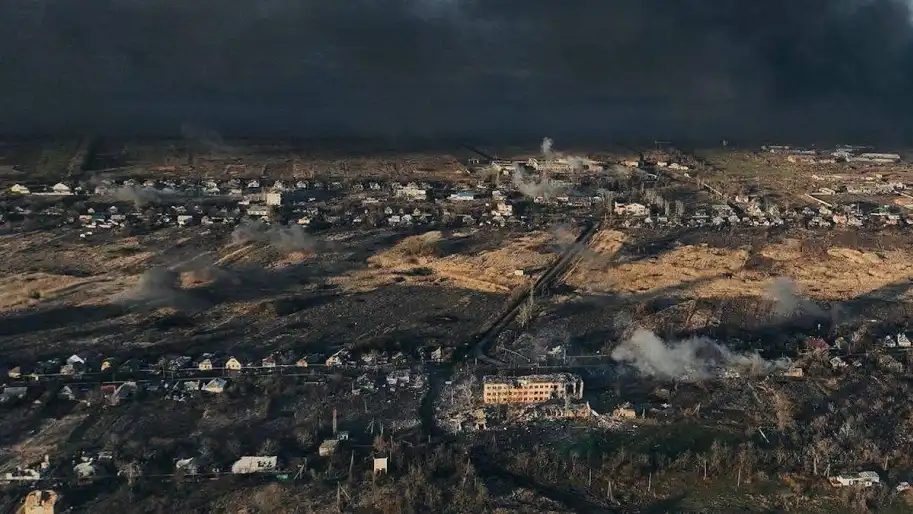

Up to a thousand soldiers of the Armed Forces of Ukraine (AFU) could be captured during the retreat of the Armed Forces of Ukraine from Avdiyivka.
This follows from a statement by the New York Times with reference to the assessments of the military and high-ranking Western officials.
Estimates of the number of captured and missing Ukrainian military personnel vary. Two soldiers interviewed by NYT put the numbers at between 850 and 1,000. Western officials, as the publication writes, find this assessment accurate.
According to the interlocutors of the newspaper, the loss of Avdiyivka was not a major strategic defeat in itself, but the capture of a large number of prisoners "could change this schedule," as the morale of the troops drops after the failed counteroffensive, and because of this, the Ukrainian army has problems recruiting new soldiers.
Western officials believe that the withdrawal of Ukrainian troops was poorly planned and started too late. The reason for the capture of such a large number of soldiers is the chaos that began at the positions.
The situation, as NYT writes, was aggravated by the fact that russian troops surrounded the city from almost three sides. In addition, as the Ukrainian servicemen said, there were communication problems during the retreat, due to which soldiers were captured or remained wounded and killed on the battlefield.
"The speaker of the AFU's Tavria group, Dmytro Likhovyi, denies the capture of hundreds of servicemen. He called it misinformation but admitted that a "certain number" of soldiers went missing," the publication writes.
As the Ukrainian News agency earlier reported, on February 16, the deputy commander of the 3rd separate assault brigade of the AFU, Maksym Zhorin, stated that 60 to 80 russian aerial bombs fall on Avdiyivka every day.
On February 17, it became known that the commander-in-chief of the AFU, Colonel-General Oleksandr Syrskyi, ordered the withdrawal of Ukrainian troops from Avdiyivka.
Who we are: About us, Contacts. How we write news and our principles: Editorial code. We did our best. If you found this valuable – please support us.
To request a correction, please send an email.