
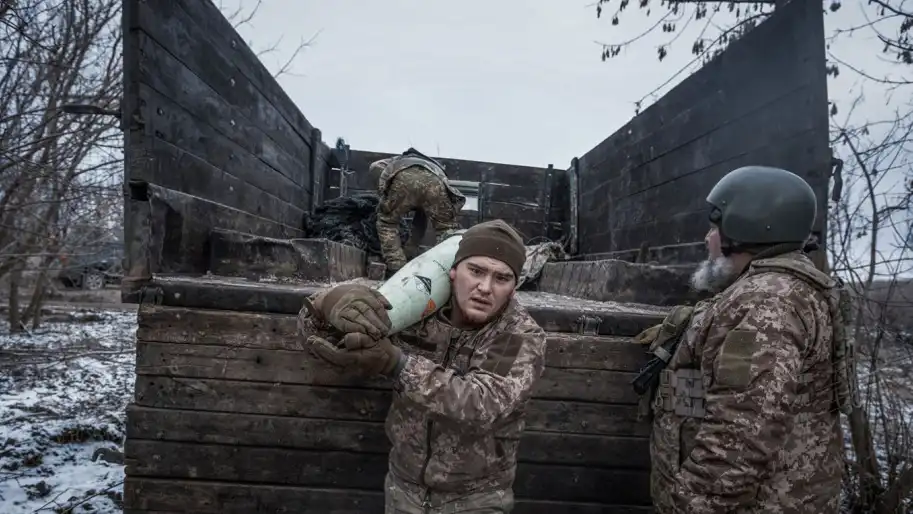

A new aid package to Ukraine, stalled in the fall in the U.S. Congress, led to a sharp reduction in support late last year and early this year. Between November 1 and January 15, Western allies promised to help the Armed Forces of Ukraine with supplies worth EUR 9.8 billion. This is almost three times less than was promised in about the same period a year earlier - EUR 27 billion, of which EUR 21 billion the United States was ready to give to Ukraine, according to a report by the Kiel Institute for the World Economy, which updated data on aid to Ukraine.
The main suppliers of military equipment and ammunition at the end of last year - at the beginning of this year were several major donors, primarily the Nordic countries, Germany and the United Kingdom, which on January 12 pledged GBP 2.5 billion (EUR 2.9 billion) this year.
The total obligations of Ukraine's allies - military, financial, humanitarian - over 2.5 months amounted to EUR 13.8 billion. This is significantly higher than in the period from August to October, when the Kiel Institute gave a preliminary estimate of only EUR 2.11 billion (87% less than in the same period of 2022). The latest figures do not take into account the EUR 50 billion in economic aid approved by EU leaders on February 1.
Although this week the American Senate passed a bill on assistance to allies, which includes USD 60 billion for Ukraine, its fate in the House of Representatives remains unclear. President Volodymyr Zelenskyy will meet with the leaders of Germany and France in the coming days, hoping to agree on an increase in military assistance by European countries. To fully replace the United States in this in 2024, Europe should double its obligations and speed of provision of weapons, notes the Kiel Institute.
To accelerate the production of weapons and increase the capacity of the defense sector, the European Commission proposes to subsidize the European military-industrial complex (MIC) from the general budget of the EU, its chairman Ursula von der Leyen told the Financial Times. Similarly, she said, the EU acted to encourage mass production of coronavirus vaccines and organize joint gas procurement to combat the energy crisis in 2022-2023. The European Commission intends to submit a strategy to support the defense sector by the end of February.
Who we are: About us, Contacts. How we write news and our principles: Editorial code. We did our best. If you found this valuable – please support us.
To request a correction, please send an email.