
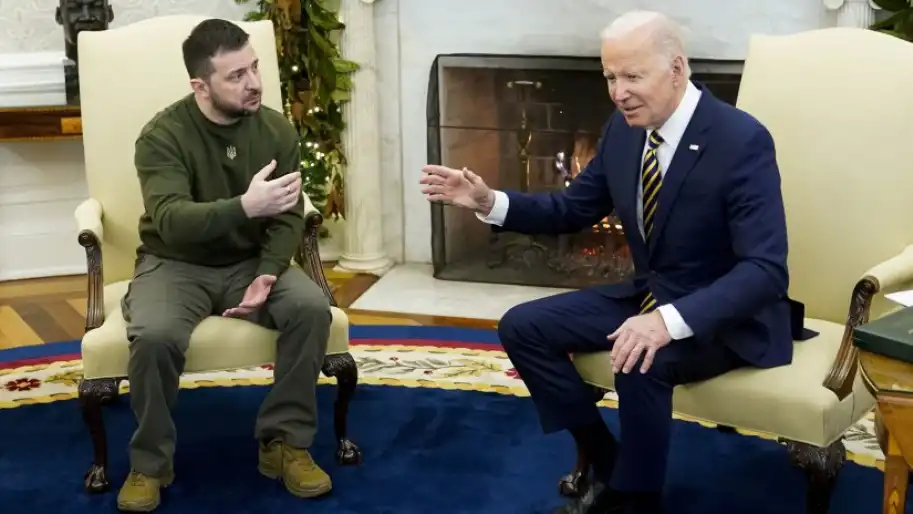

President Volodymyr Zelenskyy predicted during his visit to Washington that the Armed Forces of Ukraine would release Bakhmut by the end of the year, which indicates a difference in the position of Ukraine and the United States regarding the counteroffensive, The New York Times reports.
These plans demonstrate “the gulf between Kyiv and American war planners who believe that Ukraine should be focusing more on the south," reporters said.
According to journalists, some American officials say that “the fight in Bakhmut has become something of an obsession for Mr. Zelensky and his military leaders."
Zelenskyy, at a meeting on Thursday with American editors, also predicted that Ukrainian troops would de-occupy two more cities seized by russia. He didn't say which ones.
And contrary to the expectations of military analysts from the West, Mr. Zelenskyy said that Ukraine would fight throughout the winter, without pause.
“Some American officials have said that the Ukrainian counteroffensive appears likely to fall short of its strategic goals of cutting off, or narrowing, the land bridge between Crimea and the russian border.
Russia’s minefields have proved a potent defense, and the Ukrainian government has been extraordinarily worried about the high casualties that would be caused by any effort to breach those barriers.
U.S. officials said it would soon be even more difficult for Ukrainian forces to sustain a drive forward as the ground becomes soft and muddy. Some officials say that within a few weeks, the Ukrainian army will need time to rebuild their stockpile of equipment and rest forces exhausted by the summer fighting,” the reporters said.
Journalists remind that Washington and Kyiv shared these plans.
"American military officials have wanted Ukraine to push to liberate the city of Melitopol, in the country’s south. While that has been a focus of recent drives, time is growing short for Ukraine to breach russian defenses," the publication reports.
Who we are: About us, Contacts. How we write news and our principles: Editorial code. We did our best. If you found this valuable – please support us.
To request a correction, please send an email.