
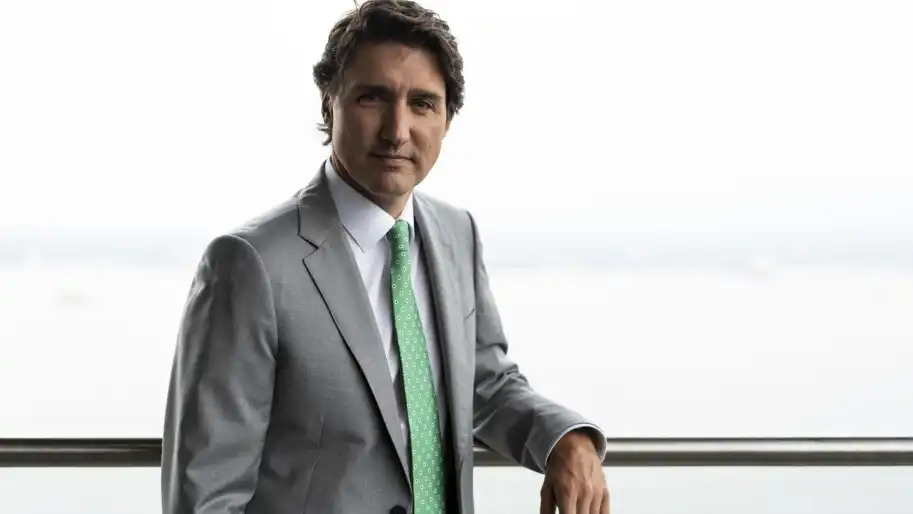

The leaders of the G7 countries understand that russia's war against Ukraine can be long, but they are ready to support Kyiv as long as it takes, Canadian Prime Minister Justin Trudeau said in an interview with Bloomberg.
"We always knew it would be a long process," Trudeau said when asked about Ukraine's counteroffensive.
According to him, from the leaders' conversations within the G7 and NATO, the allies are ready for the fact that the war can last a long time.
"We cannot and must not allow russia to win," he added.
Russia's invasion of Ukraine led to increased geostrategic interest in the Arctic. After Sweden joins NATO, russia will become the only Arctic country not a member of the Alliance.
NATO Secretary General Jens Stoltenberg emphasized the need for allies to allocate at least 2% of GDP to defense. Canada falls short of that target but also says some of its security contributions, such as the Coast Guard, are not counted in the calculations.
Meanwhile, the Trudeau government has pledged CAD 40 billion (USD 29 billion) over 20 years to modernize the Norad continental air defense system. It has pledged to replace aging CF-18 jets with F-35 fighter jets, partly because of concerns about security in the Arctic.
Asked whether decisions on missile defense could change depending on who wins the 2024 US presidential election, Trudeau said decisions about how to contribute to North American security would remain "aligned with the values" of his countries.
Growing threats in the Arctic are fueling the debate about Canada's defense needs. Canada should invest in nuclear-powered submarines to better patrol its vast territorial waters, says retired US Navy Admiral James G. Stavridis.
"Canada is not in the nuclear submarine market. But we already work very closely within the Five Eyes, which includes the three Aukus members, as well as the United States and New Zealand. And we will continue to work as security partners not only in the Indo-Pacific region, the Arctic and the Atlantic, and worldwide," Trudeau said.
Until recently, even when russia became more aggressive -- such as during the 2014 annexation of Crimea, its actions in the Arctic remained low-key, Trudeau said. But that era seems to be coming to an end.
"They're not making a direct threat in the Arctic, but it seems like that's not so much because they're holding back as because they're busy elsewhere. It doesn't look like there's anything holding them back now from being extremely negative players in security issues in the Arctic," he added.
Who we are: About us, Contacts. How we write news and our principles: Editorial code. We did our best. If you found this valuable – please support us.
To request a correction, please send an email.