
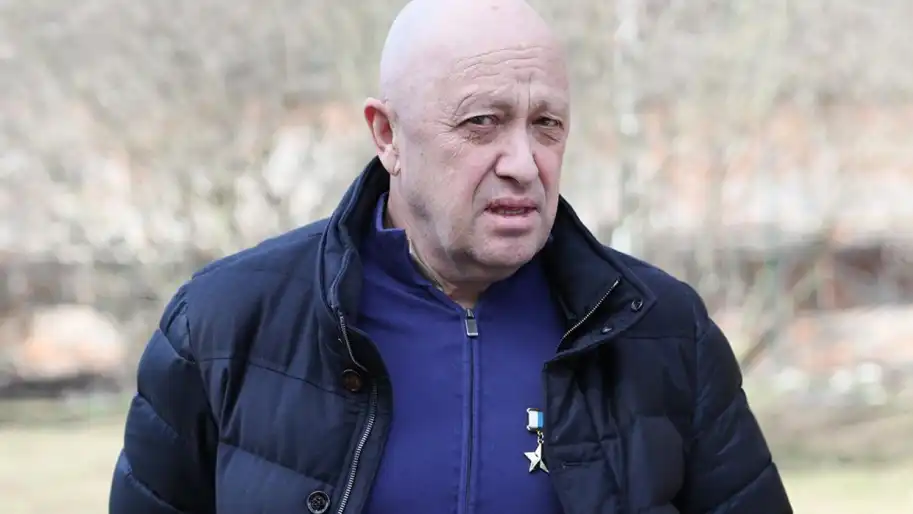

The military uprising of the founder of the Wagner PMC, Yevgeny Prigozhin, and his "campaign against Moscow" showed the weakness of the Kremlin and, most likely, will cause significant damage to the efforts of the aggressor country in its war against Ukraine.
The Institute for the Study of War writes about this.
Experts note that after the situation with the mutiny of the Wagner fighters, the Kremlin is now facing an extremely precarious balance.
The de-escalation deal between Prigozhin and the self-proclaimed president of Belarus, Alexander Lukashenko, is short-term, not long-term, and the mercenary leader's uprising has revealed severe flaws in the Kremlin and the Russian Defense Ministry.
ISW analysts call the speculation that Prigozhin's mutiny, the reaction of the Russian authorities, and Lukashenko's mediation were staged by the Kremlin absurd.
"The image of Putin appearing on national television calling for an end to the armed uprising and warning of a repeat of the 1917 revolution, and then demanding the mediation of a foreign leader to resolve the uprising, will have a lasting impact," the publication said.
The Institute for the Study of War draws attention to the fact that the uprising revealed the weakness of Russian power structures and demonstrated Putin's inability to use his forces promptly to repel an internal threat, further undermining his power monopoly.
Prigozhin's rapid advance on Moscow made a laughingstock of most of the Russian regular forces, and absolutely all representatives of the security services, state-owned enterprises, and other key officials in the Russian government were shown that a private armed force, separated from the central state, could "achieve amazing results."
The report says that the actions of the Wagner fighters also demonstrated the degradation of Russian military reserves, which are almost entirely engaged in fighting in the occupation campaign in Ukraine, and also showed the danger of relying on inexperienced conscripts to protect the borders of the Russian Federation.
Residents of Rostov-on-Don did not oppose the Wagner fighters and, in some cases, even welcomed them, accepting Prigozhin's actions.
In addition, the Kremlin's apparent surprise at the act of the mercenary leader does not reflect well on Russia's internal intelligence service, the FSB. Prigozhin had constantly intensified his rhetoric against the Ministry of Defense of the Russian Federation before his armed rebellion, and Putin failed to reduce this risk.
The ISW report notes that analysts do not predict an imminent collapse of the Russian government, but Prigozhin's rebellion and events in the Russian Federation are likely to cause significant damage to Putin's government and Russia's military efforts in its war against Ukraine.
As the Ukrainian News agency earlier reported, on the evening of June 23, the owner of the private military company Wagner Yevgeny Prigozhin stated that units of the regular Russian army launched a missile attack on Wagner locations. After that, the Wagner fighters from the territory of Ukraine moved to Russia.
The press service of the Belarusian dictator reported that Lukashenko held talks with Wagner's leader Yevgeny Prigozhin and apparently agreed to stop the mercenaries movement on Russia's territory.
After that, Prigozhin announced that he was ending his so-called "march of justice" and returning his mercenaries to their locations.
Who we are: About us, Contacts. How we write news and our principles: Editorial code. We did our best. If you found this valuable – please support us.
To request a correction, please send an email.