
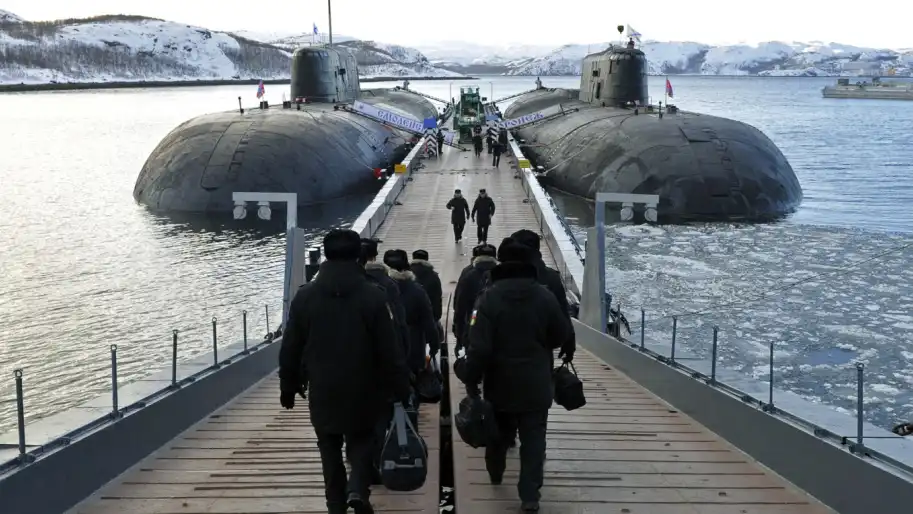

The navy of the terrorist state of the Russian Federation, as well as the army, demonstrated its unpreparedness to wage a full-scale war. At least its surface part. But the entry into confrontation of submarines the West is seriously feared. And during the exercises, NATO countries are practicing measures to track the submarines, including to prevent their possible attacks on underwater infrastructure objects, such as cables and gas pipelines.
Most of the time during the 12-day exercise, which ended on Friday and involved 12 NATO countries, was devoted to tracking an enemy submarine off the coast of Norway and Iceland, according to Bloomberg. In these areas, Russian submarines can disrupt commercial shipping or try to cut off military routes that the U.S. can use to send supplies to Europe. In addition, underwater cables carrying data and electricity can be struck.
NATO Assistant Secretary General for Intelligence and Security David Cattler said this week that Russia "may target underwater cables." According to him, Russian ships are making maps of the bloc's critical infrastructure on land and under water, preparing for strikes on underwater facilities in Europe and North America.
Fearing such attacks, the Polish government approved a bill that would allow the destruction of ships threatening the gas pipeline opened last year from Norway.
Who we are: About us, Contacts. How we write news and our principles: Editorial code. We did our best. If you found this valuable – please support us.
To request a correction, please send an email.