
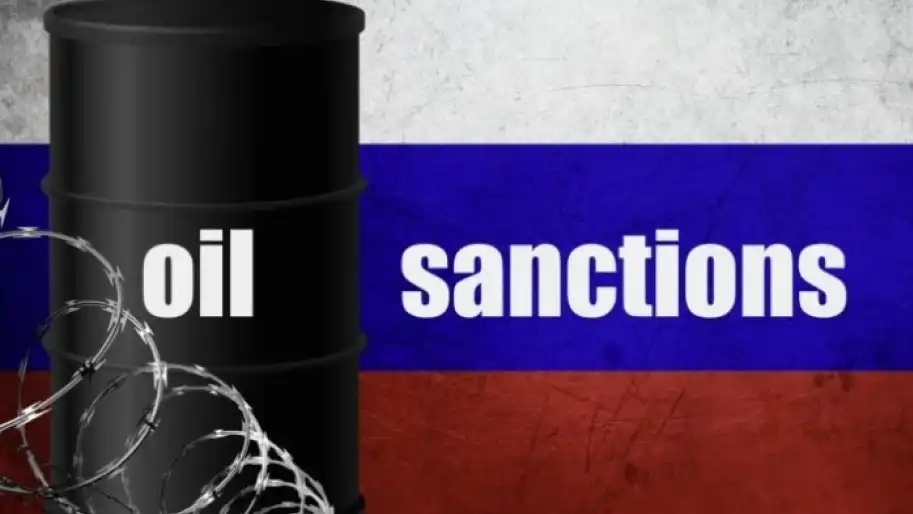

Negotiations by European diplomats on capping Russian oil prices went into a deep stupor. After a failed attempt to agree on Wednesday, representatives of European countries again suffered a fiasco on Friday, Bloomberg reported, citing sources familiar with the situation.
According to them, it was decided to postpone the negotiations for a second time - this time at least until Monday, November 28.
The price cap for oil from Russia is set to take effect on December 5 simultaneously with a new sanctions package that would ban insurance for tankers that carry barrels that cost more.
But the level of marginal prices offered by the European Commission - from USD 60 to USD 70 per barrel - caused chaos in Brussels and caused the anger of Eastern European countries. Poland and the Baltic states are shocked that de facto no reduction in Russian oil prices relative to market levels is expected, says one of Bloomberg sources: USD 65 is the average price of the Russian Urals variety over the past 8 years, and USD 70 is the level laid down in the budget of the Russian Federation 2023.
But Greece, a country that owns a large tanker fleet that carries every second Russian barrel, refuses to lower the price cap below USD 70.
Poland insists that the price of Russian oil be limited to USD 30. Polish diplomats refer to the fact that the cost of production in Russia is about USD 20, and the proposed EC levels will allow the Kremlin to earn profit and finance a "military machine." Warsaw also insists on additional sanctions and demands that the ceiling mechanism itself be reviewed, a senior diplomat told Bloomberg.
As Ukrainian News Agency earlier reported, Russian President Vladimir Putin has repeatedly stated that he will stop supplies to countries that will join the price cap, and on November 22, Deputy Prime Minister Aleksandr Novak confirmed: Moscow's position has not changed.
After the introduction of the price cap, not only ports of the G7 countries, but also Turkish straits will close for trespassers, which will stop all exports from Novorossiysk (650,000 barrels per day). And although in theory export opportunities to Asia will remain, in practice Russia is unlikely to be able to find buyers for all volumes - this is 1.5 million barrels of crude oil and 1 million barrels of petroleum products per day, the International Energy Agency predicts.
According to the IEA, the Russian oil industry will have to reduce production in 2023 by 1.4 million barrels per day, and at its peak - in the spring - the collapse can reach 2 million barrels daily. The average annual production in Russia, according to the agency's forecast, will drop to 9.6 million barrels per day - the level of the late 2000s.
Who we are: About us, Contacts. How we write news and our principles: Editorial code. We did our best. If you found this valuable – please support us.
To request a correction, please send an email.