
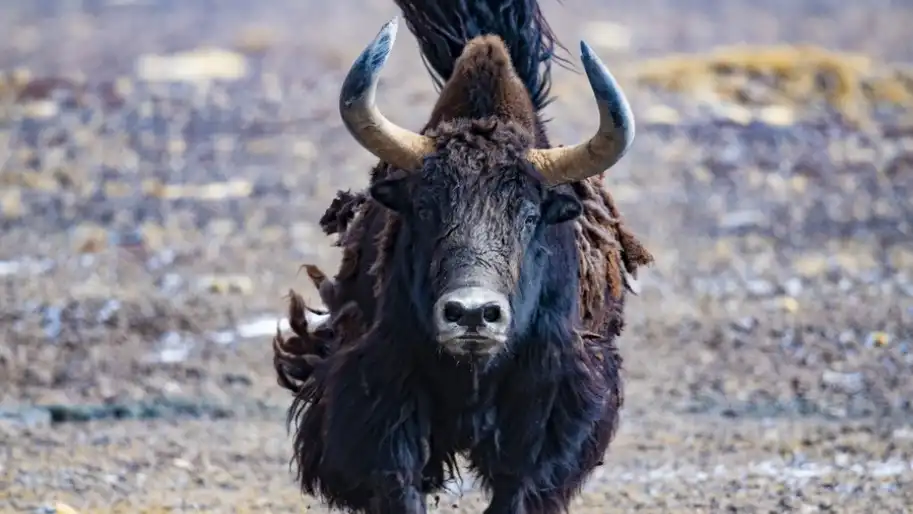

Chinese researchers have revealed genetic and cellular mechanisms underlying adaptations of yak to low-oxygen environments, according to The Xinhua News Agency reports.
Wild and domestic yak can adapt to the high-altitude environment of the Qinghai-Tibetan Plateau, while non-native mammals, including humans, may have serious lung and heart problems when they are exposed to hypoxia on the plateau.
Based on the data of genomics and transcriptomics, researchers from the Northwest Institute of Plateau Biology under the Chinese Academy of Sciences assembled two chromosome-level genomes, one each for wild yak and domestic yak, and screened structural variants (SVs) through the long-read data of yak and cattle.
127 genes carrying special types of SVs were differentially expressed in the lungs of cattle and yak. Researchers then found a yak-specific endothelial cell subtype which expresses genes associated with adaptation to a low-oxygen environment, according to the findings published in the journal Nature Communications.
These findings provide new insights into the high-altitude adaptation of yak and have important implications for understanding the physiological and pathological responses of large mammals and humans to hypoxia.
Who we are: About us, Contacts. How we write news and our principles: Editorial code. We did our best. If you found this valuable – please support us.
To request a correction, please send an email.