
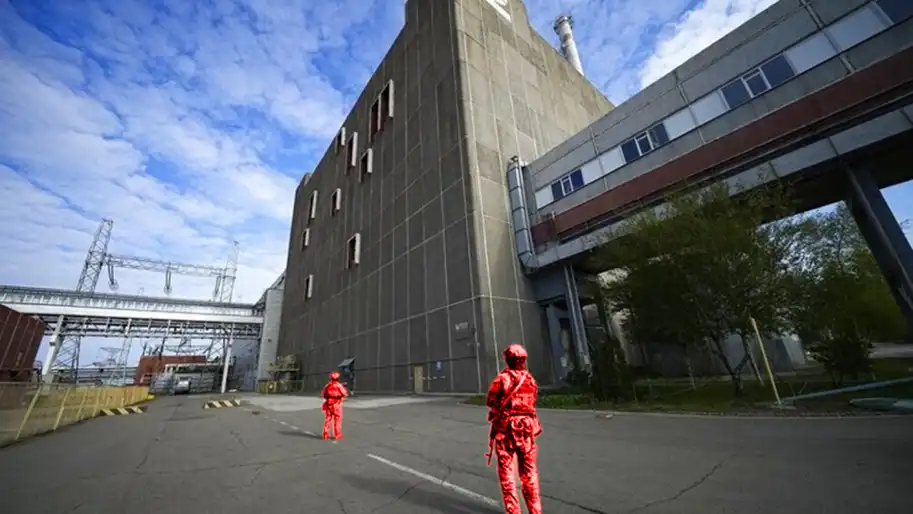

The Russian Federation continues to resort to cynical attempts to obstruct the IAEA's work at the Zaporizhzhia nuclear power plant. In particular, by implementing strategies similar to those used by Iran.
That follows from a statement by the Institute for the Study of War (ISW).
Analysts note that in this way the occupiers are trying to delay the arrival of the IAEA specialists at the Zaporizhzhia NPP.
"The IAEA has assembled a mission consisting of the head Rafael Mariano Grossi and 13 experts from "mostly neutral countries" who will visit the Zaporizhzhia NPP next week for observation," ISW says.
However, as indicated by the Institute for the Study of War, the Russian Federation managed to exclude the United States and Great Britain from the mission, calling them "unfairly biased."
"Manipulating the nationality of inspectors and attacking the 'fairness' of IAEA inspections is a tactic that Iran has long used to hide obstacles to missions," the analysts explained.
As Ukrainian News reported, in the event of an accident at the Zaporizhzhia NPP, which is under Russian fire, a radiation cloud will cover the south of Ukraine and the southwestern regions of the Russian Federation. The relevant calculation forecast was made by the experts of the State Atomic Energy Regulatory Authority of Ukraine.
On Monday, August 29, the mission of the International Atomic Energy Agency went to the Zaporizhzhia NPP. Experts will arrive at the station in a few days.
Meanwhile, the Ministry of Health has the necessary medical preparations to protect the thyroid gland from radiation in the event of an accident at the Zaporizhzhia nuclear power plant, which continues to be shelled by the Russian occupiers. Appropriate purchases have been made.
Who we are: About us, Contacts. How we write news and our principles: Editorial code. We did our best. If you found this valuable – please support us.
To request a correction, please send an email.