
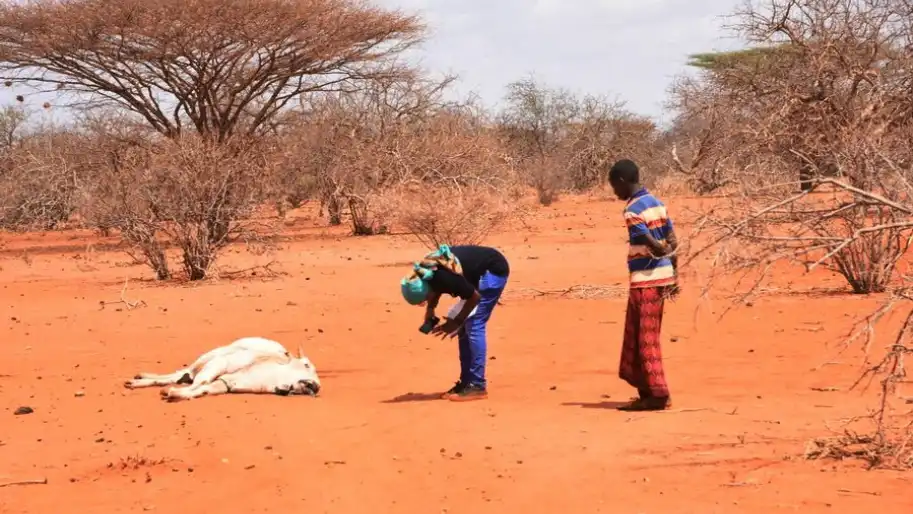

The number of people affected by hunger rose to 828 mln in 2021, an increase of 46 mln from the previous year, the United Nations (UN) Food and Agriculture Organization (FAO) said in a report. This was reported by The Xinhua News Agency.
The 2022 edition of "The State of Food Security and Nutrition in the World" (SOFI) report – drafted by the FAO and four other UN agencies – carries fresh figures on nutrition and food accessibility at the global level, including the latest estimates of the costs and affordability of a healthy diet.
The report said the number of people affected by hunger has increased by 150 mln since the outbreak of the COVID-19 pandemic. This would risk pushing the international community further away from reaching Goal 2 of the UN Sustainable Development Agenda, which is to end hunger and malnutrition by 2030.
"After remaining relatively unchanged since 2015, the proportion of people affected by hunger jumped in 2020 and continued to rise in 2021 to 9.8 percent of the world population", – the SOFI said. "This compares with 8 percent in 2019 and 9.3 percent in 2020".

A man harvests maize in a field in Blantyre, Malawi. Photo by Joseph Mizere/Xinhua.
The number of people unable to afford a healthy diet rose by 112 mln to almost 3.1 bln, "reflecting the impacts of rising consumer food prices during the pandemic".
The UN agencies added that the actual figure could be even larger once final data on income losses in 2020 become available.
"The ongoing war in Ukraine is disrupting supply chains and further affecting prices of grain, fertilizer and energy", – the report warned.
"In the first half of 2022, this resulted in further food price increases. At the same time, more frequent and severe extreme climate events are disrupting supply chains, especially in low-income countries".
Around 2.3 bln people in the world – or 29.3% of the global population – suffered from moderate or severe food insecurity in 2021, an increase of 350 mln compared to before the pandemic.
Nearly 924 mln people, or 11.7% of the global population, faced food insecurity at severe levels, an increase of 207 mln in two years, according to the report.
The SOFI also highlighted that "the gender gap in food insecurity continued to rise in 2021", with an estimated 31.9% of women suffering moderate or severe food insecurity compared to 27.6% of men.

A malnourished child lies on a bed at the malnutrition treating ward in a hospital in Sanaa, Yemen. Photo by Mohammed Mohammed/Xinhua.
Some 45 mln children under the age of five suffered from wasting (the deadliest form of malnutrition) last year. Overall, some 149 mln children under five had stunted growth and development due to a chronic lack of essential nutrients, while 39 mln were overweight.
"Looking forward, projections are that nearly 670 mln people, or 8% of the world population, will still be facing hunger in 2030, even if a global economic recovery is taken into consideration", – the SOFI said.
The UN agencies urged governments to "repurpose the resources they are using to incentivize the production, supply and consumption of nutritious foods" in order to help making healthy diets less costly and more affordable for all.
Finally, the report suggested that governments could do more to reduce trade barriers for nutritious foods, such as fruits and vegetables.
Assessing the situation of hunger, malnutrition and food accessibility at the global level, the SOFI is jointly published every year by the FAO in cooperation with the International Fund for Agricultural Development, the United Nations Children's Fund, the UN World Food Programme and the World Health Organization.
Who we are: About us, Contacts. How we write news and our principles: Editorial code. We did our best. If you found this valuable – please support us.
To request a correction, please send an email.