
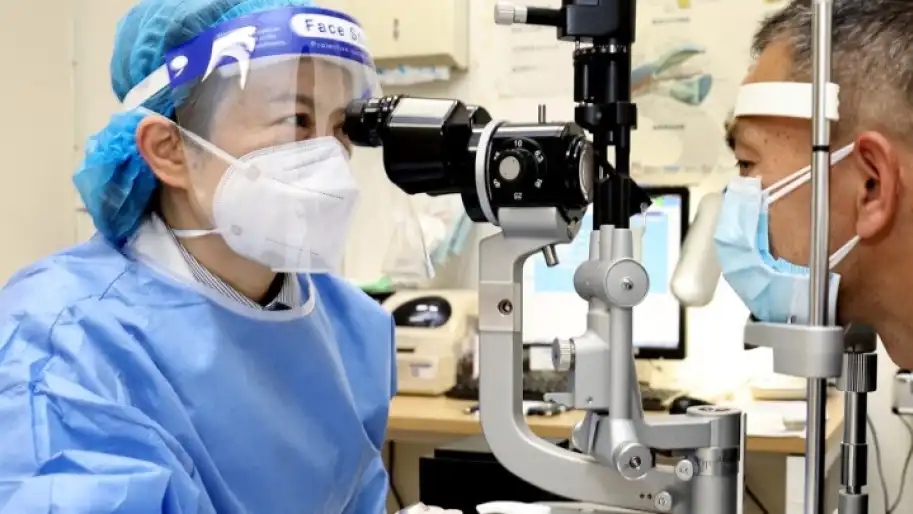

Chinese researchers have used artificial intelligence (AI) models to predict the risk of glaucoma incidence and progression, according to a recent research article published in the Journal of Clinical Investigation. This was reported by The Xinhua News Agency.
Through the research, the researchers from the Sun Yat-sen University in south China's Guangdong Province hoped to develop a clinically feasible deep-learning system for predicting and stratifying the risk of glaucoma onset and progression based on color fundus photographs (CFPs).
The incidence prediction refers to the risk assessment of the glaucoma optic neuropathy three to five years later based on the CFPs, while the progression prediction is a risk assessment of visual field progression among glaucoma patients over the next three to five years.
The AI models were developed based on the CFPs of more than 9,000 patients.
The glaucoma incidence prediction data came from the community screening cohort, thus better reflecting the distribution of glaucoma in the population and enhancing the reliability of the AI model.
The study demonstrated the feasibility of deep-learning algorithms in the early detection and prediction of glaucoma progression, the research article noted.
Who we are: About us, Contacts. How we write news and our principles: Editorial code. We did our best. If you found this valuable – please support us.
To request a correction, please send an email.