

The blockade of ports and agricultural exports from Ukraine is one of the biggest challenge the world has faced as a result of the war in Ukraine. According to the Ministry of Agrarian Policy of Ukraine, the Ukrainian agricultural sector ‘feeds’ more than 400 M people all over the world. The Economist estimates that 28% of world trade in wheat, 29% of barley, 15% of corn and 75% of sunflower oil is in the Black Sea region. Failure to supply 50 million tons of grain to world markets, especially to poor regions, will lead to tens of millions of people falling into hunger. Eurasia Group notes that the number of hungry people may rise from 1.6 billion to 1.8 billion. After two years of disruptions and inflation caused by COVID pandemic, the suspension of grain supplies to Africa, Asia and the Middle East will cause the cost of basic foodstuffs such as oil, flour and animal feed to double or triple, and still there will be deficiencies. The impact of the limited ability to export grain from Ukraine (up to 30% of requirements) will also be significant for developed markets: rising food prices will cause hyperinflation in the face of low economic growth and high interest rates, and further push the world's largest economies into recession.
The political side of this threat is one of the top priorities for the pro-Ukraine coalition, which is actively seeking ways to ensure the passage of grain through the Black Sea from Odessa. Pressure on Russia to open the Black Sea will be intensified from many countries, including even those that have so far remained silent - Egypt, Iran, Indonesia and, of course, China, just to name a few.
Challenges 2022-2023
The whole world is closely watching the planted crops in Ukraine. Nevertheless, sowing and harvesting under war conditions is only a small part of the problems in Ukrainian agricultural sector.
In addition to a significant reduction in the area under crops - up to 20% of spring crops - in some regions, farmers did not have enough financing for high-quality fertilizers and plant protection products. This will adversely effect both the quality of the future crop and the gross harvest . The effect of these factors may for some regions cause a 50% fall in harvested volumes and reduce the gross harvest of Ukraine to 50-60M tons.
Logistical challenges will be significant: the lack of a sufficient number of harvesters and vehicles for harvesting, the lack of fuel for harvesting and other fieldwork, and, most importantly, the lack of grain storage capacities.
By the beginning of the winter crop harvest, grain elevators in Ukraine will still have over 20M tons of last season grain, which could not be delivered last winter and spring. At the same time, a significant share of storage capacities - up to 30% - is located within the occupied territories and will not be available, and if the issue of the blockade lifting from the Odessa ports is not resolved, then it will be very difficult to export grain this summer. If such a scenario is the case, we will unfortunately see many unharvested fields, open-air grain storage, idle oil crushing plants and sugar refineries by this autumn. I sincerely hope that in the nearest future a solution will be found to open ports and supply fuel to farmers, and that these forecasts will not come true. Politicians all over the world are working on finding a solution, because the prices of basic goods and the lives of millions of people depend on the resumption of exports of agricultural products from Ukraine.
The financial implications for the 2023 season are equally worrisome . Due to delays in exports and lower volumes, farmers' profits will be less and much later than usual. At the same time, farmers will need to finance the autumn sowing and cultivations and pay suppliers and leaseholders Therefore, the 2023 season is under even greater threat than the current one.
It is unlikely that anything will help in solving these challenges in the short term, except for direct subsidies. Moreover, here we need financial support from Europe, the United States and other partner countries of Ukraine: direct subsidies for the autumn sowing season, preferential loans and prices for fuel, fertilizers and seeds. The estimated need for funding is up to $3 billion this fall, assuming up to $200 per hectare is provided to farmers . The same program will be needed to finance the spring sowing campaign. To what extent will become clear from the results of exports over the winter.
Strategy for Ukraine
Many of the issues facing Ukraine's agricultural sector existed before the war and have only exacerbated. them First and foremost is , a lack of investment and diversification in the agricultural sector. Ukraine now has a chance to solve these problems strategically for years to come.
Ukraine must use its unique geographic location, climate and natural resources to produce a food basket for world markets. Historically, Ukraine produced grain and some animal protein and raw materials for export to the countries of the Soviet Union and then to the Middle East, Africa and China. However, this strategy has not made Ukraine rich and prosperous.
Obviously, Ukraine will continue to grow large volumes of grains and oilseeds for export. This will remain a core business, but it must become more efficient in order to compete long term in global markets. With the current 100 million tons produced by the country, our yields are still much lower than in Europe or the USA. In addition, logistics costs in Ukraine are also higher per ton.
Ukraine needs to produce more processed products such as meat, sugar, flour, dairy products, animal feed, etc. Demand for all these products will grow in the world's most populated areas - Asia, the Middle East and Africa. It makes strategic sense for Ukraine to focus on supplying these emerging markets rather than trying to compete in mature EU markets.
Similarly, Ukraine is well positioned to become a leader in innovative food technologies, whether in the biotech, agriculture or IT sectors. This will require investment and international cooperation in higher education and science.
To realize the potential of the agricultural sector, Ukraine will need massive and long-term financial support from its international partners - donors, international institutions and private investors. However, the money will not come without two prerequisites, besides ending the war. The first is secure and transparent rule of law t: there should be many reforms from the courts to taxation. The environment for investors should become favourable. Recalling Mriya, whose restructuring I worked on after the default. Having lost more than a billion in investments, creditors still worked to save the company. At the same time, we faced attempts to plunder more assets and the inability of the judicial system to protect the interests of investors.
The second condition is that Ukraine must liberalize its economy and promote healthy competition in strategic sectors such as fertilizer production, railway infrastructure and the introduction of a free market for agricultural land. Investors will not invest in infrastructure or processing with long payback periods without ownership of the land. On a leasehold, investors will not think further than the 7 years term. Any lender will require collateral and ownership of the land is a key prerequisite for success.
Ukraine was and remains a country with great agricultural potential. The war exacerbated a lot of problems in the industry, but, on the other hand, it has created a chance to reach a new level of economic development in the agricultural sector. Ukraine must finally abandon the limitations of the post-Soviet system, and become a strong player in the world food markets. Most Ukrainians support this and are ready to join in building a strong and successful national agricultural industry.
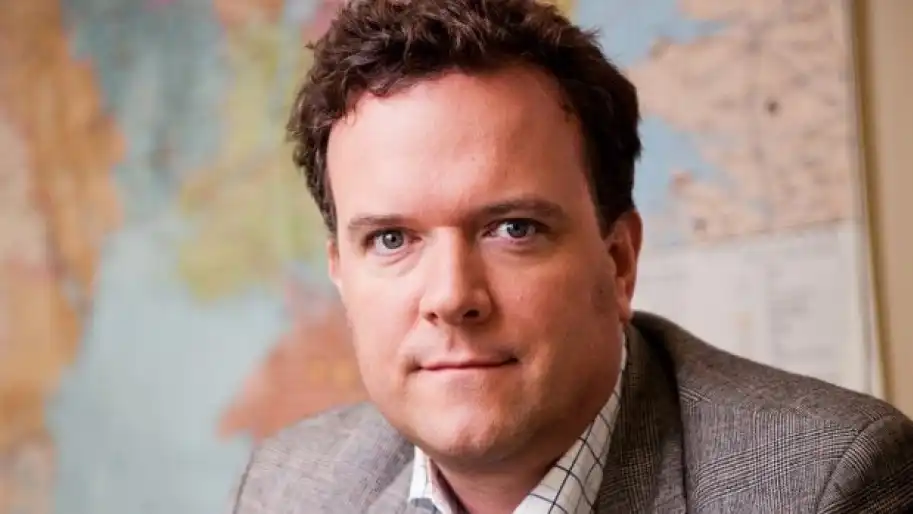
Simon Cherniavsky
1992 – 2006 – employed at various managerial positions in the field of consumer goods;
2006 – 2008 — Deputy Director for Production of the agricultural company Black Earth Farming (Russia);
2008 – 2011 — First Deputy Director of RoAgro (Ukraine);
2011 – 2015 — General Director HarvEast Holding (Ukraine);
2015 – 2018 - General Director of Mriya Agroholding;
2018 – 2019 - General Director of CFG / MRIYA;
2019 – 2020 - Acting Chairman of the Board of JSC State Food Grain Corporation of Ukraine (SFGCU);
June 2021 - present - Chairman of the Supervisory Board of LLC Barkom.
Who we are: About us, Contacts. How we write news and our principles: Editorial code. We did our best. If you found this valuable – please support us.
To request a correction, please send an email.