
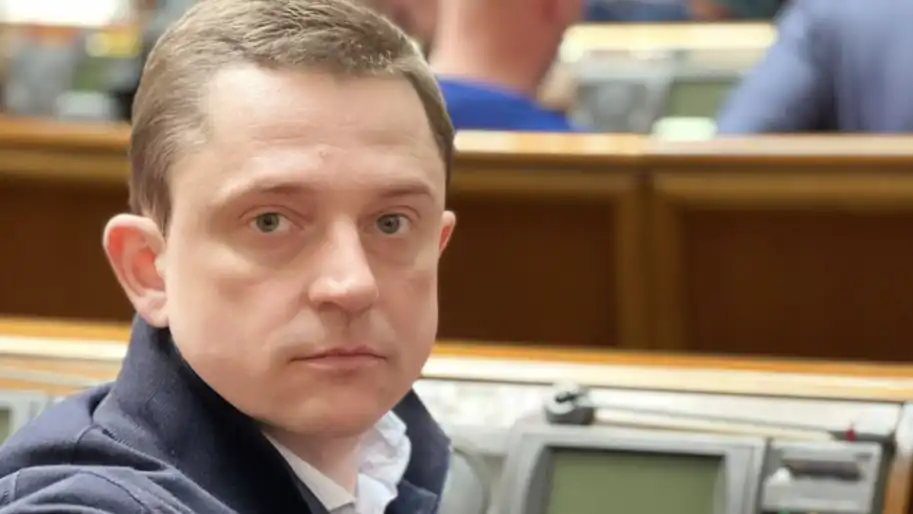

More than 10 million Ukrainians have left their homes. 3.5 million were forced to flee abroad, and about 6.5 million became internally displaced persons. Hundreds of thousands of people settled in Central Ukraine. As a rule, these are the least protected strata of the population, who have had no opportunity to move further away from the war. These people need a roof over their heads, clothing, necessities, and food. At the same time, the country faces other critical challenges: sowing crops, saving jobs, and supporting the economy during the war. In Kirovohrad region, the Dovgiy Family Charitable Foundation "Together We Can" has become one of the most active organizations supporting the Armed Forces, the territorial defense forces, and displaced persons. The Foundation delivers medicines and equipment to hospitals, feeds IDPs, and runs a number of other humanitarian projects. We talked to Oles Dovgiy, an MP from Kirovohrad region’s district 102, about whether the Ukrainians might face a famine, whether the country will have bread this fall, and about launching suspended production facilities and giving jobs to people.
OLES DOVGIY ON THE PROGRESS OF THE SOWING CAMPAIGN: UKRAINE WILL DEFINITELY NOT FACE FAMINE
- How much has Ukraine lost in this war, for how long will we be able to keep up in the terms of economy?
- If we talk about our family business, at the moment 80% of it is not working. Most of our business is related to the professional management of various types of real estate. Since the outbreak of the war, we have received virtually no rent payments. As a company that lived through the crises of COVID-19, ATO, and two revolutions before that, we know that in these conditions, we should not expect anything more than covering the current costs, and not everyone can afford even those now. We approach each specific tenant on a case-by-case basis, based on their type of activity.
Why am I talking about rent? Because it allows to determine the state of all types of business, get a feel of their condition and pulse. The vast majority of businesses are experiencing uncertainty. Everyone has positive expectations that the war will end in some foreseeable future, after which an intensive economic recovery will follow. The question is who will manage to survive this crisis and how.
 Oles Dovgiy after the delivery of foodstuffs to one of the schools of Oleksandrivka village. Its canteen now cooks meals for military units
- What is the situation in your district and in Kirovohrad region in general?
- Kirovohrad region is an agricultural area getting foreign currency earnings by selling grains and oils. The region now is in a better situation than many others, as there was almost no active military actions here. My first steps in the region after the outbreak of the war were to gather people and set priorities. I considered that the most important things were to ensure the infrastructure for the IDPs, the coordination between the security forces and various branches of the police, territorial defense units, the SSU, the Commissariat, and representatives of the Ministry of Defense. We also had to organize safe wartime logistics. The next steps were aimed at addressing the economic issues. I toured the whole territory and determined that the sowing campaign was the task No. 1 to be done.
- What is the situation with the sowing campaign? There are some worrying news that it is under threat...
- It must be understood that 40-50% of the campaign are winter crops, which were sown before the outbreak of the war. Those, for the most part, did well through the winter. Until recently, there were no problems with fuel either; in general, farmers got the required volume of diesel, having purchased it either before the war began or during the war but before the destruction of oil storage and refinery infrastructure. They had enough time to get the fuel to their own tanks. I can tell from our communication that they are either supplied with diesel or can to buy it "from the wheels", as we say.
The second issue is fertilizers. The situation with those is as follows: half of them were contracted and received before the war, and the other half is purchased from foreign sources, for example, from Lithuanian factories. They are a little more expensive, but also more efficient. Still, the most important thing is that even in those areas where farmers cannot buy fertilizers and will sow crops without using them, the maximum damage we expect is 20-30% reduction in land productivity. In any case, we will get about 70-80% of the yield provided that all the other conditions are met.
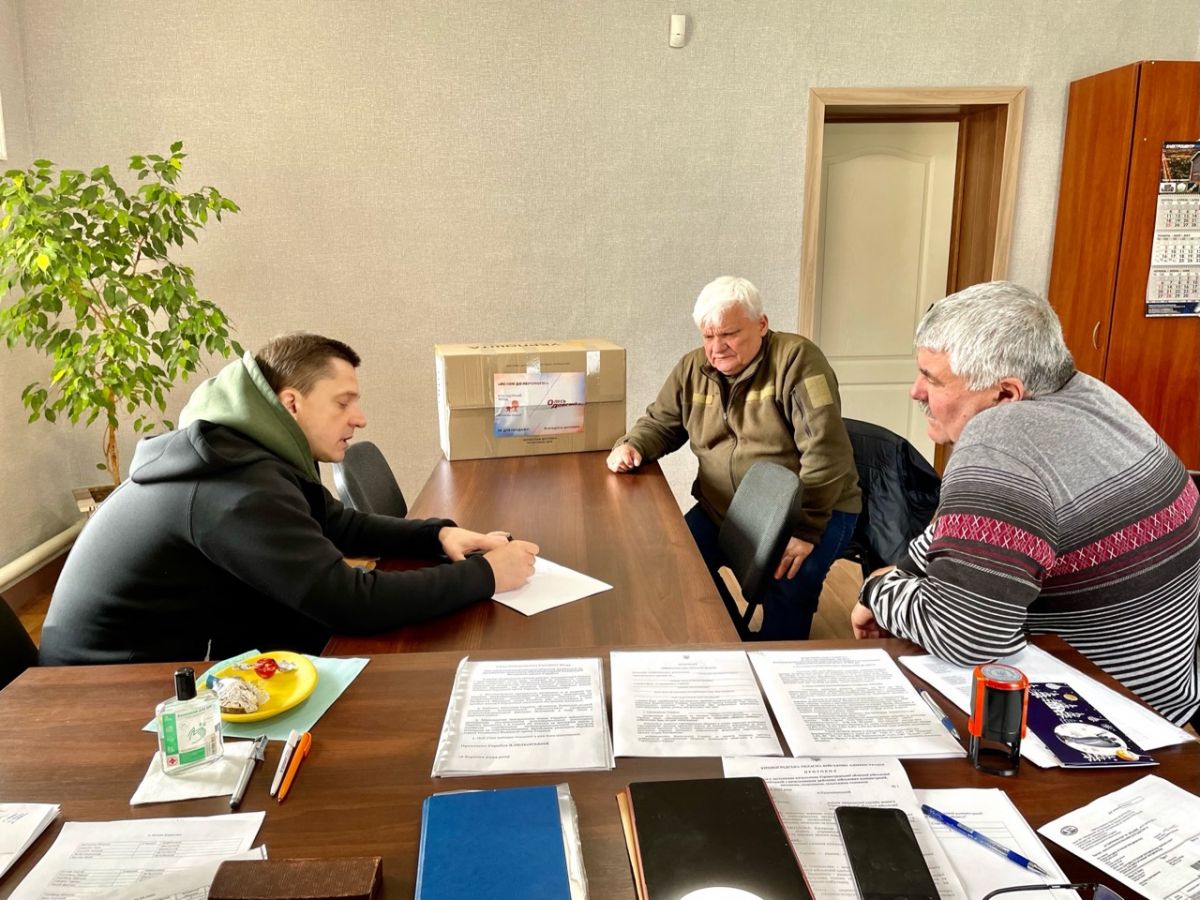 Oles Dovgiy in Velyka Andrusivka village, meeting the head of local Territorial Community and a representative of farmers
The third important point is the seeds. Most farmers have enough of those. However, there are some who face a deficit. We try to coordinate them so that those who have a surplus of sowing material would share with those who do not have enough. In general, I believe that if the above-mentioned conditions are met, the sowing campaign will be successful even in view of the war, logistics issues. We will have the harvest in any case. I believe that we will get through this sowing campaign successfully, despite the circumstances.
- So, Ukraine does not face famine?
- Absolutely not. Let us look at wheat, corn, or sunflower oil. Domestic consumption accounts for 20-30% of the production. The vast majority is designed for export. That's why there is no potential problem of famine. The question is only in foreign currency proceeds and the number of agricultural enterprises that will survive the war.
- What are the key challenges faced by farmers that must be emphasized? And how to address them?
- There are two of them: liquidity and logistics. If we talk about small businesses, they are currently facing a disastrous lack of liquidity. Previously, small farmers were bailed out by loans, which allowed them to get money they needed for sowing campaigns in times of deficit. Therefore, the main problem of agricultural enterprises, especially the small ones, is finding resources in the absence of soft credit lines. The second challenge is a surplus of products in warehouses. For the past 5-10 years, Ukrainian farmers had realized that the later they sell their crops, especially sunflower seeds, the more they will get for it. Consequently, most farmers had the seeds stored in jars at their logistics warehouses because the sunflower oil plants have stopped. The task was to give an opportunity to fill the agricultural sector with money, which means to run the oil production plants.
- What is the situation with logistics of agricultural products delivery, including abroad?
- This is yet another serious issue. Before the war, 80% of the exports were shipped through the ports of Odesa and Mykolaiv. Now those are stopped, and the only alternative is to reconfigure the exports to rail or land routes through Poland and other European countries. Enterprises have started operating, though at reduced capacity. Farmers have started to sell sunflowers, turning products into money. Given the surplus of sunflower seed, the price they have got was less than the farmers’ expectation, but most importantly, the market began to be filled with money, which were used to purchase seeds, fertilizers, diesel, etc.
 Oles Dovgiy at the oath-taking ceremony of Territorial Defense units in Oleksandriya
In any case, the issue of logistics is rather pressing. Globally, it is about whether Ukraine will preserve its access to the Black Sea. If it will, then when will the sea be demined and will it be possible to resume exports through the ports of Mykolaiv and Odesa? Will the state, which owns Ukrzaliznytsia and ports, be an effective regulator in this case? These factors will determine which part of the powerful agrarian sector will survive.
- How should we dispose of agricultural products in the case of limited opportunities to market them through the established sales channels?
- We will have to look for an alternative to the regular logistics capacities of the ports. Unless an adequate alternative is found, we will face an overproduction crisis, as a result of which our crop storage capacities and our logistical abilities for export will be lacking. On the other hand, the price on the international markets will sharply increase because of the shortage. Therefore, the one who will set up these logistic arrangements and will be able to deliver the product will succeed. Those enterprises will operate under super-cycle conditions and get super-premiums, as was the case in the iron ore and gas sectors. In this case, it is very important from the regulatory point of view to make sure that large companies do not get a monopoly on exports through their influence and do not start getting windfall gains out of it, eliminating the medium and small farmers. On the contrary, we as a country must encourage small agricultural companies and make sure they are able to sell their products.
OLES DOVGIY ON BUSINESSES HALTED BY WAR – UKRAINE WILL BE REBUILT AT AN INTENSE PACE
- What is the fate of the enterprises not related to the agricultural sector?
- The companies with physically destroyed or occupied infrastructure will suffer the most. However, even if the business survives physically, it will face certain complications. In my constituency in Svitlovodsk, there are several plants producing reinforced concrete structures (RCS). Thousands of people are out of work because those plants were supplying products for the "Great Construction." Now they have no payments, and all the facilities have stopped. The question is how long can they retain the work force in order to restart their business after the war is over. Those who will manage to keep the staff will be rewarded for their loyalty and patience. After all, there is a great expectation that Ukraine will be rebuilt at an intense pace. Such crises work as filters purifying the market. And here the main thing is to avoid monopolization, to make sure that different kinds enterprises will survive: not only conglomerates which are diversified or have western credit lines, but also the factories that have in the past 5-10 years started their transformation from broken-down Soviet enterprises into modern factories with competitive salaries.
- Is government support required here?
- Sure, in order to keep staff businesses need a liquidity reserve, so the government should provide them with affordable loans. Otherwise, we will simply lose the best workers. It is no secret that even before the war, Europe has been interested in high-quality and affordable labor force from Ukraine, and during the past few years our companies have been competing with European suppliers for labor. However, for many Ukrainians the salary was neither the only nor the main factor. People were simply not willing to work abroad because here they were at home, they had their families and friends here, and they were ready to work in Ukraine for half the income that they could have got in Europe. Now that people are losing their homes because of the war and are forced to move abroad with their families, their priorities will inevitably change. The longer the war goes on and the economy stands still, the more skilled workers will go abroad. This is true for both white-collar workers, i.e. the managers, but for blue-collar ones as well.
 Oles Dovgiy managing delivery of foodstuffs and hygiene products to the Znamyanka humanitarian hub helping the IDPs
OLES DOVGUI ON IDPs IN CENTRAL UKRAINE: WE HAVE BUILT UP A SAFETY MARGIN FOR SEVERAL MONTHS
- Let us talk about the social environment in Ukraine. How to help people affected by war?
- I would like to break this down into several parts. The people who lost their lives or their loved ones were affected by war the most. This is beyond discussion. The next level of tragedy was faced by those who have stayed alive but lost their homes and livelihoods. This characteristic contains an answer to the question of what the state should focus on: it has to provide people with housing and jobs. Furthermore, the war affected those who retained their homes but lost their jobs due to the economic crisis, and here our task is to support those people. Those who live in the territories not directly exposed to shelling and occupation have been the least affected. They, too, however, are suffering from exchange rate differences and disrupted supply chains. After all, even if their businesses work, they still operate within the macro-economy, and macroeconomic shifts are hitting all businesses.
- What about the Kirovohrad region specifically? People there were less affected by the war.
- A lot of IDPs go through our territory; most of the eastern transit routes pass through Kirovohrad region. Many people stay here. The more wealthy the people are, the further they go, including to the Western part of Ukraine or abroad. Therefore, generally people with small or minimum income stay here. To begin with, we host and accommodate them in educational and cultural institutions, i.e. schools, kindergartens, palaces of culture or other centers where some minimum conditions are met and, preferably, where there is a kitchen. When we had beds and mattresses in stock, there were at least some conveniences. Now almost every town experiences a shortage of beds and mattresses, and many people have to sleep on the floor, literally using some clothes as a bed. Definitely, many people host IDPs in their homes.
At the time being, there are almost 14 thousand IDPs in my constituency alone. We support them with food, necessities, clothing, and provide other assistance, including organizational support and counseling services. I think that we now have a safety margin and stocks of food that will do for several months; I can see the reserves to be used to meet the demand. If people will get jobs and at least some part of the economy starts working again, if the state begins to implement an end-to-end funding mechanism, then we will be able to support the displaced persons for quite a long time.
- What about the housing?
- Housing is the most pressing issue. Good thing is that the frost is over and the next few months will be warm. This simplifies the issue greatly, since no heating is needed. The minimum task for the state is to find enough heated housing before the onset of cold weather. The key task, however, is to provide new housing for those who have lost their homes during the war. There are temporary structures provided by our partners. Modular houses are also being built extensively. However, I am not sure that these actions will solve the existing problem in full.
- Have you or your loved ones been affected by the war?
- The war deprived my mother, who used to live near Irpin and Bucha, of her home. We were lucky enough to get her out of there just a few days after the war started, during a shelling. It was just a miracle! I was there a few days ago, looking at the remains of the house where we had gathered around mom's table for the holidays during the past 15 years. That house is gone now. So is part of our lives and my mom's life. It was a treasure trove of goodness and memories for us. All the personal things that mattered to us: childhood photos, drawings, our first baby shoes, the letters we wrote as children, the paintings we inherited from our grandfather who was an artist... All those things were there. What hurts the most is my mom’s library. She has been collecting it all her life, some of the books were collected literally sheet by sheet: my mom spent a lot of time in the libraries around the world, making photocopies of books she liked there. She studies manuscripts important for Ukrainian culture and turns them into scientific works, lectures for students, and articles for international editions. The last printed edition of Innokentiy Gizel, edited by my mother with the involvement of scientists from different countries, was also lost there. This book is about the first abbot of Kyiv-Pechersk Lavra, Innokenty Gizel. He was deposed by the Moscow patriarchate for his pro-Ukrainian position, and they tried to erase the memories of him. That is why this part of history had to be literally put together bit by bit in foreign archives. This work is especially important in times like these.
Thinking about my mom's situation, I am happy that she has us and dreadful to think about those who do not have that kind of support. This is the most difficult and painful issue. A lot of people from Mariupol, Kharkiv, Chernihiv and other cities in Ukraine have lost everything, their jobs, their homes and sometimes their loved ones. This is a huge tragedy. And the answer to this question should be given not only by Ukraine, but also by the whole world. Billions of dollars will be needed to provide homes and jobs for hundreds of thousands of people who have lost them. Those funds can only be raised in partnership with other countries from around the world. After the war, in addition to building new housing rapidly, we will need new retraining centers, government incentives for employers and job creation, as well as long-term loan programs for youth and people who are stranded. These are all huge and complicated packages of economic solutions, to which we as a parliament and a state must respond together with our Western partners, and do it as soon as possible. If people lose faith in a possible fair response regarding their future life in Ukraine, they will seek employment abroad, working for the economies of foreign countries.
OLES DOVGYI ON ASSISTANCE TO THE ARMED FORCES OF UKRAINE AND IDPs: PROUD OF OUR FAMILY AND PARTNERS
- In addition to the economic component, there is also the cultural one. Statistics show that besides military and critical infrastructure, the Russians have also shelled our cultural monuments. Because of that, several historic churches have been burnt down and museums have been vandalized. You participate in the Monument Protection Program; could you tell us more about this?
- When the war started and we saw that Kyiv was being shelled, one of the questions for our family was how historical values and memorials would survive this. My sister and I initiated the custody of one of the key and important landmarks for the people of Kyiv – the Monument to the founders of Kyiv Kiy, Schek, Khoryv and their sister Lybid, actually, two monuments, one on Dnipro Naberezhna, the other on Maidan. These two monuments have their own design feature – unlike other important objects, there is a cavity under them and there is no way to strengthen the structure around them. Therefore, it was a challenge for the Department of Cultural Heritage: those monuments could not be simply encased with sandbags, unlike the other ones.
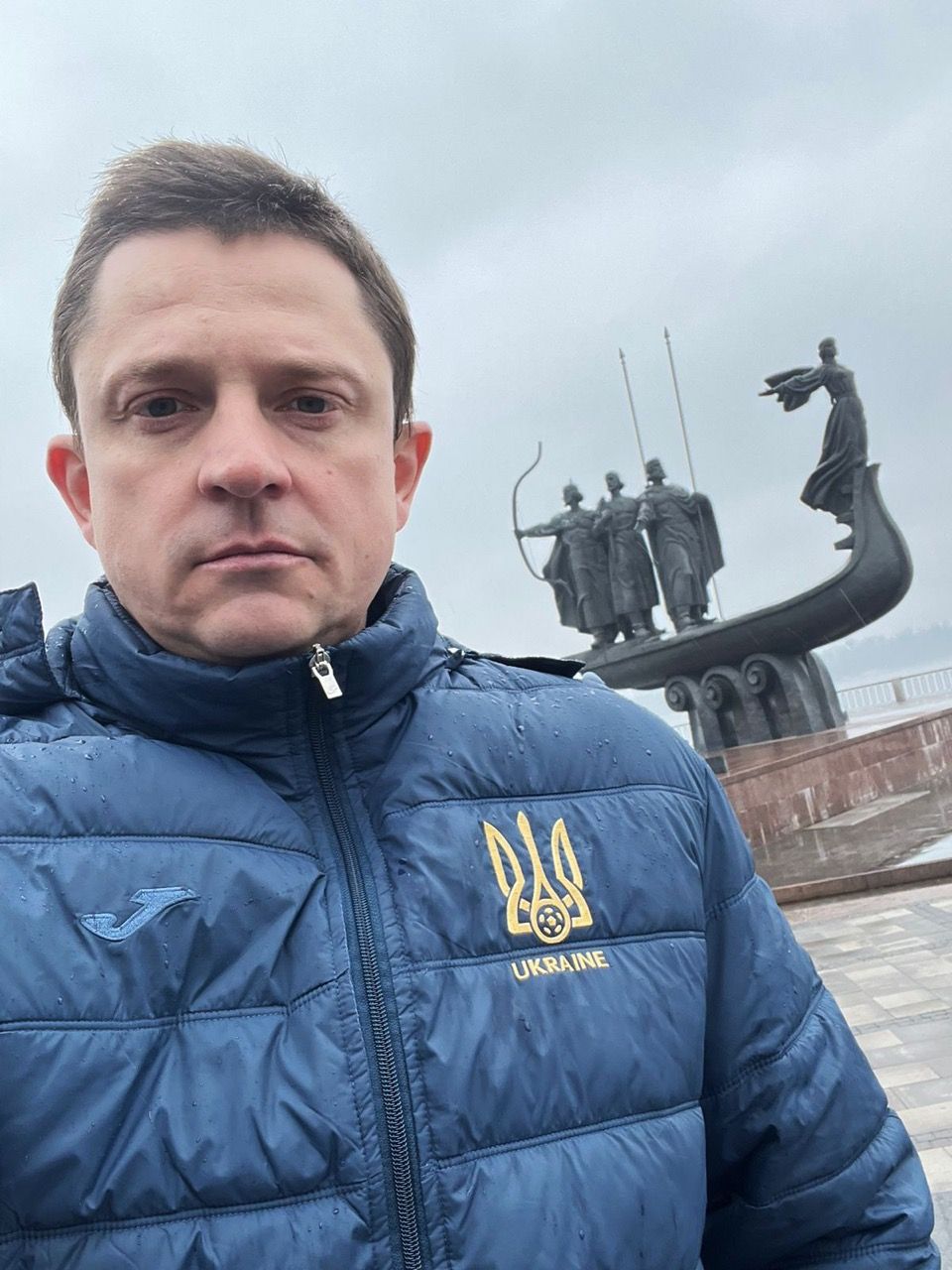 Oles Dovgiy: Our family has initiated the custody of the Monument to the founders of Kyiv
We launched this project together with our partners. Here I would like to thank Pavlo Somov, the owner of Ecobud company, and Oleksandr Hlymbovskyi, the owner of Altis Construction, for their assistance.
Also, now we are preparing the protective construction for the Icon of Theotokos of Nicopeia (the Winner) at the Golden Gate.
I believe it is very important to preserve cultural and historical heritage. Every nation has its symbols that have stood for thousands of years and are our heritage. Those cannot be restored once destroyed, it is not like rebuilding a house. Our family implemented similar projects in the pre-war period. We were actively involved in both architectural restoration and renovation of real estate. The revitalization of buildings that are part of our historical memory is an important part of our family business, run by my sister. It is a very complex and low-margin activity from a business perspective. However, it is consistent with our family values, which is why we have brought beautiful sites in Kyiv back to life over the past few years. One of the last projects was the House of Novikov on Podol, which our family restored and renewed consulting with archival materials. Furthermore, together with our partners, we are now revitalizing several objects in the central historical part of the city.
Our portfolio also includes a full restoration of a Cossack church in Chernihiv region. We transported it to the territory of Kyiv open-air museum Pyrohovo and restored it, so that everyone interested in Ukrainian history can see with his own eyes what life, traditions and customs of a specific period of Ukraine’s history used to look like.
- You mentioned a protective structure for the icon. Are we talking about the large mosaic icon on the Golden Gate, restored with the support of your family?
- Yes, it is a unique mosaic icon of Theotokos of Nicopeia that crowned the main entrance to Kyiv in the 10-11th centuries, seeing our soldiers off to battle and welcoming them back after victories. Then it was lost, and in May 2016, through the efforts of our family, it has been returned to its place at the Golden Gate. It took historians and restoring artist more than a year to create its exact copy.
Enlightenment and intellectual development, including that of young people, is an important part of our family's activities. In spite of the war, my father and I have opened a new museum of Small Academy of Sciences in Lviv. This place will become a point of reference for many internally displaced people. It is a temporary exhibition, which is similar to the one in Kyiv. After the war, we hope to make a full-fledged museum there, a separate world allowing a child to plunge into another dimension. During the last year, over 100 thousand children visited the Kyiv Science Museum.
We planned to open a similar museum in Mariupol. We brought 30 of 50 exhibits planned, and all of them were destroyed, while 20 other exhibits are still pending production in Europe. We are now looking for partners to open the Mariupol Science Museum, but temporarily in a different city.
- There is an opinion that the war has reset the political landscape and shown who is who. Some are actively helping and expressing their position, while others are silent...
- Any crisis causes revaluation of everything around us, and people inevitably get divided into those who are stable and reliable and those who should not be relied upon. My team included both those joined the work at once and proved to be super effective, and those who have faltered at first, but then managed to pull themselves together. War is a test, a time when everyone's masks come off.
Our generation has experienced a lot: the collapse of the USSR, the 2004 revolution, the 2008 crisis, the 2013-2014 revolution, the ATO, and now we have to live through the war. Every time there was a revolution, those who were shouting the loudest came to the fore for only a short time afterwards. Often these people turned out to be incompetent and weak in terms of their values. Many of them discredited the significance of the events that Ukraine experienced, events that left scars and wounds on the body of Ukraine’s statehood.
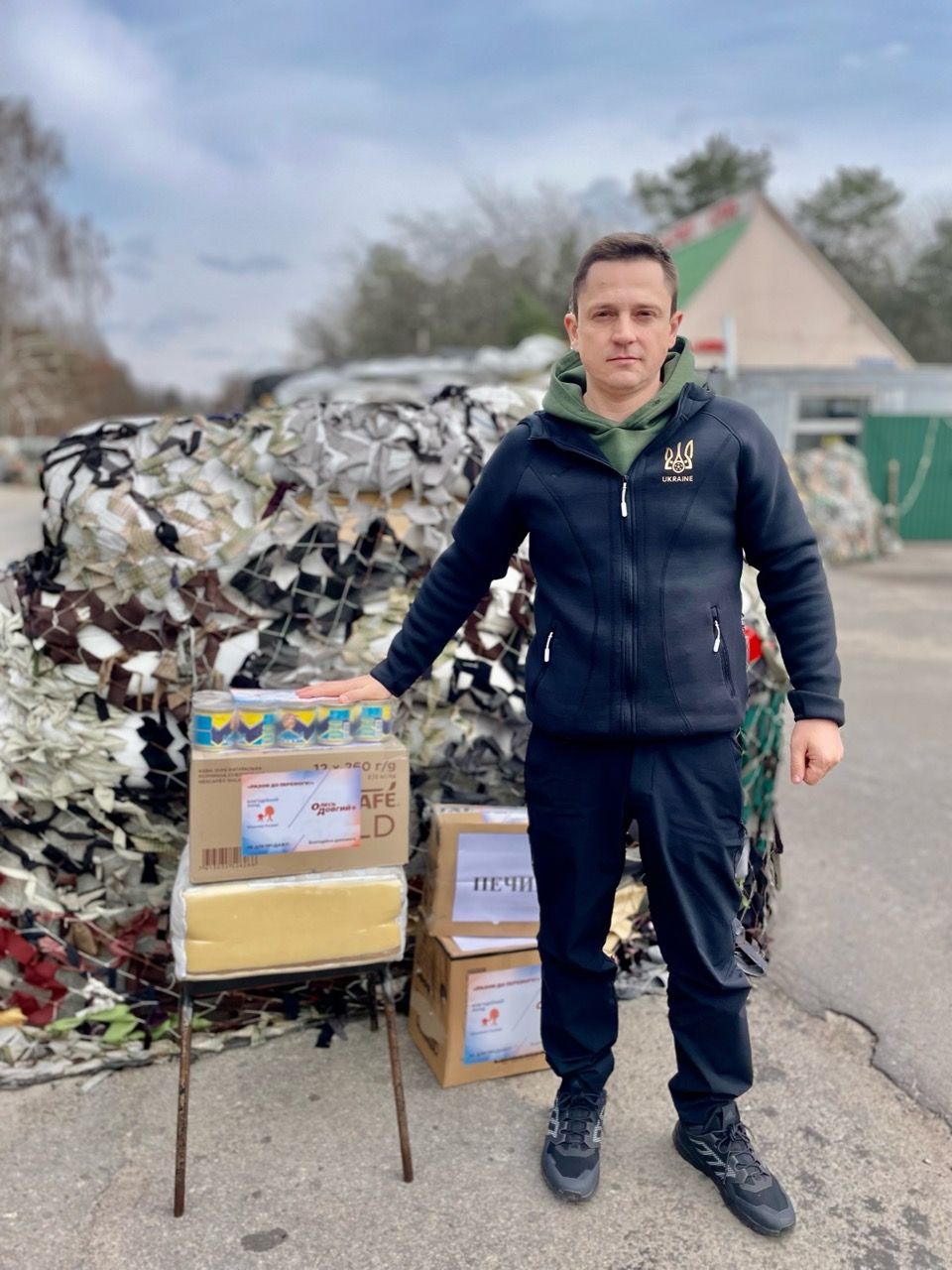 Assistance to the Armed Forces of Ukraine and Territorial Defense Forces in Svitlovodsk
As for the political arena, those who were on different sides of barricades politically managed to forget the differences and unite when the threat of loss of the life, independence and freedom arose. I am sure that this new unity will be based on new values and include all those who are able to build a new Ukraine. Those who are passing this test with dignity deserve respect and recognition by both society and the state.
- Are you afraid that the situation may repeat after the current war?
We do not want our political leaders to start tearing the country apart again in pursuit of the ratings. To the contrary, I wish they would put aside their differences and unite around the implementation of the Ukrainian "Marshall Plan" that will be an answer to the questions of how to rebuild the country, create a strong competitive economy, restore the housing for hundreds of thousands of people who have lost it, and give people jobs with decent competitive wages.
Now, much depends not only on our ability to unite in times of crisis in the face of external threats, but also on our ability to keep that unity pursuing long-term goals. Today, Ukraine has gained worldwide recognition as a brand but it was at quite a high price.
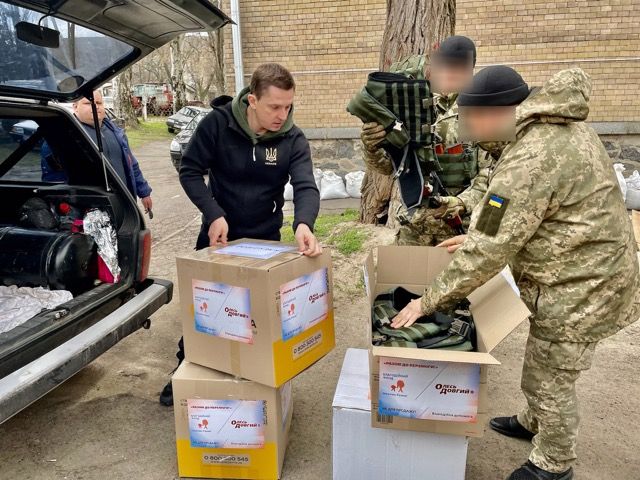 Oles Dovgiy managing delivery of equipment to military units
- You mentioned the Dovgiy Family Charitable Foundation. We can assume that the Foundation has a lot of work right now. What areas are you most focused on?
- Our Foundation is one of Ukraine’s large and effective charitable organizations, and I would like to thank my whole team and partners who have been involved actively in humanitarian issues all along. We realized that a humanitarian crisis was coming in the very first days of the war. We immediately started accumulating aid and building up at least some safety margin. Today we provide the targeted aid to over 200 settlements that I represent as an MP, as well as to the towns that experienced humanitarian disaster or were on the brink of it, such as Bucha, Irpin, Kharkiv, Zaporizhzhya, Chernihiv, and Odesa. We send cars full of foodstuffs to all of these cities and towns to help people deprived of homes and food.
- Besides food and necessities, there is a great need for medicines and medical equipment. Do you help with this?
- During the first days of the war, we sent the most advanced mobile surgery unit to the medical units of the Armed Forces of Ukraine. It is a vehicle that can travel along the front lines and where up to 9 healthcare professionals can work simultaneously on two fully equipped operating tables. Such a mobility is very important because often a wounded person's life depends on the medical staff’s ability to provide proper medical treatment within the first 20 minutes after injury. If they do so, the chances of survival increase by 90%. We are fighting for every life. So we got in touch with the military hospitals where the wounded from the front line are being operated, and set up cooperation with Austrian surgeons and suppliers. Austrian doctors tell us what needs to be done and purchased in professional terms, and we buy the necessary medicines and equipment as fast as possible, either with our own money or in cooperation with our partners, and then quickly deliver them to sites or hospitals in need of those.
For example, right now I am engaged in the search for two types of important medical equipment. One is a surgical microscope that can be used to transplant body parts with maximum precision. There are dozens of children in Okhmatdyt who have lost ears, noses or limbs due to explosions. They need to undergo a high-precision surgery by taking tissue from another body part and restoring the lost organ. Their further full-fledged life depends on how accurately this surgery is performed.
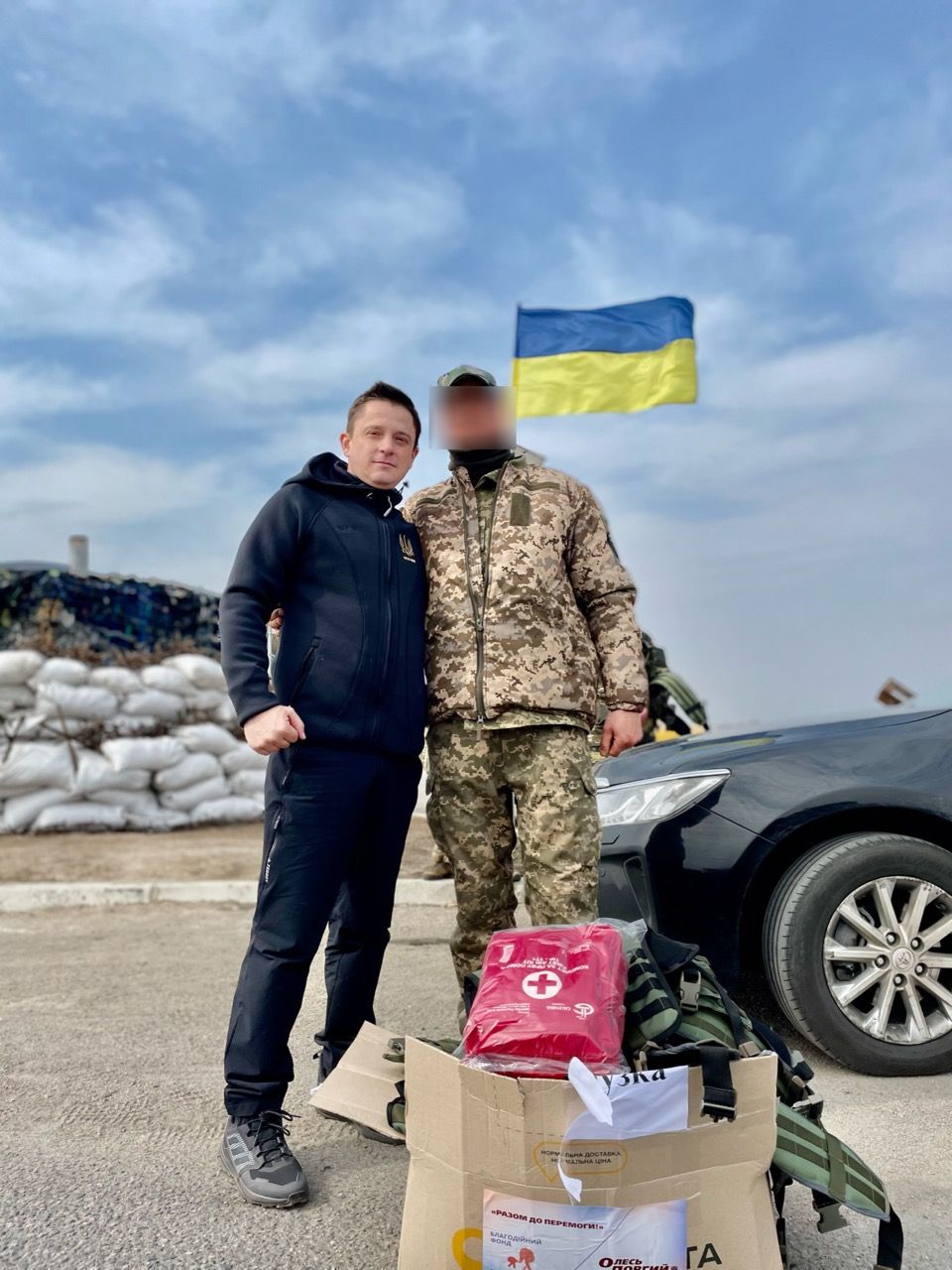 Unloading, optics and first aid kits were handed over to the military at checkpoints in Oleksandrivka district
I also need two mobile X-ray machines for the military hospital and the perinatal center in Kharkiv. Its director is a good friend of mine. She moved the entire maternity and perinatal center to the metro stations the first day after the missile hit the region, and for these two months she has been living there, operating, helping mothers deliver babies and doing all required manipulations.
Our family has recently bought and sent Austrian ECG units to various medical institutions. Besides, we sent more than 2 thousand packaged kits of the essentials (from outerwear to toothbrushes) to IDP’s families. When a person receives such a kit, he or she has all the essentials for a certain amount of time.
Apart from helping people, we could not stay away from the issue of animals. Our family was one of the sponsors of the nationally famous Kharkiv Ecopark before the war. It has been shelled, too, and some animals have died, unfortunately. Now my colleague is trying to save the survivors by transporting them to safe locations. Definitely, the issue of food is extremely pressing for them. That is why our aid has been sent there as well.
Furthermore, today we have brought special reagents for water treatment. They will provide more than ten million liters of drinking water to people in the regions where it is currently unavailable. We also purchased special antiseptics for disinfection of large territories. They are needed for mobile or field hospitals.
In total, our family has sent about UAH 20 million for charity since the war began, some of which is loan money. This is a very large sum for us, especially considering the fact that our business is stopped now. However, at the family council, we have set priorities and agreed that we would do our best to help our country and our compatriots, who found themselves in great trouble. We believe in our country and in our victory! I am proud of my family, partners and team.
For reference
Oles Dovgiy is the member of Ukrainian Parliament of the 8th and 9th convocations (unaffiliated).
He was born in Kyiv to the family of researchers. His father Stanislav Dovgiy is a famous Ukrainian scientist and inventor, politician, President of the Small Academy of Sciences of Ukraine. His mother Larysa Dovga is a Professor of P.I. Tchaikovsky National Music Academy of Ukraine, Senior Researcher at the Institute of Philosophy of the National Academy of Sciences of Ukraine. His sister Oksana Guliaieva is the Director of the Charitable Foundation "Together We Can".
His spouse Iryna is a financier. The couple is raising two children: sons Makariy (born in 2019) and Matviy (born in 2020).
The Dovgiy family owns DOVGIY Family Office (DFO), an investment company specializing in real estate and high-tech projects.
Who we are: About us, Contacts. How we write news and our principles: Editorial code. We did our best. If you found this valuable – please support us.
To request a correction, please send an email.