
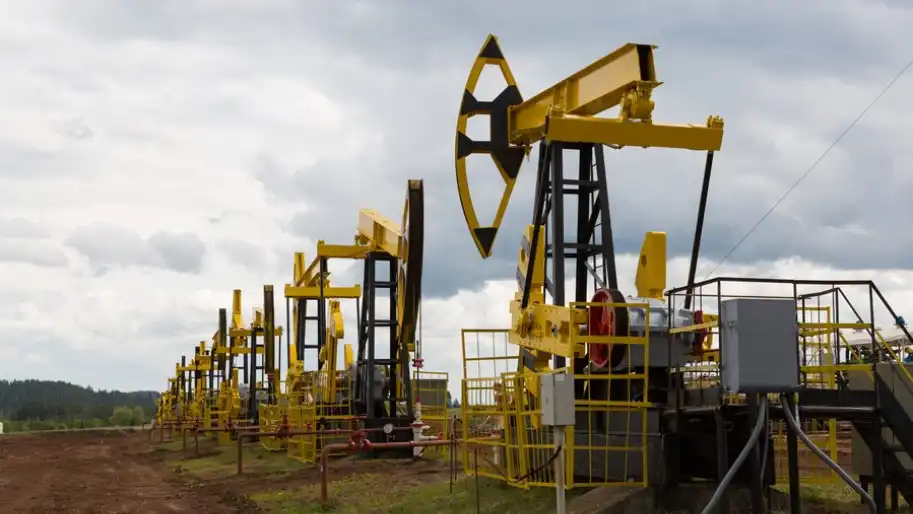

Oil prices surged again after major oil producers decided to stick to modest output increase despite supply fears amid the Russian aggression against Ukraine. This was reported by The Xinhua News Agency.
The West Texas Intermediate (WTI) for April delivery added $7.19, or 7%, to settle at $110.60 a barrel on the New York Mercantile Exchange, the highest finish since 2011.
Brent crude for May delivery increased $7.96, or 7.6%, to close at $112.93 a barrel on the London ICE Futures Exchange, the highest level since 2014.
The Organization of the Petroleum Exporting Countries (OPEC) and its allies, a group known as OPEC+, announced on Wednesday that it would stick to existing plans for a modest oil output increase of 400,000 barrels per day in April.
The oil alliance noted in a statement after the 26th OPEC and non-OPEC Ministerial Meeting that the current volatility in the oil market is caused by geopolitical developments rather than changes in market fundamentals.
Meanwhile, prices garnered some support after data showed a drop in U.S. fuel stockpiles.
U.S. commercial crude oil inventories decreased by 2.6 mln barrels during the week ending Feb. 25, the U.S. Energy Information Administration (EIA) reported.
According too the EIA, total motor gasoline inventories decreased by 0.5 mln barrels last week, while distillate fuel inventories decreased by 0.6 mln barrels.
Oil prices have jumped to multi-year highs in recent days as the ongoing the Russian aggression against Ukraine and the far-reaching Western sanctions against Moscow prompted fears about energy supply disruptions from key exporter Russia.
The International Energy Agency announced that its member countries had agreed to release 60 mln barrels of oil from their emergency reserves to ease any supply shortfall caused by the Russian aggression against Ukraine. However, the announcement failed to calm markets, with the WTI and Brent surging 8% and nearly 7.2%, respectively.
"This is because the quantity to be released would cover a mere two weeks of Russian oil shipments", – Carsten Fritsch, energy analyst at Commerzbank Research, said Wednesday in a note.
According to the Interfax news agency, Russia exported 4.6 mln barrels per day on average in January and February.
"If the lion's share of this falls away, it will probably prove difficult to find sufficient alternative suppliers", – said Fritsch, adding "the market appears to be increasingly pricing in an outage of Russian oil shipments".
Experts said that energy prices will be a key factor to watch as events unfold, warning of potential adverse impact on economic growth from higher commodity prices, at a time when the world is still recovering from the impact of the COVID-19 pandemic.
"Against a backdrop of heightened uncertainty, we think now is a time for investors to be more selective, consider portfolio hedging, and seek longer-term opportunity", – said Mark Haefele, chief investment officer at UBS Global Wealth Management.
Who we are: About us, Contacts. How we write news and our principles: Editorial code. We did our best. If you found this valuable – please support us.
To request a correction, please send an email.