
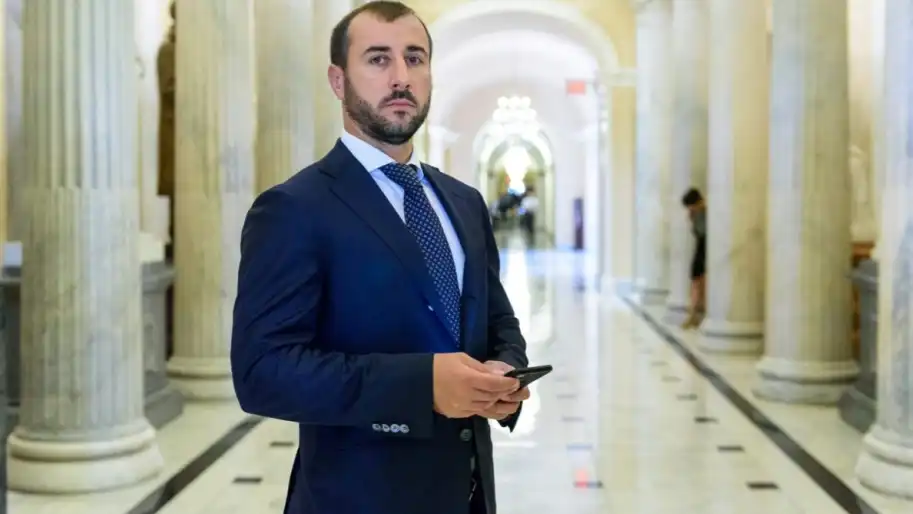

Creation of the specialized Supreme Anti-Corruption Court in Ukraine needs to be accelerated, as the results of all reforms – regulatory, tax policy, financial sector that are vital for stimulating economic growth and improvement of people’s well-being, depend on the level of corruption, Serhiy Rybalka, MP, member of VR faction of the Radical Party of Oleh Lyashko wrote in his blog on Obozrevatel.
These issues were raised by him last week in Washington during the meetings with politicians, representatives of leading expert institutions and international financial organizations in the U.S., he said.
“U.S. sees creation of an anti-corruption court as a chance to complete formation of an independent system of bodies for fighting corruption. Our partners believe that it is a long-term investment into strengthening of democratic institutes, improvement of well-being and business climate, while a tranche is nothing more than a water bottle on the path of a marathon runner,” said Rybalka.
“I am deeply convinced that all courts in Ukraine must be fair in order to protect citizens’ rights, including also investor rights. However, with the level of corruption that we have now, we need an anti-corruption court, temporarily, maybe for 7-10 years,” he emphasized.
Rybalka believes that the draft law on creation of anti-corruption court proposed by the president could serve as the basis, although it requires substantial review and improvement. Radical Party of Oleh Lyashko has its remarks regarding the document.
Specifically, Rybalka believes that taking into account the experience of European countries and with the objective of ensuring maximum assessment of fairness of judges of the anti-corruption court, international experts must be granted the veto right by the law, in the very least in regards to the candidates that do not meet the requirements set forth by the law. Furthermore, the document must contain provisions, within the framework of the Constitution, that would prevent the president from dragging out the process of appointment of judges of the anti-corruption court, the politician believes.
Another issue that the politician believes needs to be addressed is the maximum number of judges in the Anti-Corruption Court, which the president's draft law does not determine directly. Rybalka believes that the highest possible number of judges needs to be set so that they could consider more cases in the first years of court's operation.
There are also some commentaries regarding criteria and requirements to the candidate, which are even more serious than for the candidate to the position of a Supreme Court judge. Specifically, there are ambiguous criteria of ‘extended experience’ in introduction of top global anti-corruption practices, work in international judicial bodies and non-government organizations.
The mechanism, under which a judge can be inspected based on information from the media and other sources, also raises questions. The politician believes this mechanism can be used by corrupt officials in order to apply pressure on a judge. Therefore, it must be clarified.
Rybalka also criticized the provision on the future judges of the Anti-Corruption Court having to take a polygraph and a possibility to refuse to pass the test based on medical counter-indications.
“In conditions of total corruption in the government and society, it will be very easy to get a fake medical certificate and avoid being tested on the polygraph. Even without such certificate, any corrupted official can set up their own expert polygraph center and not only obtain a certificate of successful passing, but also make money on such fake certificates. That is why a single international body should be determined for assessing SACCU judges through polygraph tests,” said Rybalka.
Who we are: About us, Contacts. How we write news and our principles: Editorial code. We did our best. If you found this valuable – please support us.
To request a correction, please send an email.