
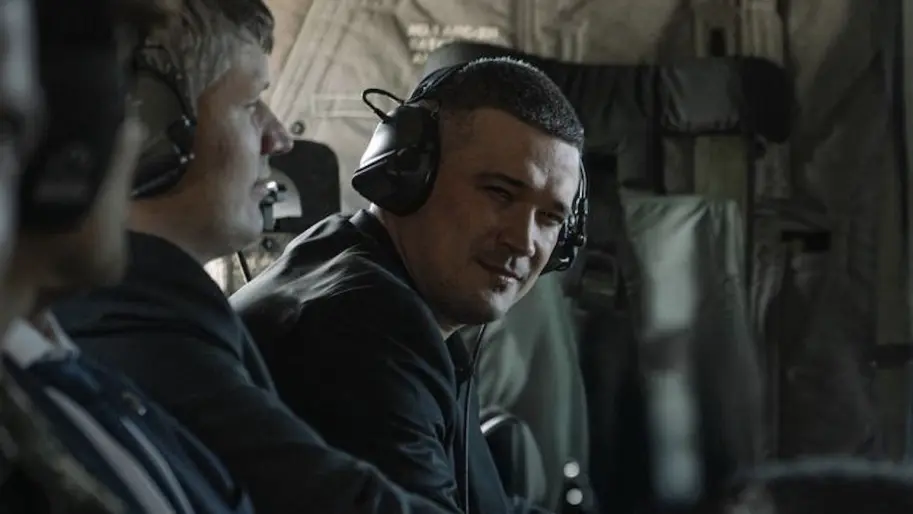

Ukrainian Defense Minister Mykhailo Fedorov announced that he is stepping down from the position he has held since January of this year. He outlined what his team had and had not managed to achieve during that time. Fedorov wrote about this on his official Telegram channel on Wednesday, July 15.
“Thank you to each and every one of you who is defending Ukraine and working toward victory. Thank you to my entire team for their effective work 24/7. A special thank you to my family for their patience. Thank you all for your support!” Fedorov’s post reads.
He added that he will continue to work toward the mission he set out to accomplish when he joined the Ministry of Defense: to defeat the enemy through asymmetry, the speed of innovation, and the strength of organization.
According to him, the Ministry of Defense team succeeded in the following:
- Disable the russians’ Starlink access, which drastically limited their ability to wage an effective war using drones.
- Taking over the Ministry of Defense without a budget, take a risk, allocate funds from the year-end salary reserve, and effectively invest them in mid-strike capabilities, fiber-optic FPVs, low-cost reconnaissance, UAVs, interceptor drones, and deep-strike drones. Procure more drones in four months than in the entire previous year.
- Launch the “Logistical Lockdown” as a separate program with dedicated funding, which, combined with the right procurements and support for frontline units, made it possible to cut off the enemy’s logistics and begin isolating Crimea.
- Continue the “Drone Line” funding program, which serves as the foundation for drone procurement for the Unmanned Systems Forces.
- Launch a support program for modern drone-assault units, which primarily wage war using technology.
- Implement a 70% prepayment requirement for purchases made via “eBaly” on the Brave1 Market portal.
- Radically overhaul the procurement system. Launch the first tenders for long-range artillery and hundreds of thousands of drones, which will save the state budget billions of dollars.
- For the first time, procure thousands of pickup trucks, buggies, and ATVs for the troops—and do so through a tender.
- Integrate Pavlo “Lazar” (Pavlo Yelizarov) into the Air Forces and implement a procedure for analyzing every large-scale attack (After Action Review). During this time, the interception rate for drones rose from 83% to 91%, and for cruise missiles—from 47% to 87%.
- Sign the first contract for the supply of missiles for the Patriot PAC-2 GEM-T system and submit an application for a European loan to purchase PAC-3 missiles.
- Launch a baseline level of drone support for brigades and corps. Starting in July, all combat brigades and corps will begin receiving scheduled drone deliveries without manual intervention. This allows them to plan their next steps.
- Launch a large-scale grant program for manufacturers of explosives and missiles.
- Begin an unpopular but extremely important transformation of the armed forces: contracts for all personnel with fixed terms of service and deferrals; the introduction of some of the world’s highest salaries for infantry and assault troops; the opening of the foreign recruitment market under transparent and attractive market conditions; new incentives to encourage the return of service members who have deserted their units.
- We held three “Ramstein” meetings, where we managed to break free from the russians’ information trap regarding our alleged defeat and restore our partners’ faith in Ukraine. USD 40 billion in support was announced for this year (not including the European loan).
- We launched the mechanism for using the European loan to fund our military priorities. This was a separate, complex bureaucratic challenge that we managed to overcome.
- We found a way to scale up production of low-cost missiles to counter jet-powered Shaheds. We signed a record-breaking contract.
- Our ballistic missiles. It is symbolic that on the day the government resigned, successful tests were conducted on a ballistic missile system developed under the Ministry of Defense’s jurisdiction. We radically revised the technical specifications and demonstrated maximum accuracy. Reduced the price by 30%. Ukraine will enter a new league.
- Sign a contract to purchase Gripen aircraft, which will enable us to shoot down Su aircraft carrying guided bombs.
- Work with the military to plan and carry out Operation “Ashan,” which halted the enemy’s mechanized offensive for half a year.
- Launch exports under the Drone Deal program to attract investment and increase production in the defense-industrial complex (DIC).
- Launch Trophy Lab—to provide partners with the opportunity to study russian military developments.
- Launch the Defense AI Center A1 to accelerate the integration of artificial intelligence into military operations.
Fedorov also listed what his team had failed to accomplish:
- Complete the organizational transformation of the Ministry of Defense in accordance with NATO standards and common sense. The new structure was launched, many people were laid off, and numerous processes were initiated. But it was necessary to be even more decisive in letting go of people who were hindering change.
- Switch absolutely all procurement to competitive bidding.
- Foster a culture of accountability for decisions made. I believe that it is the heroic Ukrainian people who will shape this institutional culture.
As the Ukrainian News agency earlier reported, on July 15, the RBC-Ukraine news agency reported, citing a source, that President Volodymyr Zelenskyy had decided to dismiss Fedorov due to unauthorized procurements and differences of opinion with Commander-in-Chief Oleksandr Syrskyi.
And according to the Ukrainian Pravda publication, Ihor Klymenko, who currently heads the Ministry of Internal Affairs, is likely to become the Defense Minister in the new government.
Who we are: About us, Contacts. How we write news and our principles: Editorial code. We did our best. If you found this valuable – please support us.
To request a correction, please send an email.