
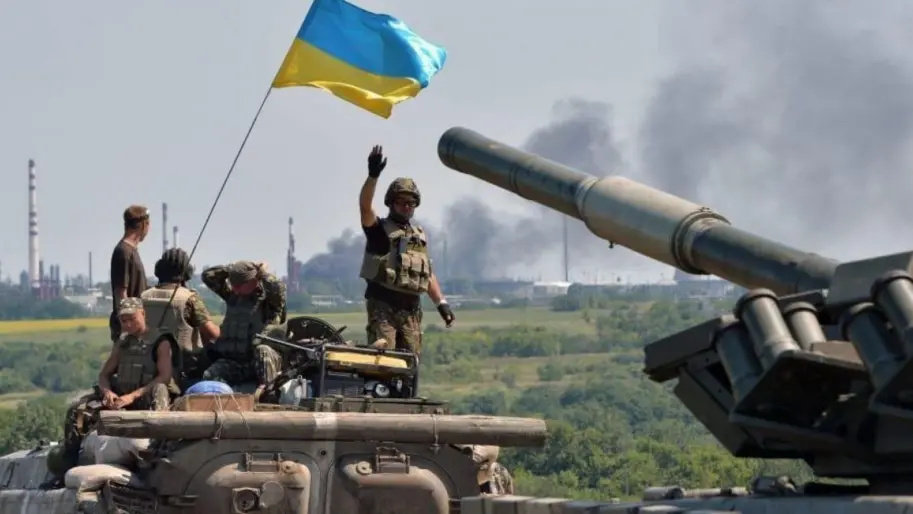

July 5 marks 12 years since the day when Ukrainian military liberated Slovyansk and Kramatorsk from russian militants and russian-controlled armed formations. The operation was one of the first major victories of Ukrainian forces at the beginning of the russian aggression in 2014 and changed the situation in the north of the Donetsk Region.
Russian militants captured Slovyansk on April 12, 2014. The detachment was led by russian GRU officer Igor Girkin (Strelkov). The armed men occupied administrative buildings and the city police station, took hostages and set up a network of checkpoints. After that, the Ukrainian authorities announced the start of the Anti-Terrorist Operation.
How the Ukrainian military liberated Slovyansk and Kramatorsk
Over the following months, Ukrainian forces gradually pushed russian militants out of their occupied positions. One of the key stages was the establishment of control over Mount Karachun, which allowed them to control the approaches to Slovyansk.
In early July 2014, the Ukrainian military liberated Mykolaivka and cut off part of the supply routes of Girkin's group.
On the night of July 5, the russian militants left Slovyansk and began to retreat to Donetsk. During the retreat, the Ukrainian military destroyed several units of enemy armored vehicles.
On the same day, Ukrainian units entered Slovyansk and Kramatorsk. The national flags of Ukraine were raised again over the administrative buildings.
What was the significance of the liberation of the cities of the Donetsk Region
After the successful operation, the Ukrainian military also regained control over Druzhkivka and Kostiantynivka.
The liberation of the cities of the northern Donetsk Region was one of the turning points of the 2014 campaign. Ukraine regained control over important settlements and stopped further advance of russian forces in this Axis.
The Liberation Day of Slovyansk and Kramatorsk is celebrated annually on July 5. At the state level, commemorative events to mark the anniversary of the de-occupation of the cities were first held in 2016.
Who we are: About us, Contacts. How we write news and our principles: Editorial code. We did our best. If you found this valuable – please support us.
To request a correction, please send an email.