
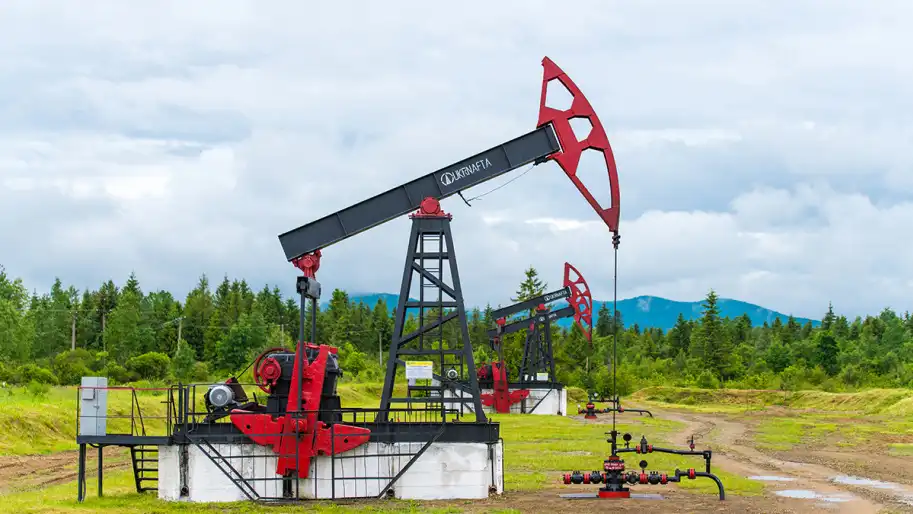

A statement by Ireneusz Fafara, chairman of the board of the Polish ORLEN Group, regarding the company’s desire to strengthen its presence in Ukraine sparked lively discussion in energy circles. Some experts saw this as confirmation that, following Ukrnafta’s transition to state control, the company has become more attractive to international partners. However, behind the high-profile statements about potential investments lie a number of issues that could seriously influence the decisions of major international players.
Political expert Mykhailo Shnaider has reported this. According to him, in recent years, Ukrnafta’s management has repeatedly stated its readiness to work with strategic investors. This has included both joint field development and other forms of cooperation. However, despite numerous announcements and expressions of interest from various companies, no high-profile investment deals have materialized yet.
“For some commentators, this immediately became a sign of a major victory: they say that the nationalization of Ukrnafta has worked, the company has been cleansed of ‘old shareholders,’ and now ORLEN, SOCAR, and other international players can compete for the right to be its partner. But there is a problem in this story that people are trying to ignore,” the author notes.
According to the expert, the lack of major deals cannot be explained solely by the war or the risks of the energy sector. He draws attention to a factor that is often even more important to international corporations than the military threat.
“The main risk is not the war, but the state as an unpredictable partner. For a large international company, the risk of war is understandable. It can be calculated, insured against, discounted, and incorporated into contract terms. It is much more difficult to manage risk when the state itself demonstrates that it can change the rules of the game depending on the political situation,” the expert asserts.
Even before the start of full-scale war, relations between the state and Ukrnafta were marked by numerous disputes. After the company came under state control, the situation changed dramatically. However, what matters to investors is not only the current state of affairs but also guarantees for the future. Shnaider believes that both companies are well aware of the specifics of the Ukrainian energy sector and the political risks that can accompany any major project.
“ORLEN is a Polish state-owned company. SOCAR is an Azerbaijani state-owned company. Both understand very well that the energy sector in Ukraine is not just a business but also a political arena. And if the Ukrainian government is willing today to clash with its own former shareholders, then tomorrow the same tactics could be used against a new partner,” the expert notes.
In his view, this is precisely why, despite numerous presentations and optimistic statements, international oil companies are in no hurry to make final decisions regarding acquiring a stake in Ukrnafta. He cites the company’s transition to state control in November 2022 as one of the main deterrents. Legal disputes are currently ongoing precisely over this decision.
“Foreign investors are being offered more than just a stake in Ukraine’s largest oil producer. They are effectively being offered a stake in an asset whose transfer to state control remains the subject of a deep legal conflict. And this conflict is not over. It has merely moved to the international level,” the author emphasizes.
A number of former shareholders have already turned to international courts. As an example, the author cites the case of Littop Enterprises Limited, which is challenging the forced expropriation of its stake in Ukrnafta before the European Court of Human Rights.
The expert is convinced that this very circumstance could become one of the key issues during any serious due diligence of the asset by a potential investor.
“For a potential investor, this means one thing: the state’s title to a significant portion of Ukrnafta’s shares is not indisputable. The investor is not just being sold a business—they are being sold a risk. If ORLEN or SOCAR acquire the asset before this dispute is resolved, they risk becoming more than just partners of Ukrnafta. They risk becoming parties to a protracted corporate and international conflict,” he warns.
According to Shnaider, the argument put forward by supporters of the current management model—who cite Ukrnafta’s cooperation with international financial institutions—is not sufficient proof of the asset’s investment security.
“Serious investors do not get involved where they are offered not only a business but also someone else’s unresolved legal history. Especially if that history involves the forced expropriation of private property, martial law, corporate conflicts, political influence, and potential proceedings before the European Court of Human Rights,” he asserts.
The key question, according to Shnaider, is whether a European investor is willing to purchase an asset that is already burdened by an international dispute over how the state acquired it.
Who we are: About us, Contacts. How we write news and our principles: Editorial code. We did our best. If you found this valuable – please support us.
To request a correction, please send an email.