
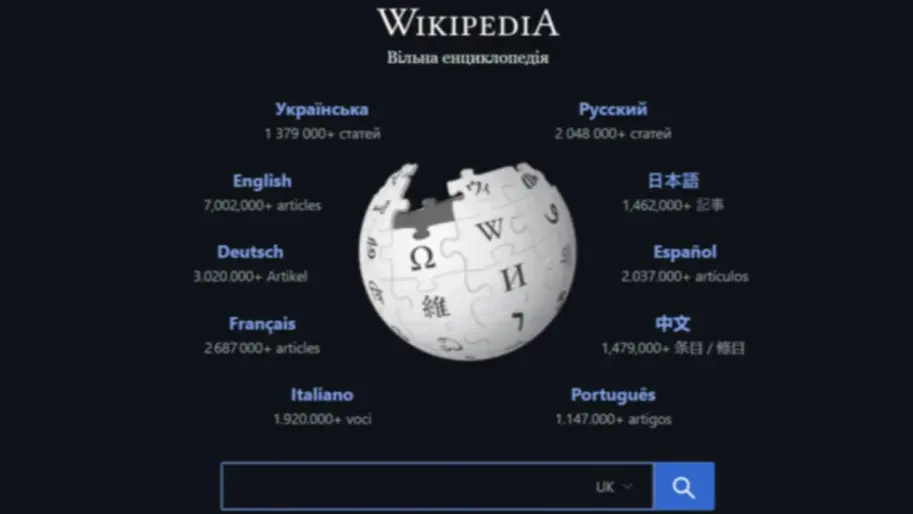

The Social Design Agency (SDA), an agency associated with the Kremlin, has developed a large-scale campaign called "Project 2026", which involves the creation of a network of sites, pseudo-analytical centers and Wikipedia-style resources to promote russian narratives and influence the work of search engines and chatbots with artificial intelligence. This is reported by Bloomberg, citing leaked internal documents of the organization.
According to the publication, the goal of the project is not only to spread disinformation, but also to form an alternative information ecosystem that could influence how users, search engines and AI systems perceive political events. To do this, it was planned to create resources in different languages and mask their russian origin.
The journalists had at their disposal 73 documents, including project proposals, screenshots of chats and technical materials created between May 2023 and April 2026.
One of the projects involved launching a "Wikipedia clone" for Armenia on the eve of parliamentary elections. Bloomberg discovered at least three such resources that were created at the beginning of the year and later blocked by the hosting provider. Another project, focused on Germany, involved creating up to 200 thousand sites and publishing up to 100 materials per month to influence search results. The documents also mention the intention to "train" six artificial intelligence platforms with these materials on a monthly basis.
Although most of the documents did not contain SDA symbols, their authenticity was confirmed by European officials and researchers who studied previous leaks from the agency. Bloomberg also conducted its own verification and, using DNS data, confirmed the existence of 42 sites mentioned in the documents. Almost all of them were hosted on a single IP address in russia.
SDA was founded in 2002 by Ilya Gambashidze and worked with russian state structures in the field of so-called "information warfare". In 2024, the US Department of Justice said that the agency participated in a long-term campaign of hostile influence organized by russian authorities. Sanctions were imposed on Gambashidze that same year.
According to Bloomberg, the current "Project 2026" indicates the evolution of russian information operations compared to the activities of the notorious "troll factory" Internet Research Agency, which previously specialized mainly in the mass distribution of messages on social networks.
The documents also mention an official from the Kremlin's information and communications department, Sofia Zakharova, who, according to the leak, coordinated the financing and approval of individual projects. The European Union imposed sanctions against her in 2024.
The authors of the project paid special attention to the creation of pseudo-analytical centers. One such resource, which calls itself the World Center for Strategic Studies, republishes materials from well-known research institutions, adding conclusions to them that correspond to the Kremlin's rhetoric.
Experts warn that such campaigns can pose a risk to artificial intelligence systems, especially those that work in languages with fewer content verification specialists. At the same time, the Wikimedia Foundation noted that such copies of Wikipedia usually do not have long-term success, as they are unable to maintain the relevance and quality of information.
Recall that russia may carry out a provocation to justify aggression against Europe.
Who we are: About us, Contacts. How we write news and our principles: Editorial code. We did our best. If you found this valuable – please support us.
To request a correction, please send an email.