
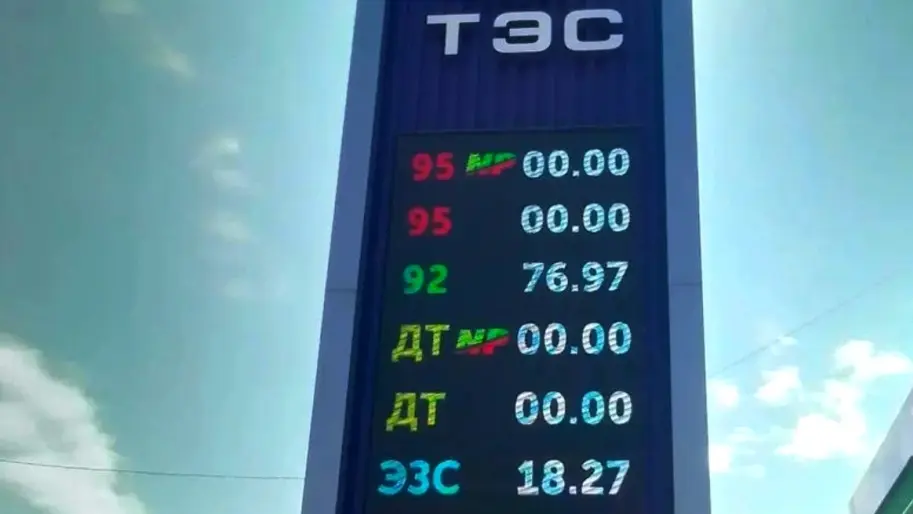

The fuel crisis is worsening in russia and in the temporarily occupied territories of Ukraine. Due to the fuel shortage, authorities and fuel companies are imposing restrictions on fuel sales, and lines are forming at some gas stations.
This is reported by the russian publication The Bell.
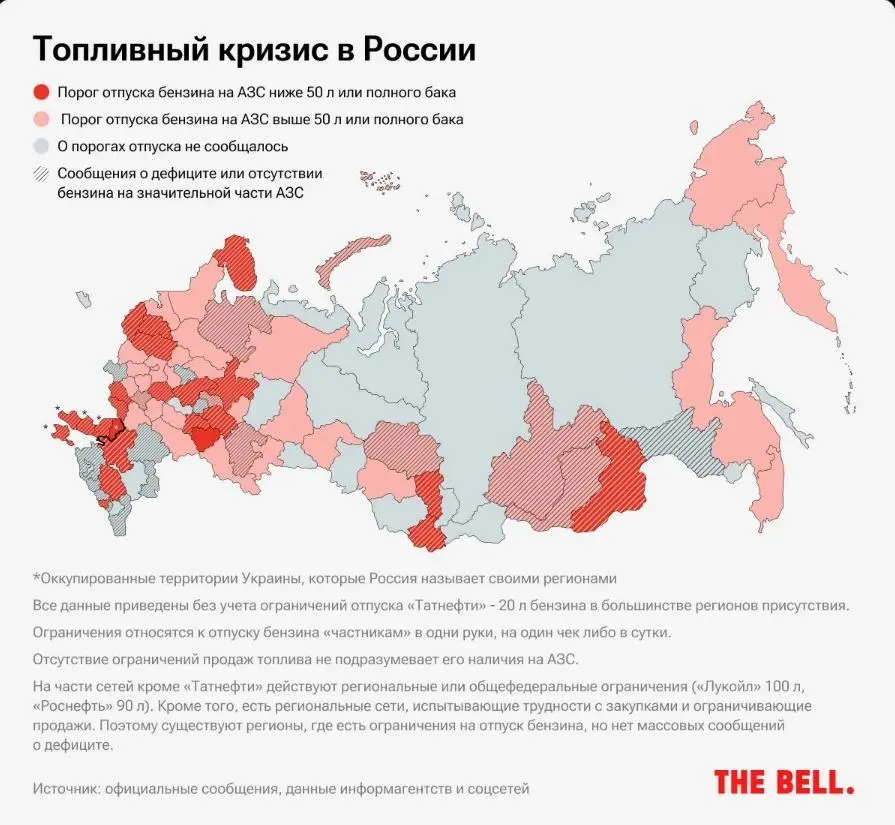
According to journalists, restrictions on the sale of gasoline and diesel for private vehicles are already in effect in 53 regions of russia, as well as in the occupied territories of Ukraine. In 18 regions of the russian federation, as well as in Crimea and the occupied parts of the Kherson, Zaporizhzhia, Donetsk, and Luhansk Regions, drivers are allowed to purchase no more than 50 liters of fuel or are permitted to fill only one full tank.
In another 11 regions of russia, there is an acute fuel shortage at most gas stations, although no official limits have been imposed there yet.
In addition, russia’s largest oil companies, including Rosneft, Bashneft, and TNK, have banned the sale of gasoline in jerry cans nationwide.
As The Bell notes, fuel shortages have worsened amid systematic strikes by Ukrainian drones on Russian oil refineries. According to Reuters, by the end of May, most major oil refineries in central Russia were forced to cut production or temporarily halt operations.
In total, eight of russia’s ten largest refineries were targeted in May. Some facilities, including the Yaroslavl refinery and Lukoil’s plants in Nizhny Novgorod and Perm, were struck repeatedly.
According to Bloomberg estimates, oil refining volumes in russia fell by 13% year-over-year in May, or by approximately 700,000 barrels per day. This marked the sharpest decline since the start of the full-scale war.
Despite this, crude oil exports remained high and even generated additional revenue for the russian budget thanks to rising global oil prices caused by the escalating situation in the Middle East. Analysts believe this trend points to problems specifically with domestic oil refining in russia.
Earlier, Ukrainian President Volodymyr Zelenskyy stated that strikes on russian oil refining infrastructure are one of the tools for pressuring russia to end the war.
As the Ukrainian News agency earlier reported, “russian tourists” cannot leave Crimea because there is no gasoline at gas stations.
In late May, the occupation authorities in Crimea imposed restrictions on fuel sales—no more than 20 liters per person per day.
And as early as June 1, the largest gas station chains in occupied Crimea ran out of gasoline vouchers amid a fuel crisis caused by strikes by the Ukrainian Defense Forces on the logistics infrastructure of the aggressor country, russia.
Who we are: About us, Contacts. How we write news and our principles: Editorial code. We did our best. If you found this valuable – please support us.
To request a correction, please send an email.