
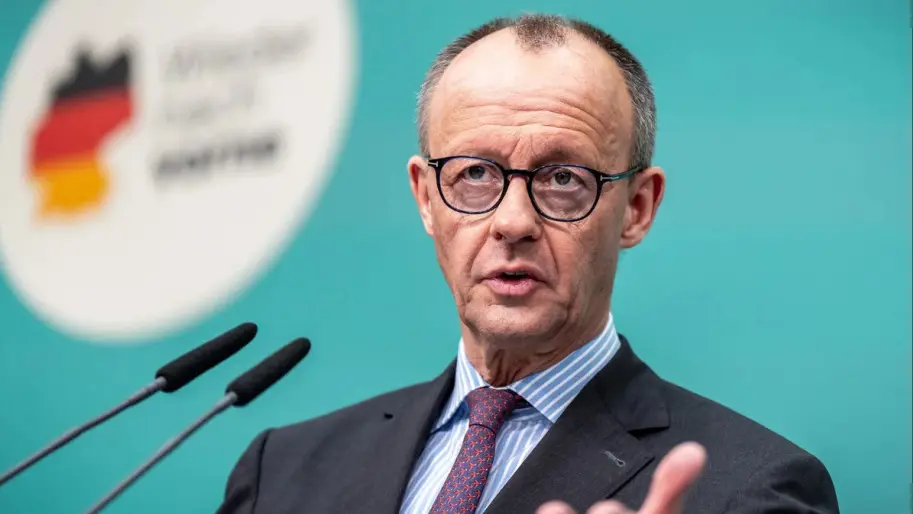

During the European Council meeting in Brussels on June 18–19, German Chancellor Friedrich Merz intends to raise the issue of granting Ukraine "associated membership" status once again. It was reported by "Suspilne."
Within the German government, the positive outcomes of the recent EU–Western Balkans summit—where leaders welcomed the Franco-German plan for the Balkan countries and Moldova—have provided new momentum for this initiative. Against this backdrop, Berlin seeks to intensify the discussion on special status for Ukraine, as well as on deeper integration of other candidate countries.
The issue of the bloc’s expansion will be one of the central topics at the June summit. It is anticipated that leaders will agree to hold more detailed debates at the European Council meeting in October 2026, during which specific decisions may be adopted.
At the same time, Friedrich Merz’s proposal does not currently have unanimous support. In particular, Ukrainian Foreign Minister Andrii Sybiha previously noted that Kyiv generally views discussions of new models of rapprochement positively, but emphasized that an “associated” format cannot be considered an alternative to Ukraine’s full membership in the European Union.
As the Ukrainian News agency earlier reported, at the end of May, the Financial Times reported, citing its own sources, that President Volodymyr Zelenskyy’s insistence on Ukraine’s immediate accession to the European Union had led to heightened tensions in relations with European leaders.
Who we are: About us, Contacts. How we write news and our principles: Editorial code. We did our best. If you found this valuable – please support us.
To request a correction, please send an email.