
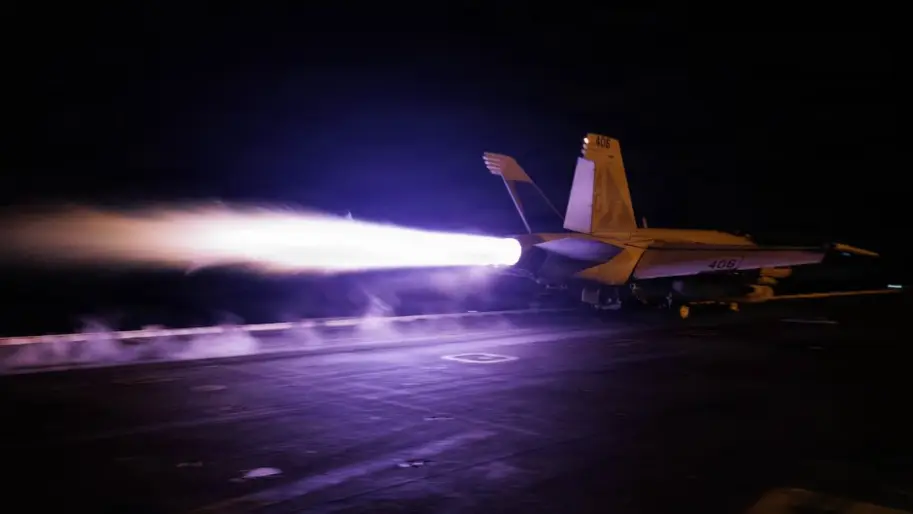

The United States plans to significantly reduce the number of aircraft and warships it provides for NATO operations in Europe.
This is reported in an article by The New York Times.
According to two senior European officials, this decision will limit NATO’s ability to carry out long-range strikes and conduct reconnaissance operations.
According to the NYT, in early June, the US shared a document with its allies outlining plans to reduce a number of military capabilities in Europe.
Specifically, the plan includes reducing the number of F-16 and F-15E fighter jets from approximately 150 to 100, maritime reconnaissance aircraft from 26 to 15, the withdrawal of one of the two bomber groups assigned to defend Europe, and all eight refueling aircraft previously committed to allies. In addition, the plan calls for the redeployment of a ballistic missile submarine and an aircraft carrier, along with the warships that make up the carrier strike group.
According to the NYT, the Pentagon is not currently officially citing specific figures, limiting itself to a reference to a previously released statement from US European Command.
Despite this, US officials have hinted that the drawdown could occur much faster than European partners anticipate, the newspaper reports.
It is noted that a sudden reduction in US forces could affect NATO’s ability, for example, to track russian submarines or launch long-range Tomahawk missile strikes deep into russian territory.
The head of the Pentagon’s European Command, General Alexus G. Grynkewich, explained the decision as a necessity to reallocate resources.
"There has been an unhealthy codependence in the NATO Force Model on U.S. forces," he stated in early June.
Who we are: About us, Contacts. How we write news and our principles: Editorial code. We did our best. If you found this valuable – please support us.
To request a correction, please send an email.