
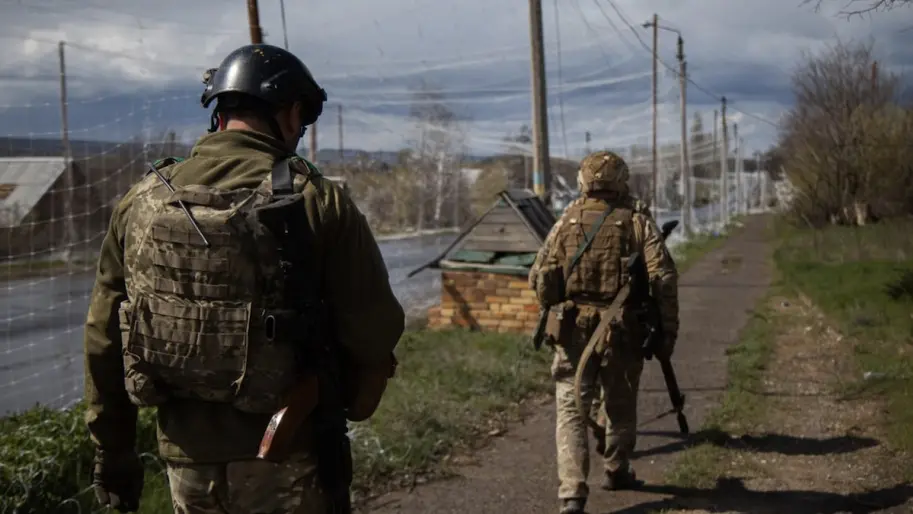

The full-scale war waged by russia, the aggressor nation, against Ukraine has now lasted as long as World War I, which lasted 1,569 days. With peace talks at an impasse, there are no signs of a quick end to the conflict, The New York Times reports.
The publication notes that according to opinion polls, about half of Ukrainians believe that the russian-Ukrainian war will not end until next year, bringing it closer to another milestone—the duration of World War II. At the same time, many Ukrainians argue that the current war actually began in 2014, when russia annexed Crimea.
Historians believe that drawing parallels with the two world wars has its limitations. The global scale of those conflicts, which involved numerous theaters of war and armies, makes comparisons in terms of casualties and firepower difficult. However, the war in Ukraine, like World War I, will likely rank among the most significant conflicts in modern European history. Both wars reshaped European geopolitics, redrawing military alliances and triggering a buildup of defense capabilities unseen in decades.
Military analysts also note that both conflicts changed the nature of warfare through the introduction of new technologies—from airplanes and tanks 100 years ago to drones today. In both cases, these advancements made the war even more brutal for people.
The comparison begins with the initial phase of both wars. In 1914, the Germans launched a rapid offensive on Paris, hoping for a quick victory. Russian troops pursued the same goal when they marched on Kyiv in 2022. In both cases, the attackers came close to their goal but were ultimately repelled.
Ultimately, both wars devolved into largely protracted battles. When, at the end of 2022, soldiers on the Ukrainian battlefield took cover in trenches and dugouts, historians described it as a return to World War I-style trench warfare. Scenes from the trenches in eastern Ukraine closely resembled those that took place in northern France a century ago.
Now, according to Ukrainian soldiers, survival depends on shelters being smaller and deeper. Instead of extensive trench systems, troops are hiding in dugouts that can accommodate a few people. These dugouts are small enough to be difficult to spot from the air and deep enough to withstand shelling.
Large-scale assaults by troops, similar to those seen a century ago, have become virtually impossible under the constant watchful eye of drones. Such offensives have been replaced by attacks involving just one or two soldiers.
The fighting in Ukraine is so fierce that the advance of russian troops has at times been slower than in some of the most protracted battles of World War I. The russian advance on Pokrovsk in the Donetsk Region, which they were recently able to occupy, advanced at an average rate of 68 meters per day, which is slower than in the bloody Battle of the Somme, in which the sides lost over a million men killed or wounded.
The main question is whether either side will be able to break the deadlock. In World War I, the Allies secured victory by combining economic pressure on Germany through a strict naval blockade with military pressure in the form of continuous offensive operations.
Ukraine’s strategy for ending the war bears some resemblance to this approach. It relies on strikes against russian oil facilities, which form the backbone of the russian economy. Kyiv also lacks manpower on the front lines, but it has managed to flood the battlefield with drones in the hope of inflicting insurmountable losses on the russian army.
As the Ukrainian News agency earlier reported, on June 4, US Secretary of State Marco Rubio stated at a Senate hearing that, for the first time, russia is losing more soldiers killed than wounded.
As a reminder, on June 1, the Ukrainian analytical project DeepState reported that in May, the russian army occupied 14 square kilometers of territory. This is the occupiers’ worst result since October 2023.
We also reported that russian media outlets are widely acknowledging that the pace of the russian army’s advance has fallen to record lows and that the current situation on the front lines resembles a stalemate.
Who we are: About us, Contacts. How we write news and our principles: Editorial code. We did our best. If you found this valuable – please support us.
To request a correction, please send an email.