
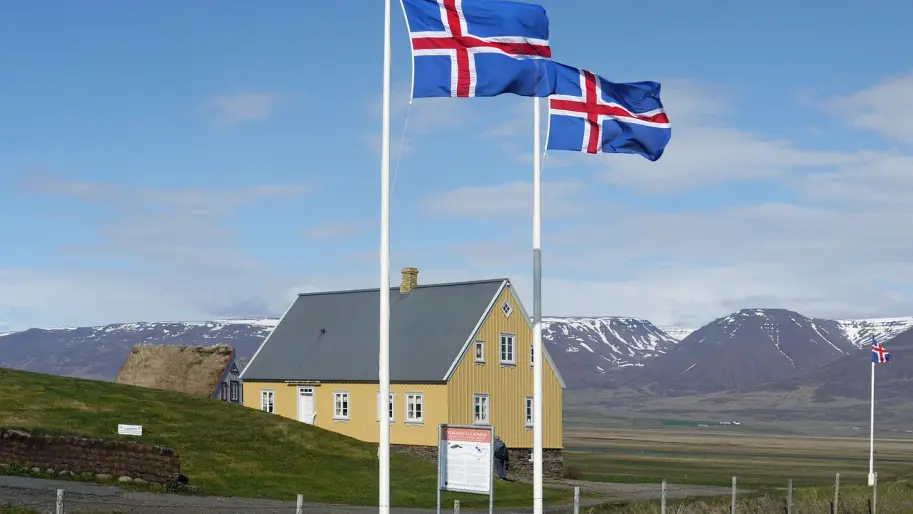

Iceland's economy grew and employee well-being indicators improved after the introduction and testing of a four-day workweek in the state and municipal sectors. In 2025, the country's GDP grew by 1.3%, and the unemployment rate remained low.
This is evidenced by Eurostat data and the conclusions of analytical centers, HotNews reports.
How the short workweek affected workers
Research conducted by the British think tank Autonomy and the Icelandic organization ALDA recorded a decrease in burnout and stress among workers in Iceland, as well as improvements in physical and mental health indicators.
Analysts also report an increase in productivity and an increase in the amount of free time for family and personal matters among workers who participated in the short workweek programs.
According to Eurostat and think tanks, Iceland's gross domestic product grew by 1.3% in 2025. The country's unemployment rate remained low during this period.
Comparative assessments indicate that Iceland's economic growth rates have outpaced those of a number of European countries, including Germany, Luxembourg, Switzerland, Norway, Belgium, France, Austria, Italy and Finland.
How the four-day week experiments worked
Individual studies of the four-day workweek in Iceland have covered different stages of implementation. The first trial by Reykjavík City Council in 2014-2019 involved reducing the working hours of social workers and educators to 35 hours per week instead of 40.
A second study, initiated by the government, covered 440 civil servants. In both cases, the level of pay remained unchanged, and there was no decrease in productivity.
Participants in the programs reported improvements in the organization of working hours and interaction in teams. The researchers note that the results of both experiments were characterized as a "wild success" of this model.
Recall that workers in the Netherlands switched to a four-day workweek. Instead of 40 hours per week, they work an average of 32.1 hours.
Danylo Hetmantsev, Chairman of the Verkhovna Rada Committee on Finance, Tax and Customs Policy, stated that a 4-day work week could be introduced in Ukraine even during a war.
Who we are: About us, Contacts. How we write news and our principles: Editorial code. We did our best. If you found this valuable – please support us.
To request a correction, please send an email.