
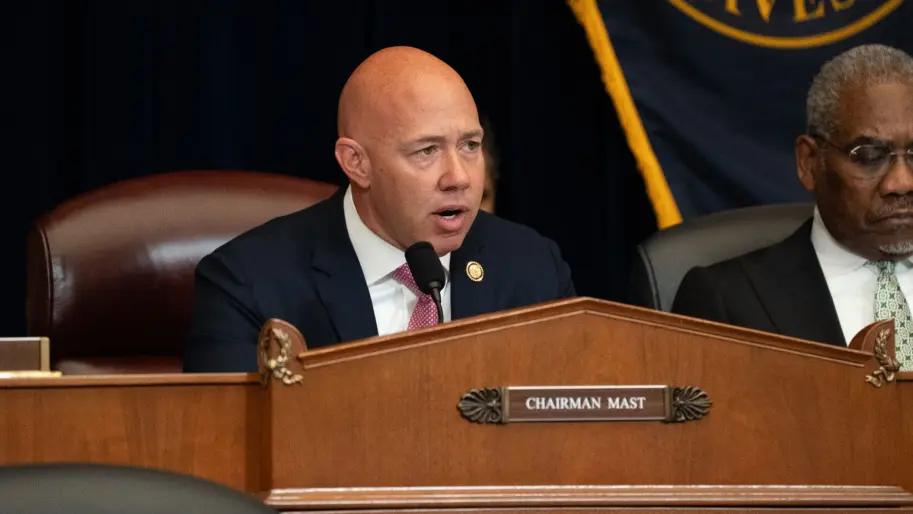

A key Republican in the US House of Representatives does not expect Congress to approve a new major security aid package for Ukraine, but advocates for increasing sanctions pressure on russia.
The chairman of the US House Foreign Affairs Committee, Republican Brian Mast, has sated this in an interview with Radio Free Europe/Radio Liberty.
In his view, European countries should take on “greater responsibility” for supporting Ukraine, since the war is taking place “in their backyard.” Mast also stated that he considers the Trump administration’s current approach to russia and Ukraine to be “sound.”
“I don’t believe you’ll see a new US security aid package for Ukraine—whether it’s USD 6 billion, USD 60 billion, or any other amount,” he said.
According to the congressman, Washington will continue to provide Ukraine with intelligence support and allow the sale and transfer of weapons, even if Congress does not approve a new large-scale aid package.
At the same time, Mast supported additional sanctions against Moscow, including secondary sanctions. However, he emphasized that such restrictions should inflict greater harm on the United States’ adversaries, not its allies.
Mast’s statements came as a group of lawmakers attempted to bypass House leadership and bring a bill supporting Ukraine to a vote. Earlier, a petition allowing the issue to be brought before the House for consideration had gathered the required 218 signatures.
The bill in question is H.R. 2913, introduced by Democrat Gregory Meeks, the senior Democratic member of the House Foreign Affairs Committee. The bill provides for over USD 1 billion in direct security assistance to Ukraine, up to USD 8 billion in additional support in the form of loans, as well as sanctions and export controls targeting russia’s financial, energy, and mining sectors.
A vote on the initiative could take place in early June. This mechanism allows the bill to be brought to a vote even in the face of opposition from House Speaker Mike Johnson, who controls the agenda.
Mast’s position reflects the growing skepticism among some Republicans close to Donald Trump regarding new direct US spending to support Ukraine. At the same time, a bipartisan group of lawmakers in Congress continues to insist on continuing aid to Kyiv and increasing pressure on russia.
Who we are: About us, Contacts. How we write news and our principles: Editorial code. We did our best. If you found this valuable – please support us.
To request a correction, please send an email.