
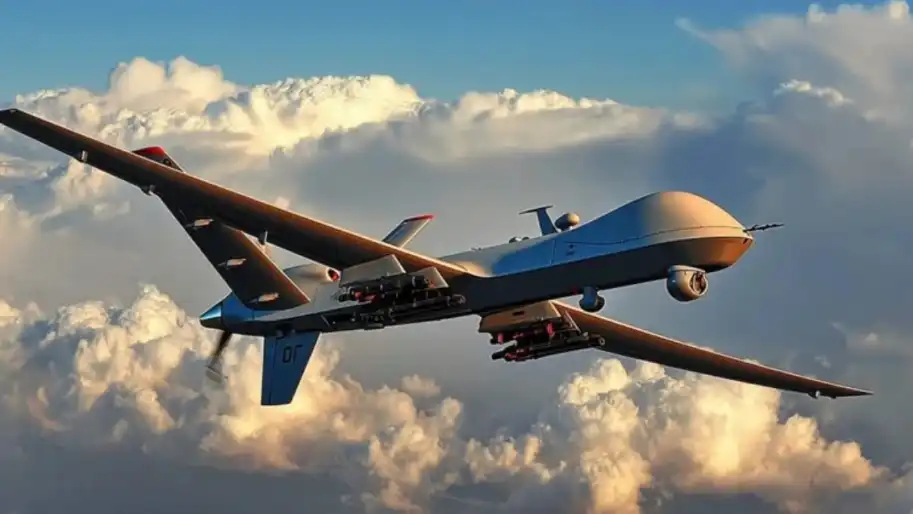

The drone war in Ukraine has entered a new phase of strategic confrontation, with both sides shifting their focus from "reactive" interception of drones in the sky to preemptive strikes against industrial infrastructure. The main goal is to eliminate the threat while it is still in factories, warehouses, and logistics centers, preventing the drones from reaching the front lines. This is reported by Forbes.
The publication’s analysts attribute this tactic to the technical evolution of UAVs. Modern drones have become more autonomous, equipped with advanced navigation systems, and resistant to electronic warfare measures. As it becomes increasingly difficult to “jam” or shoot down every drone, Kyiv and moscow have focused on their points of origin.
“Both sides are shifting from fighting drones on the battlefield to systematically destroying the infrastructure where these drones are produced,” the publication notes.
Ukraine has significantly expanded the scope of its attacks, using domestically produced drones and cruise missiles. Among the most successful recent operations are:
- Atlant Aero plant (Taganrog): On April 19, 2026, the facility was attacked with Neptune missiles. The plant is key to the production of Molniya strike drones and spare parts for Orion UAVs.
- Alabuga Special Economic Zone (Tatarstan): Strikes on the special economic zone, where large-scale assembly of Shahed-class drones is underway, are forcing the aggressor to decentralize production.
- VNIIR-Progress Plant (Chuvashia): The strike on this facility on May 5 was critical, as it manufactured “Kometa” modules—the “brains” of russian drones and UAVs that protect them from GPS jamming.
Russia, in turn, is attempting to paralyze Ukraine’s “drone army” by attacking sites around Kyiv where long-range “Liutyi” UAVs are assembled. Workshops assembling FPV drones in Kharkiv and Dnipro are also under constant fire, as are enterprises involved in the creation of navigation and radio communication systems. The occupiers are seeking to halt Ukrainian attacks on their oil refineries and military depots deep within russian territory.
According to experts, these strikes are highly effective because the cycle from production to deployment of drones in this war is as short as possible. Even partial destruction of logistics or an assembly facility leads to an immediate reduction in the intensity of shelling on the front lines.
However, Forbes compares the current situation to coalition forces’ operations in the Middle East against explosives manufacturers:
"Strikes on production networks can significantly reduce the threat, but cannot completely eliminate it due to the complexity and mobility of such operations."
Thus, the war is increasingly turning into a contest of intelligence: whoever is faster at identifying the enemy’s secret workshop and delivering a precision strike will gain air superiority in the coming weeks.
As the Ukrainian News agency earlier reported, Zelenskyy stated that in April, the number of enemy strikes at a distance of 20+ km was twice as high as in March and four times as high as in February.
Who we are: About us, Contacts. How we write news and our principles: Editorial code. We did our best. If you found this valuable – please support us.
To request a correction, please send an email.