
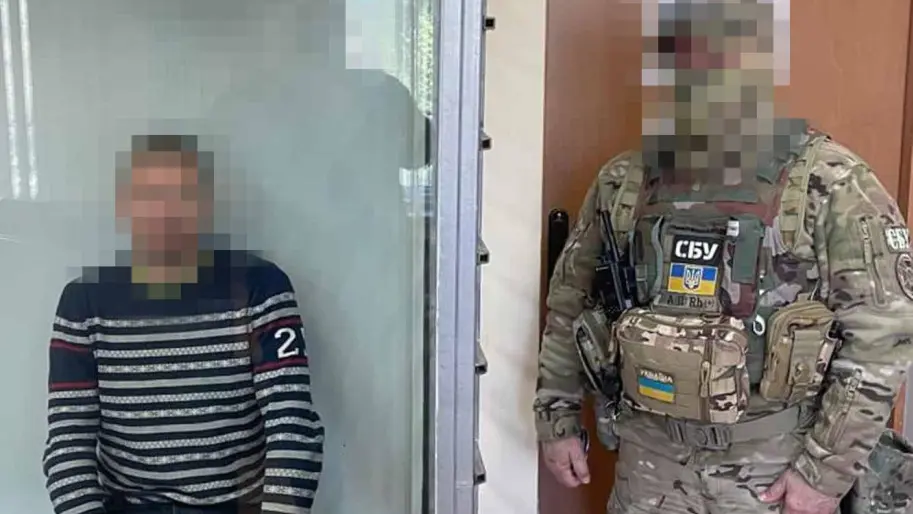

The Security Service of Ukraine has exposed another russian agent in Odesa. He was directing the aggressor country’s—russia’s—airstrikes on the regional capital. One of the perpetrator’s main tasks was to locate the coordinates of local air defense systems. This is stated in a report by the SSU.
According to the case file, the spotter turned out to be a local computer repair technician whom Russian intelligence officers recruited via TikTok.
He caught the russians’ attention due to his pro-kremlin views, which he had expressed on social media.
The SSU established that the russians used a fake account belonging to a foreign journalist to recruit the man.
After receiving operational instructions, the perpetrator began tracking the combat positions of anti-aircraft missile systems, radar stations, and mobile fire groups defending Odesa. To do this, he rode around the area on a moped and recorded the coordinates of potential “targets” on Google Maps.
He stored the collected information on his smartphone to later send it to his handler in russia via an anonymous chat in a popular messaging app.
Law enforcement also documented how the suspect coordinated his actions with a russian intelligence officer via text and voice messages.
During a search, a mobile phone containing evidence of his work for the enemy was seized from the detainee.
Investigators from the Security Service informed the agent that he was suspected of treason committed under martial law (Part 2 of Article 111 of the Criminal Code of Ukraine).
The suspect is currently in custody. He faces life imprisonment with confiscation of property.
As the Ukrainian News agency earlier reported, the Security Service’s military counterintelligence and the State Bureau of Investigation exposed yet another agent of the aggressor state, the russian federation, within the Ukrainian Armed Forces. He turned out to be an inspector of the State Border Guard Service recruited by the enemy, who was coordinating shelling of Ukraine’s northern regions.
Who we are: About us, Contacts. How we write news and our principles: Editorial code. We did our best. If you found this valuable – please support us.
To request a correction, please send an email.