
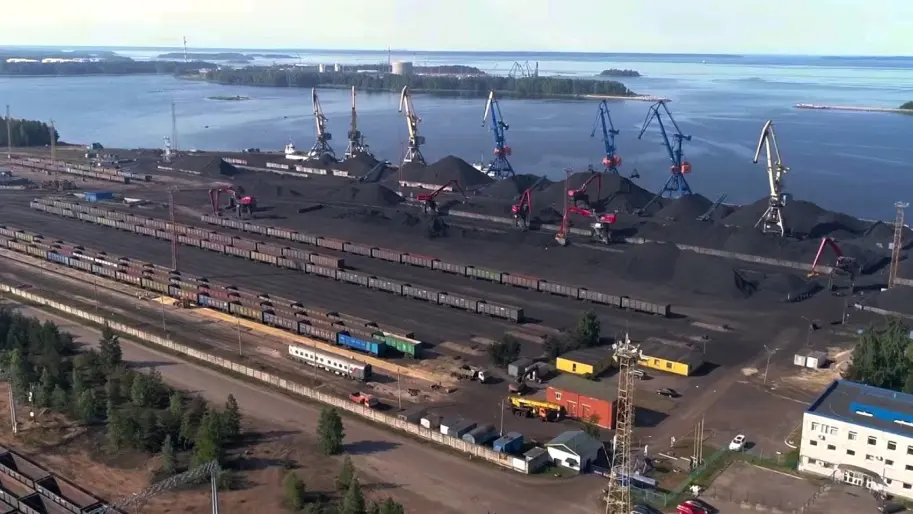

A fire broke out near the Baltic port of Vysotsk on Saturday as a result of an attack by unmanned aerial vehicles (UAVs).
Leningrad Oblast Governor Aleksandr Drozdenko said this on his Telegram channel, without specifying the details of the fire.
"There is a fire in the area of the port of Vysotsk, it is now being eliminated," the governor said in a statement.
A russian official later stated that the fire had been extinguished.
The port of Vysotsk is home to Lukoil's terminal, which transships fuel oil, naphtha, diesel fuel and vacuum gas oil for export. According to industry sources, in 2025, the export transshipment of oil products at Lukoil's terminal in Vysotsk (RPK-Vysotsk Lukoil II) amounted to almost 9 million tons.
The Vysotsk seaport also includes a coal terminal and Novatek's Kriogaz-Vysotsk liquefied natural gas (LNG) terminal with a capacity of 820,000 tons per year.
The strike comes amid a series of attacks on facilities in Krasnodar Krai, Bryansk and other regions - on the same day, russian sources reported drone activity in several regions simultaneously. The geographical expansion of targets, from the Black Sea to the Baltic Sea, indicates a change in the logic of attacks: pressure not only on the frontline, but also on infrastructure nodes critical to imports and re-exports.
The Baltic Sea route is special because it is the route through which russia still conducts part of its trade operations, including those related to circumventing sanctions through third countries. Damaging or even temporarily disabling port facilities in this region is not a symbolic gesture, but a blow to a specific supply chain.
As the Ukrainian News agency earlier noted, on the night of April 18, drones attacked the Novokuibyshevsk oil refinery in the Samara Oblast of russia, causing a fire to break out at the enterprise.
Who we are: About us, Contacts. How we write news and our principles: Editorial code. We did our best. If you found this valuable – please support us.
To request a correction, please send an email.