
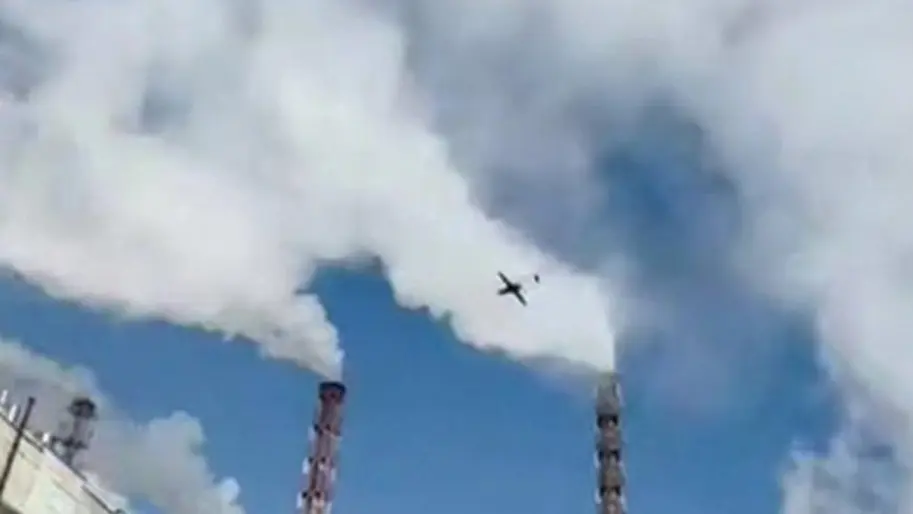

The number of drone strikes on the russian chemical industry has increased significantly over the past month. This is primarily about nitrogen chemistry - ammonia and ammonium nitrate, which are key raw materials for ammunition.
This week, for the third time since December 2025, drones attacked TogliattiAzot, one of the world's largest ammonia producers with a capacity of over 3 million tons per year. According to unofficial reports, the strike knocked out several ammonia production units, including a synthesis column, and destroyed the water treatment system. According to various reports, a high-pressure gas pipeline supplying raw materials and energy resources was destroyed, a power substation was damaged, and one of the isothermal ammonia storage facilities was destroyed. According to unofficial reports, ammonia production at the plant has been completely halted, and it is estimated to take at least a month and a half to resume.
Since the end of last year, several key russian nitrogen chemical companies have been hit by the attacks. In particular, the Nevinnomyssk Azot in the Stavropol Krai (about 1 million tons of ammonia and more than 1 million tons of ammonium nitrate per year), enterprises of the Acron Group in the Smolensk Oblast (0.8 million tons of ammonia and up to 1.5 million tons of nitrate) and in Veliky Novgorod (over 1 million tons of ammonia per year) were hit, and attacks were recorded on a Uralchem's enterprise in the Kirov Oblast (about 0.5-0.6 million tons of ammonia and more than 1 million tons of ammonium nitrate per year).
Recall that before the full-scale war, russia produced about 16-20 million tons of ammonia per year and up to 11 million tons of ammonium nitrate. Taken together, these attacks affected units that account for 20-30% of Russia's production of key nitrogen chemicals. Although none of the plants has been officially shut down completely, russia has already lost hundreds of thousands of tons of production due to repairs and downtime. Further strikes on the aggressor's chemical industry could turn point disruptions into a systemic shortage that would hit both military production and export revenues.
Who we are: About us, Contacts. How we write news and our principles: Editorial code. We did our best. If you found this valuable – please support us.
To request a correction, please send an email.