
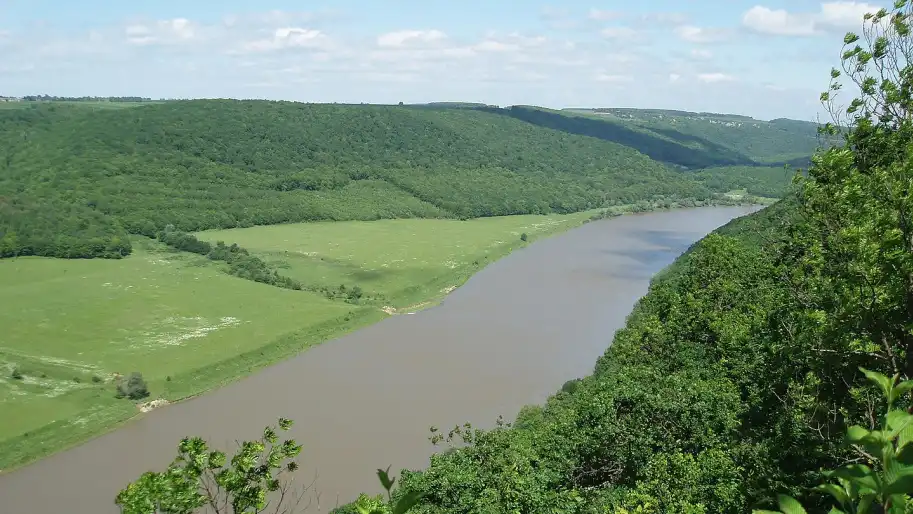

Ukraine involves international partners in water analysis in the Dniester River after shelling by the aggressor country of russia. This is announced in a statement by the Ministry of Economy, Environment and Agriculture, Ukrainian News Agency reports.
It is noted that the situation with the pollution of the Dniester River as a result of missile and drone attacks by russia is under constant control of the Ukrainian and Moldovan authorities, in Ukraine the greatest attention is paid to the protection of the drinking water intake on the Dniester - in the area of the village of Biliaivka, Odesa Region, and assistance to Moldova in localizing the pollution.
"As a result of shelling and extinguishing fires at the affected facilities, hazardous substances entered the water. We recorded an excess of permissible concentrations of petroleum products 2.5 times, barium 3-6 times, which indirectly indicates a connection with explosives," said Deputy Minister of Economy, Environment and Agriculture Iryna Ovcharenko.
The ministry notes that in Ukraine, pollution is currently recorded in the Dniester Estuary, but all necessary measures have been taken to prevent it from entering drinking water intakes, in particular for Odesa. To this end, boom barriers have been installed, sorbents are used to localize and reduce the impact of pollution, the Odesa Regional Military Administration is constantly monitoring the situation, and recommendations have been given to water utilities for more thorough water purification, and sampling and laboratory analysis are also ongoing.
According to the report, Ukraine responded promptly to the situation, in particular:
the Security Service of Ukraine has opened criminal proceedings regarding pollution;
specialists from the State Environmental Inspectorate were involved in the investigation;
intergovernmental communication with Moldova was established;
constant laboratory monitoring of water quality is being carried out.
Ukraine and Moldova also appealed to international partners for support in conducting additional research, in particular, on the identification of polychlorinated biphenyls and compounds that are part of the weapons (rocket fuel); both countries are coordinating actions and are waiting for assistance from international laboratories to conduct relevant analyses.
As Ukrainian News Agency earlier reported, the russian attack on the Dniester hydroelectric power station on March 7 caused pollution of the river in Moldova. Moldova declared an environmental alert due to pollution of the Dniester after the russian attack on the hydroelectric power station.
The Ministry of Economy reported on March 16 that after the russian attack, the content of petroleum products in the Dniester was exceeded 2.5 times, and Odesa was recommended to improve water purification.
Who we are: About us, Contacts. How we write news and our principles: Editorial code. We did our best. If you found this valuable – please support us.
To request a correction, please send an email.