
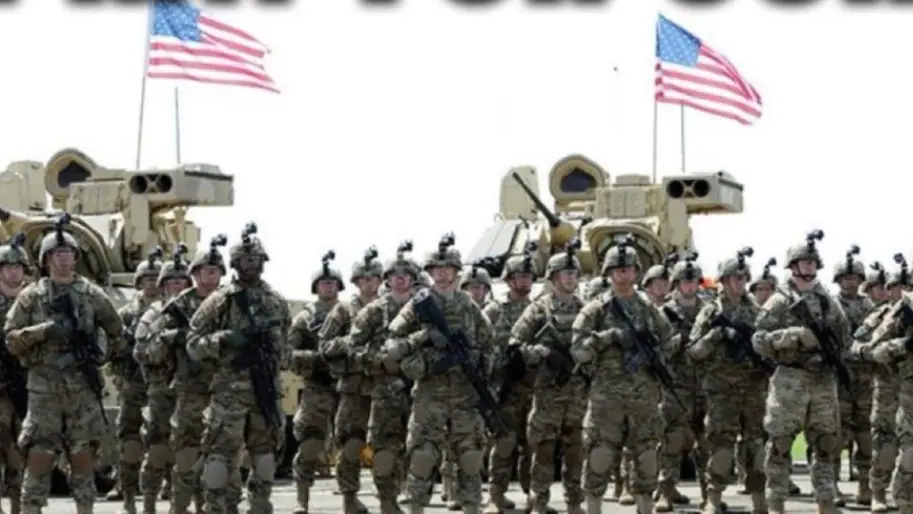

The Trump administration is considering a large-scale deployment of US troops to the Middle East, which could be a radical step in the confrontation with Iran and significantly expand US military operations in the region. This is reported by Reuters.
The White House is discussing sending thousands of troops to create new leverage in the war against Tehran. One of the key scenarios involves the involvement of air and naval forces to ensure the safe passage of oil tankers through the Strait of Hormuz. At the same time, experts suggest that the implementation of this mission may require the presence of a US contingent directly on the Iranian coast.
A separate item of discussion is the possibility of landing ground troops on the Iranian island of Kharg, through which about 90% of the country's oil exports pass. Officials consider such an operation extremely risky due to the threat of strikes by Iranian missiles and drones. In addition, the agenda includes the issue of involving special forces to establish control over stocks of highly enriched uranium in Iran, although experts call this task critically difficult even for elite units.
Such plans create serious political challenges for Donald Trump, since involvement in a protracted conflict contradicts his election promises to avoid new wars in the Middle East. The situation is also complicated by technical aspects: while an expeditionary force of more than 2,000 Marines is preparing to arrive in the region, the overall strength of the US group has temporarily decreased due to the sending of the aircraft carrier USS Gerald R. Ford to Greece for repairs after a fire on board.
As Ukrainian News Agency earlier reported, on Monday, March 16, it became known that US allies massively rejected President Trump's request for military support to open the Strait of Hormuz.
Recall that the day before, Trump hinted that he might postpone his planned visit to China so that Beijing could help secure shipping in the Strait of Hormuz.
Who we are: About us, Contacts. How we write news and our principles: Editorial code. We did our best. If you found this valuable – please support us.
To request a correction, please send an email.