
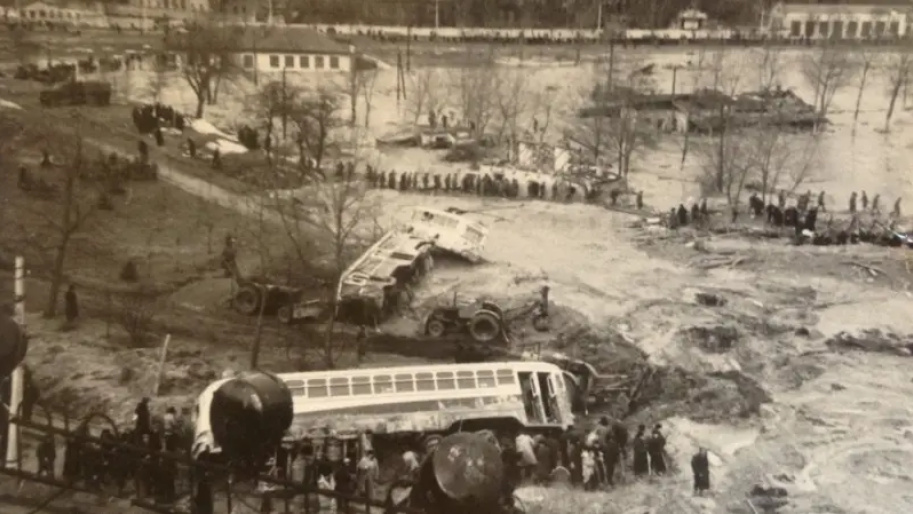

On March 13, 1961, one of the largest man-made disasters in the history of the city occurred in Kyiv - the Kurenivka tragedy. That morning, the residential area of Kurenivka was covered by a giant wave of liquid clay, sand and water, which broke through the dam at Babyn Yar. In a matter of minutes, the element destroyed houses, transport and enterprises, burying hundreds, and according to unofficial data, thousands of people under a layer of mud.
It was a tragedy that the Soviet authorities tried to hide, and its true scale became known only decades later.
How Babyn Yar was turned into a cesspool
The history of the disaster began long before 1961 - in March 1950, the executive committee of the city council decided to actually destroy the natural ravine by filling it with waste from brick production. From nearby factories, pulp began to be poured into the ravine - a mixture of water, sand and clay, which was formed during the extraction of clay for bricks.
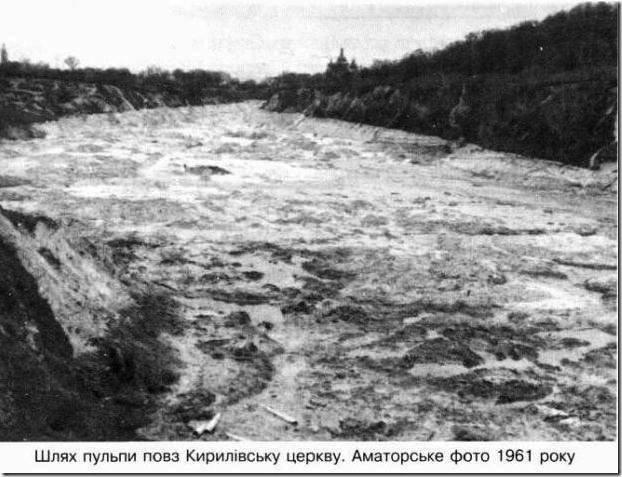 The Kurenivka tragedy. Photo: golos.kyivcity.gov.ua
A dam was built to contain this mass. However, it was earthen and not designed for a huge volume of waste, and over ten years, millions of cubic meters of liquid soil accumulated in the ravine. The drainage system did not work well, water seeped through the dam, and its walls gradually lost their strength. Engineers and workers repeatedly warned about the danger, but the city administration did not react.
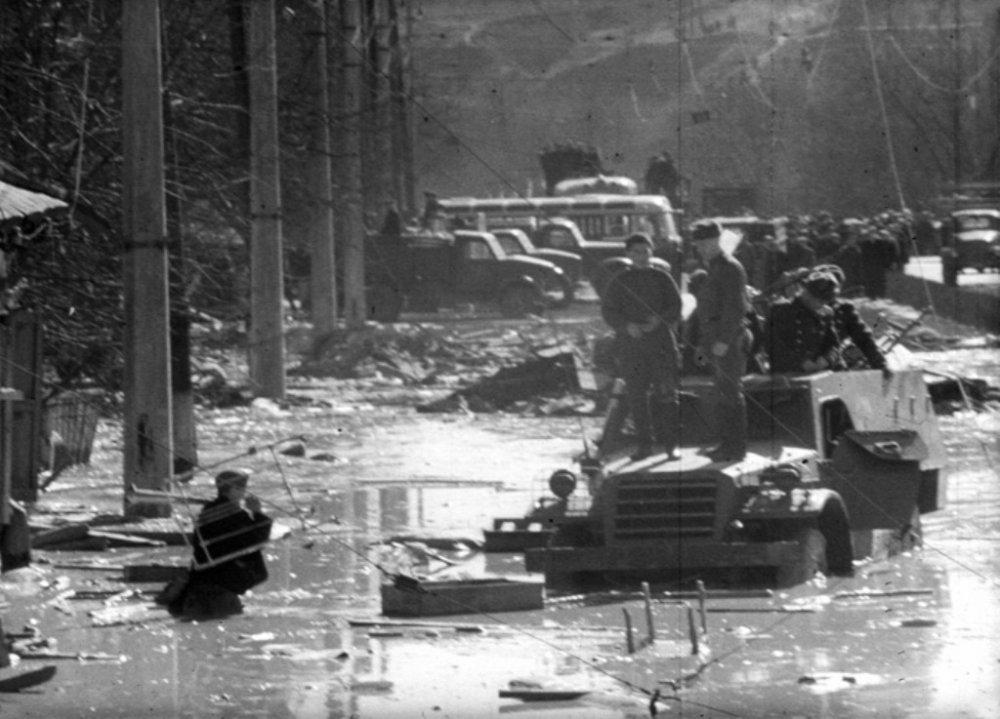 The Kurenivka tragedy. Photo: facebook.com/kiev.klab//
What happened on the morning of March 13, 1961
That Monday, life in Kyiv began as usual. People went to work, children to school, public transport was operating on the streets. At about 8:30 in the morning, water began to leak from the dam. And at 9:20 it could not withstand the load and broke through. A giant wave of pulp burst from Babyn Yar - about 14 meters high. It moved at a speed of up to 5 meters per second, sweeping away everything in its path, the clay avalanche rushed down to Kurenivka and in a few minutes, residential areas, a tram depot, industrial enterprises, buses, trams and cars, dozens of houses and hostels were under it, the Ukrainian Institute of National Remembrance reports.
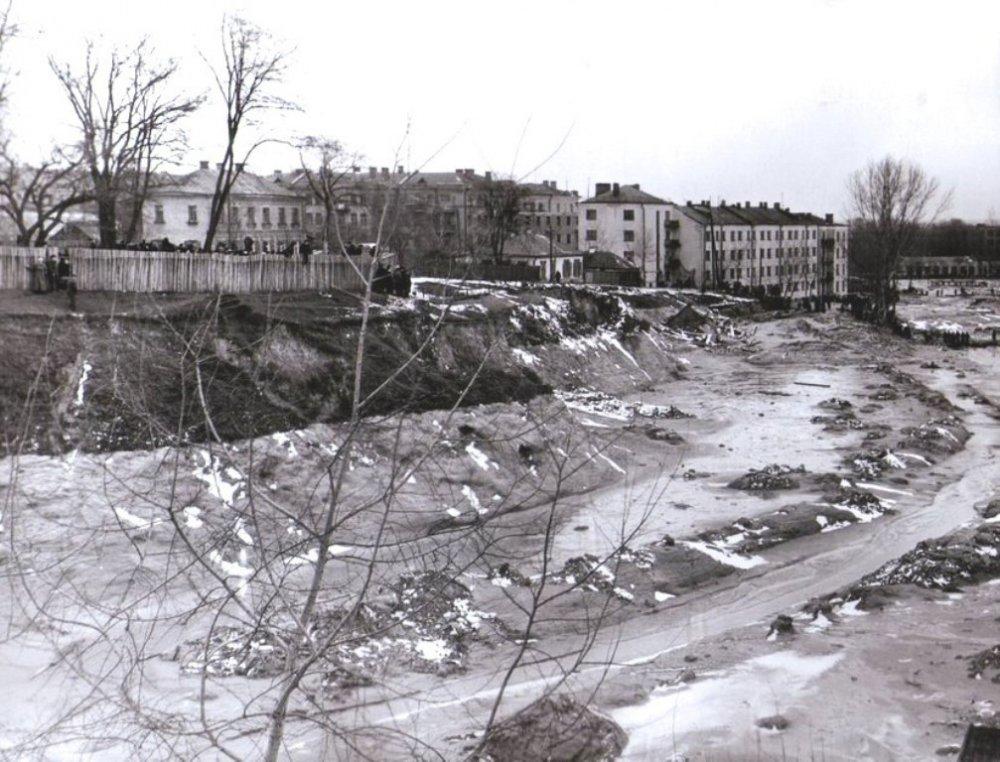 The Kurenivka tragedy. Photo: facebook.com/kiev.klab/
The area of destruction reached about 30 hectares.
People who survived the disaster recalled that everything happened almost instantly. Eyewitnesses told about a bus blocked on the road, on which a power line support fell - the transport caught fire, and only a few passengers managed to escape. Others saw how the wave lifted the tram car and carried it along with the rails.
Dozens of people worked in the tram depot that day. Many were killed simply at their workplace. When they later began to dismantle the rubble, forensic experts established that some people remained alive under a layer of mud for several days.
How many people were killed
It is still impossible to establish the exact number of victims of the tragedy. The Soviet authorities officially reported only 145 deaths. However, historians and researchers believe that the real figure could have been much higher - approximately 1,000-1,500 people, and according to some estimates even several thousand. But not only people were buried under the layer of clay. The stream also carried remains from cemeteries and burials from the ravines.
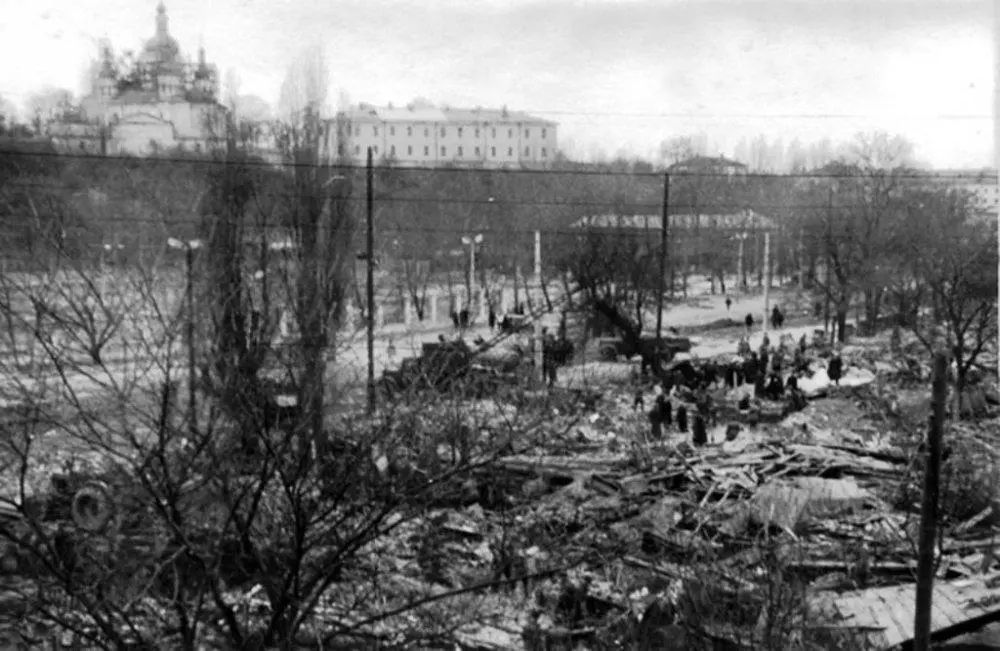 The Kurenivka tragedy. Photo: facebook.com/kiev.klab/
Soviet secret
After the disaster, the authorities did everything to prevent information from spreading. In the first days, long-distance telephone communication with the city was limited, journalists were forbidden to write about the tragedy, and the relatives of the deceased were not informed of the real causes of death. Only a brief note about the "accident" appeared in the newspapers. The Prosecutor's Office of the Ukrainian SSR launched a criminal case in strict secrecy. 6 officials were punished at a closed court session. The cause of the tragedy was called "errors in the design of hydraulic dumps and dams." No one touched the top management of the factories and party members.
Only after the collapse of the USSR were historians able to gain access to the archives and partially restore the picture of events.
For many years, the disaster was almost not spoken about publicly, and only in the 1990s did the first memorial signs to the victims of the tragedy begin to appear in Kyiv. One of the first monuments was erected by workers of the Podilskyi tram depot in honor of their colleagues who were killed that day. Today, the anniversary of the disaster is annually commemorated by historians, researchers and city residents.
We would like to remind you that a memorial service for the victims of the Kurenivka tragedy was held at the Podilskyi tram depot in Kyiv earlier. Anyone who wished could lay flowers at the memorial sign, and a priest held a memorial service for those who were killed during the tragedy, the press service of Kyivpastrans reported.
Who we are: About us, Contacts. How we write news and our principles: Editorial code. We did our best. If you found this valuable – please support us.
To request a correction, please send an email.