
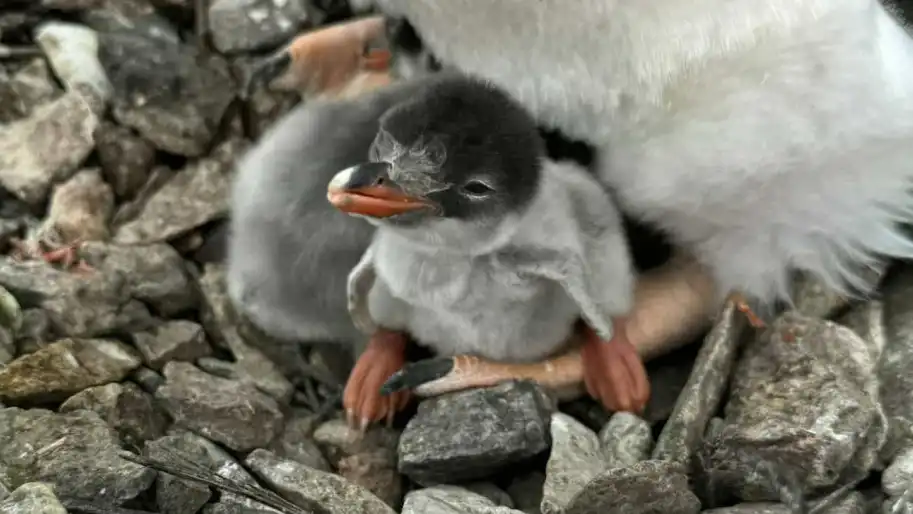

The first penguin chick of the season was born near the Ukrainian Antarctic Station "Akademik Vernadsky". The chick was recorded on the eve of Antarctica Day - an unusually early time for subantarctic penguins on Galindez Island, the National Antarctic Research Center reported.
Zoya Shvydka, a biologist with the 30th Ukrainian Antarctic Expedition, said that the birds began to visit the island and build nests much earlier this year. "We noticed the first matings in mid-September, and even then it was not a rare phenomenon. That is, this is not some couple that got out of the "schedule", but normal behavior of the population," she noted.

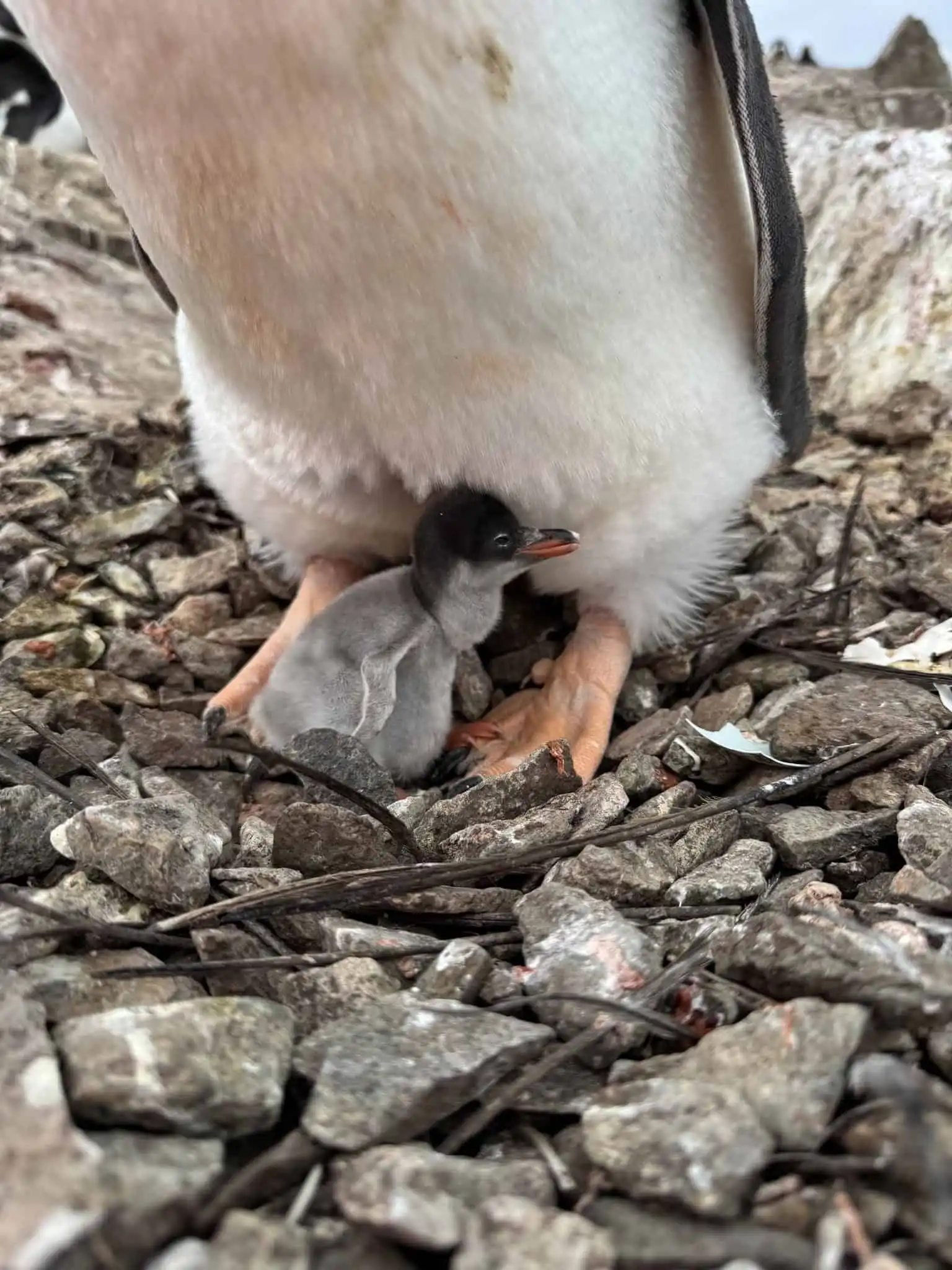
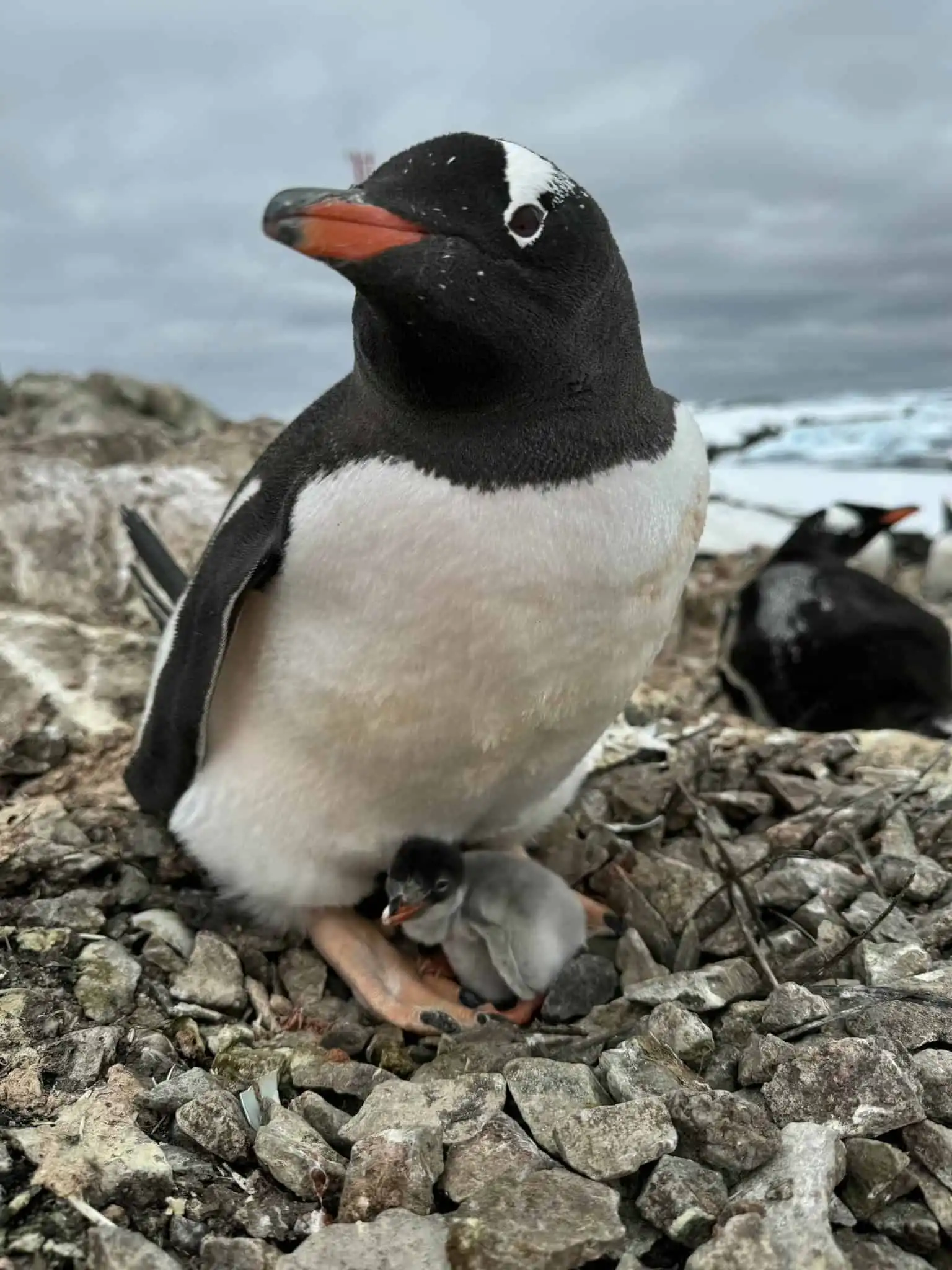


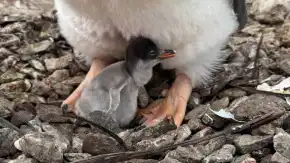
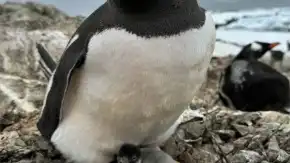
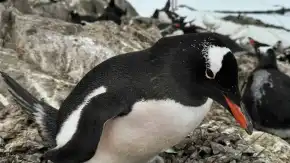
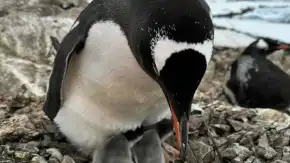
It was Shvydka who found the chick in a nest on a rock near the geocosmic laboratory, where the first eggs had previously appeared. "I understood by the time that the replenishment must be about to happen. And indeed, there was a chick in the nest. Now there are two of them there," the scientist clarified.
Biologists remind that subantarctic penguin chicks hatch asynchronously - according to the order in which the eggs were laid. At first, the chicks are covered with gray down, which gradually thickens, changes color, and after about a month they begin to molt and turn into feathers.
For the first month, the parents take turns caring for the chicks: one stays in the nest, the other goes to the ocean to get food.
According to the National Center for the Study of the Environment, this season a record number of subantarctic penguins live on Galindez Island - about 7,000. Biologists have already counted 2,300 nests with eggs and expect a real "penguin baby boom" around Vernadsky.
The center emphasizes that subantarctic penguins have not previously nested on Galindez. Their appearance and expansion of colonies are associated with climate change. The early start of the mating season and the appearance of chicks is another proof of warming in Antarctica.
As we will recall, earlier Ukrainian polar explorers showed how a huge flock of penguins dives into the ocean.
Who we are: About us, Contacts. How we write news and our principles: Editorial code. We did our best. If you found this valuable – please support us.
To request a correction, please send an email.