
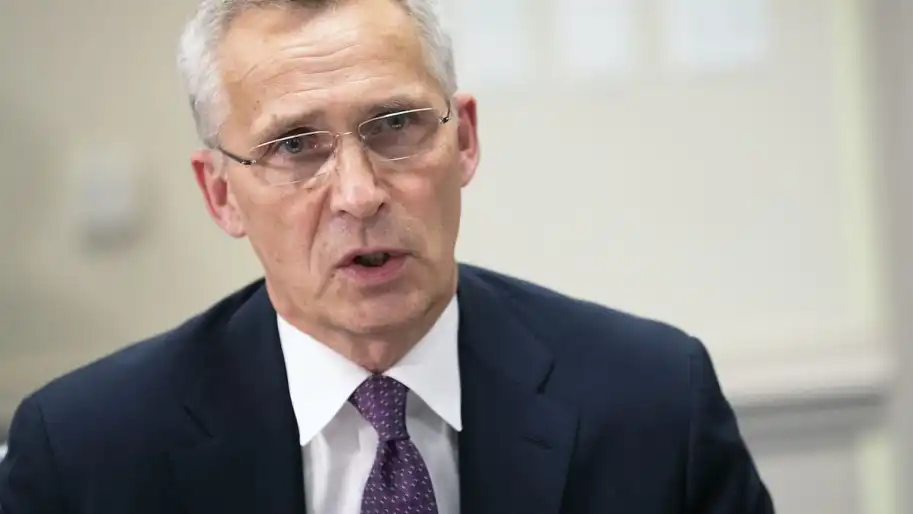

Former NATO Secretary General Jens Stoltenberg described in his memoirs a "painful moment" in February 2022 when he rejected President Volodymyr Zelenskyy's desperate request to introduce a no-fly zone over Ukraine. It was reported by The Sunday Times.
Jens Stoltenberg noted that he was afraid that their conversation with Zelenskyy could be the last phone call of the Ukrainian President. According to him, everyone in the West feared for the life of Zelenskyy and his family.
"He called me from a bunker in Kyiv with Russian tanks just up the road. And he said: 'I accept you're not sending in NATO ground troops, though I disagree. But please close the airspace. Prevent the Russian planes, drones and helicopters from flying and attacking us.' And he also said: 'I know NATO can do this because you've done it before,'" Stoltenberg recalled
He added that in the past, NATO did close airspace over Bosnia and Herzegovina in the 1990s to prevent war crimes and restricted flights over northern Iraq to protect the Kurds. However, Stoltenberg refused Zelenskyy's request at the time.
"I understand why you want this. But this will not happen, because if NATO is going to close Ukrainian airspace, the first thing we will have to do is disable Russian air defense systems in Belarus and Russia, because we cannot fly over Ukrainian airspace when Russian air defense missiles are aimed at NATO aircraft. And if there is a Russian plane or helicopter in the air, we have to shoot it down and then we are in full war between NATO and Russia. And we're not willing to do that. As Biden, who was US president at the time, put it, we will not risk a third world war for Ukraine," Stoltenberg said.
He noted that it was "painful" for him to end that phone call with Zelenskyy, "knowing that his life was in danger."
As the Ukrainian News agency earlier reported, Lieutenant General Alexander Sollfrank, Head of the German Joint Operations Command, said, that the aggressor country russia can carry out a limited attack on the territory of the North Atlantic Alliance (NATO) at any time, but the decision to act will depend on the position of Western allies.
Who we are: About us, Contacts. How we write news and our principles: Editorial code. We did our best. If you found this valuable – please support us.
To request a correction, please send an email.